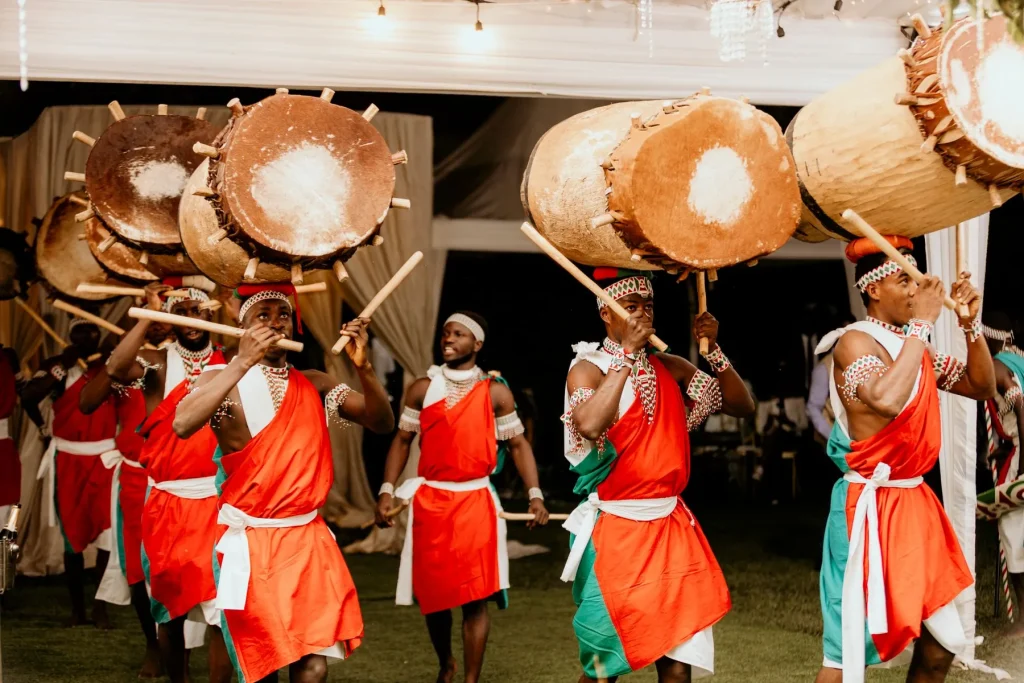
A percussion workshop quickly brings a group together. It creates a shared pulse that speaks without words. In a company or an association, this tool supports cohesion, non-verbal communication and well-being.
The promise: getting everyone playing together in a short time. Short sessions create a shared memory and immediate energy.
Formats vary: quick introduction, team building, rhythmic challenge, participatory finale or recurring activity for local organizations. Each option adapts to the context and the audience.
Accessibility: no musical experience is required. The teaching is progressive and supervised by coaches to ensure enjoyment and safety.
Sessions can be organized across France, indoors or outdoors depending on constraints. To see references and a typical schedule, visit the programming site.
Why choose a djembe activity to unite a group
Rhythmic practice creates an immediate bond between team members. Within minutes, the group finds a shared pulse. Rhythm helps everyone identify their place and synchronize with others.
Strengthen cohesion through rhythm and unison
Synchronization produces a feeling of belonging. Solidarity appears when everyone follows a pattern and supports the others.
Improve communication through non-verbal listening
Participants learn to send and receive signals without speaking. This active listening carries over into daily work.
Stimulate creativity and letting go
Improvisation invites people to try simple variations. They dare to suggest, experiment without judgment and creativity rises.
Reduce stress and support well-being
Playing as a group releases tension and refocuses attention. The “reset” effect is quick and measurable in the group’s collective energy.
An inclusive activity, accessible with no musical experience
No level is required: instructions are simple and progressive. Every profile can take part and feel useful.
| Benefit | Immediate observation | Possible KPI |
|---|---|---|
| Cohesion | Synchronization and mutual support | Participation rate, qualitative feedback |
| Communication | Active non-verbal listening | Number of effective post-workshop interactions |
| Creativity | Initiatives and improvisations | Ideas generated during the workshop |
| Well-being | Reduced perceived stress | Satisfaction score, energy level |
To adapt these benefits to a team project, see our selection of solutions and formats under team building ideas.
Djembe activity: format ideas for events and associations
A short format aims to create a “wow” effect and instant participation. In 10 to 45 minutes, it sparks energy and curiosity during a welcome session, open house or kick-off.
Short introductory workshop for open houses
Objective: immediate participation and a shared memory. Guided session, simple rhythm, fast rise in intensity.
“Djembe Orchestra” team building for public bodies and companies
The “Djembe Orchestra” concept gives each participant an instrument. Quick allocation, step-by-step learning and collective construction of a piece.
Inter-team rhythmic challenge
Groups answer each other. Simple criteria: precision, listening, dynamism. The aim: strengthen cohesion, motivation and performance.
Participatory orchestra-style finale
For conventions or evening events, a progressive build-up is created with breaks and direction from the coach. The stage effect is spectacular without being complex.
Continuous activity or subscription
Continuous flow during a trade show, or recurring subscription sessions for cultural venues. Progression over several sessions makes it possible to include new colleagues.
“Playing together transforms the relationship with the group in just a few beats.”
| Format | Duration | Objective |
|---|---|---|
| Short introduction | 10-45 min | Discovery, immediate effect |
| Djembe Orchestra | 45-90 min | Cohesion, collective creation |
| Inter-team challenge | 30-60 min | Healthy competition, performance |
| Orchestra finale | 15-30 min | Show, celebration |
| Subscription / sessions | Monthly rehearsals | Progression, lasting social bond |
Use cases: public bodies, neighborhood projects, onboarding integration or multi-team corporate events. For a turnkey solution during a corporate evening event, this format adapts to the timing and the intended objective.
Key percussion performance formats to combine with the djembe
Combining different percussion worlds turns a session into a memorable collective experience. Varying timbres makes it possible to adjust the energy: festive, dance-oriented or more melodic.
Batucada / Samba: a wave of energy
Batucada is based on an orchestra logic organized by sections. Agogo, tamborims, maracas, floor toms and surdos share the roles.
Each group learns its part, then the rhythms are assembled for a collective finale. The impact on energy is immediate.
Calypso & Steel Drums: melody and togetherness
Steel drums bring a reassuring melodic line. Visual cues and clear roles are provided: melody, chords, bass, percussion.
The final result, in a steelband style, highlights every participant and creates a strong sense of belonging.
Balafon: melodic relief to structure the finale
The balafon, an African xylophone, adds relief to the progression. It “carries” the group without making the learning process more complex.
- Why combine them: vary sound colors and renew the experience.
- Shared objective: get people playing together quickly, with simple rules and a spectacular result.
- Choice according to audience: company = energy and performance; public bodies = discovery and cohesion; evening events = dance and enjoyment.
Typical flow of a successful djembe workshop, from warm-up to grand finale
Each workshop begins with a practical setup that makes the instruments easy to handle. The coaches welcome the group, check comfort and quickly explain the safety instructions.
Welcome and setup
The instruments are placed in front of each chair for immediate access. The layout optimizes seated posture and reduces fatigue.
Discovering the essential sounds
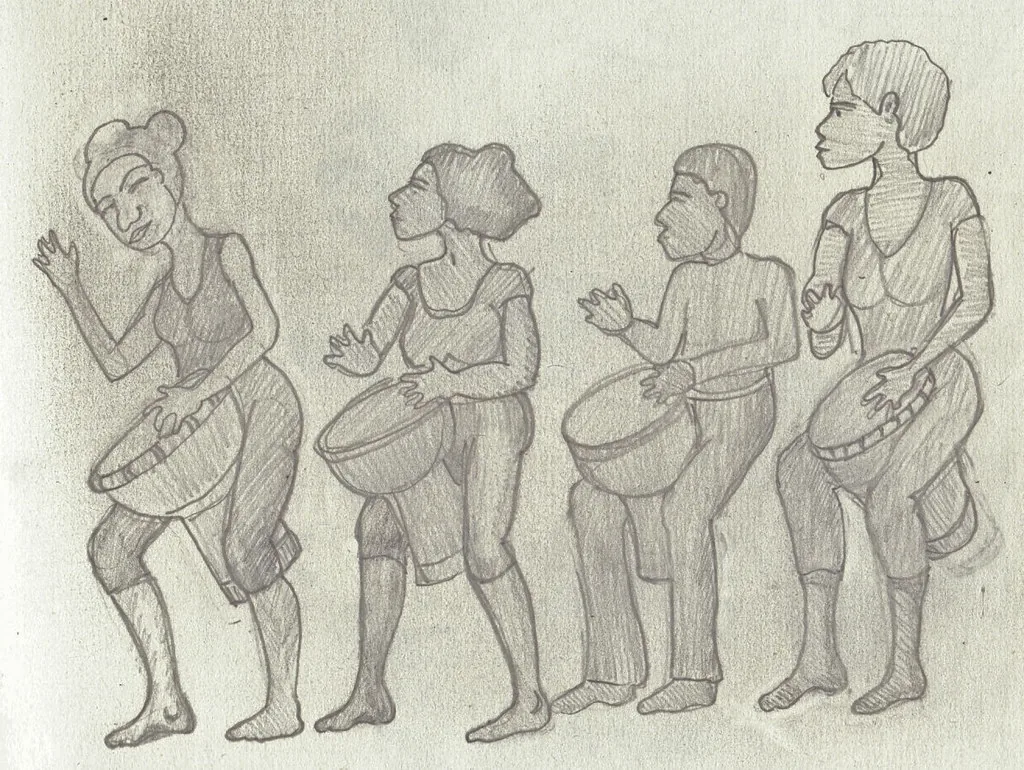
The three sounds of the djembe drum are introduced: tone, slap and bass. Participants practice distinguishing each stroke.
Oral teaching and learning
The method is based on oral tradition: imitation, onomatopoeia and call & response. This learning without music theory engages everyone, even the most reserved participants.
Progressive construction
First, a slow rhythm is practiced, then a faster second one. A transition break acts as a bridge.
Simple patterns are layered, and nuances and attacks are managed to prepare the rise in intensity.
Collective grand finale
The final phase unites the group: everyone plays together. The shared pulse creates palpable pride and enjoyment.
Role of the facilitators: the percussionists keep the tempo, restart the energy and value every success.
Adapt the activity to the context of your event
The choice of format depends on the goal: rapid integration, collective momentum or change support.
Onboarding and integration of new colleagues
As a welcome activity, an icebreaker format helps new colleagues feel at ease. It values participation without codes to master.
This approach supports non-verbal communication and quickly places participants within an operational team.
Seminar, kick-off, product launch and conventions
Use rhythm as a starting signal to anchor a shared objective. The tempo becomes a visual and sound-based reference point.
During a seminar, the format strengthens cohesion within teams and works as an opening or closing ritual.
Public bodies, neighborhood projects: creating bonds and discovery
For local organizations, the focus is on cultural discovery and intergenerational participation.
Consult a facilitation guide to adapt activities to the audience and encourage bond-building.
Mergers, restructuring and change management
During a reorganization period, the work focuses on listening and adjustment: changing a pattern, following a leader, accepting mistakes.
This sound metaphor supports communication within the company and makes collective acceptance of change easier.
Modulation: intensity, difficulty and duration are adjusted according to the audience, venue and objective. This means each team building session delivers a measurable and lasting impact on the group.
Logistics, capacity and hosting conditions indoors and outdoors
Preparing a rhythmic welcome requires precise logistics and appropriate space choices. The key point: define capacity and check the conditions of the venue before any booking.
Number of participants and large-group management
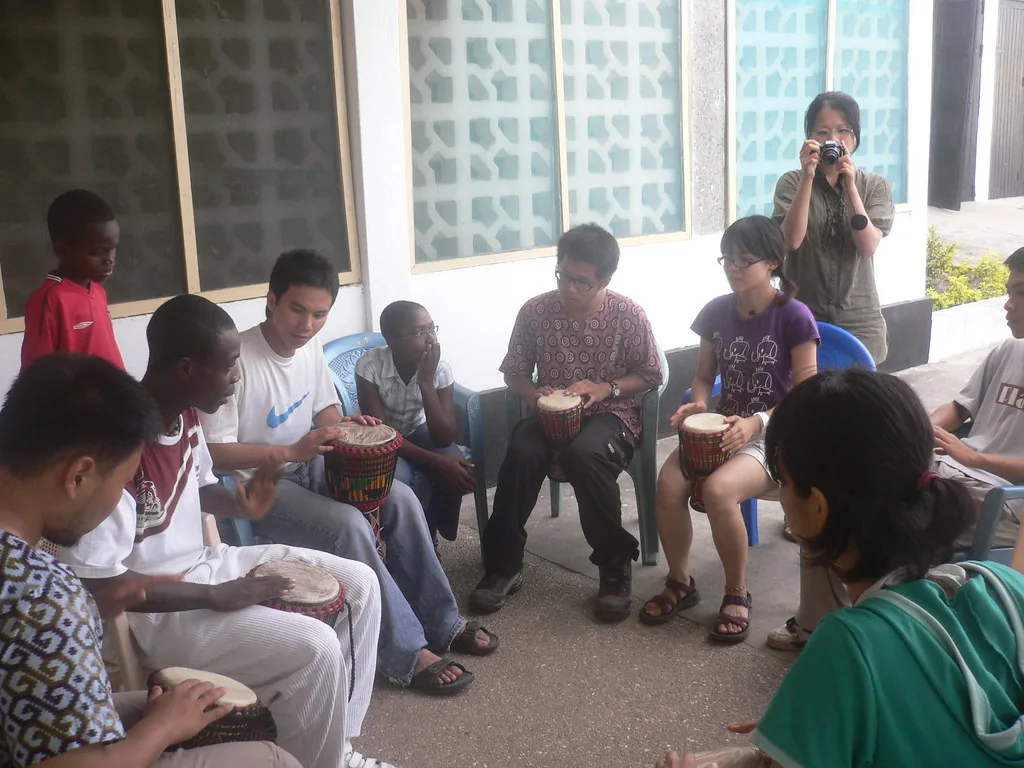
Our services cover 8 to 1,200 guests. For small groups, coaching remains highly focused. For large gatherings, sections, clear signals and several coaches are organized to coordinate the whole group.
Flexible duration according to your schedule
The duration varies according to the objective: short activity formats or 30- to 90-minute sessions. We recommend at least 30 minutes to learn the basics and guarantee a successful finale.
Venue, constraints and practical conditions
Choose a venue “where making noise is acceptable,” away from sensitive premises. Indoors, consider acoustics and permissions. Outdoors, plan a weather backup and check the neighborhood.
Surface area, seating and equipment
Allow 1 sq m per person and one chair per participant. We provide the instruments and sound system if needed. Plan a coach area, wide circulation spaces and, on the digital side, the cookies banner on your site for UX.
Coaching and teaching: a tailor-made activity that helps everyone succeed
Adapted coaching turns each session into shared success, even for the shyest participants.
Role of coaches and percussionists: give clear reference points, manage the tempo and maintain energy. They build confidence, correct without patronizing and bring reluctant participants on board like true conductors.
Safety and comfort are priorities. Instructions cover posture, striking intensity and fatigue prevention.
The sound level is also adjusted according to the venue and the audience, to protect hearing and maintain enjoyment.
Tailor-made teaching
The method progresses in stages: listening, nuance, unison, then finale. It adapts to age, available time and company culture.
Examples of adaptation: short sessions for a kick-off, repeated educational paths by subscription or intergenerational workshops for public bodies.
Role distribution and group dynamics
- Sections and parts to structure the whole group.
- Response patterns and breaks to create points of attention.
- Volunteer soloists to value initiative.
The more listening progresses, the more the music comes together. Cohesion becomes tangible and teams develop communication skills transferable to daily life: following, guiding, making room and recovering together.
“Well supervised and at the same time very free, very flexible.”
Reviews and feedback: the impact of a djembe service on teams
Client testimonials often reveal renewed energy within teams after a short, well-led rhythmic activity. Reviews and feedback highlight immediate joy, a rise in positive adrenaline and the feeling of having achieved something together.
What participants remember: joy, energy, sense of achievement
Colleagues mention simple, strong feelings: “exhilarating, tonic, joyful” (Orange) or “I had a blast” (Crédit Agricole).
Pride comes from succeeding with no musical prerequisite. Letting go and collective well-being offer a real “reset” after a stressful period.
What organizations observe: engagement, dialogue and shared memories
HR departments and management teams report a visible rise in engagement and cross-functional interactions. Danone emphasizes an activity that was “well supervised… very free,” while Thales mentions the “happiness of expressing oneself.”
Logistical feedback is positive: La Tourangelle, Renault and Hennessy note excellent facilitators and enthusiastic colleagues.
“Total success: the coach becomes a conductor and brings reluctant participants on board.”
In short, these reviews show that a well-run service produces a memorable collective finale and listening behaviors that can be reused in a professional context. Emotional value quickly becomes an operational benefit.
Conclusion
In short, a rhythmic workshop turns a group into an orchestra in very little time. Rhythm creates cohesion and improves communication within a team.
Choose a format according to the objective: introduction, Djembe Orchestra, challenge or finale. These options suit team building and collective discovery.
Organization remains simple: adjustable duration, indoor or outdoor options, capacity up to 1,200 participants. Plan 1 sq m per person, chairs and a venue where noise is acceptable.
Participants, even without experience, progress quickly thanks to the coaches. To enrich the sound palette, add other percussion instruments or a balafon.
Define the number of people, venue, duration and objective, then request a tailored quote to bring your project to life.