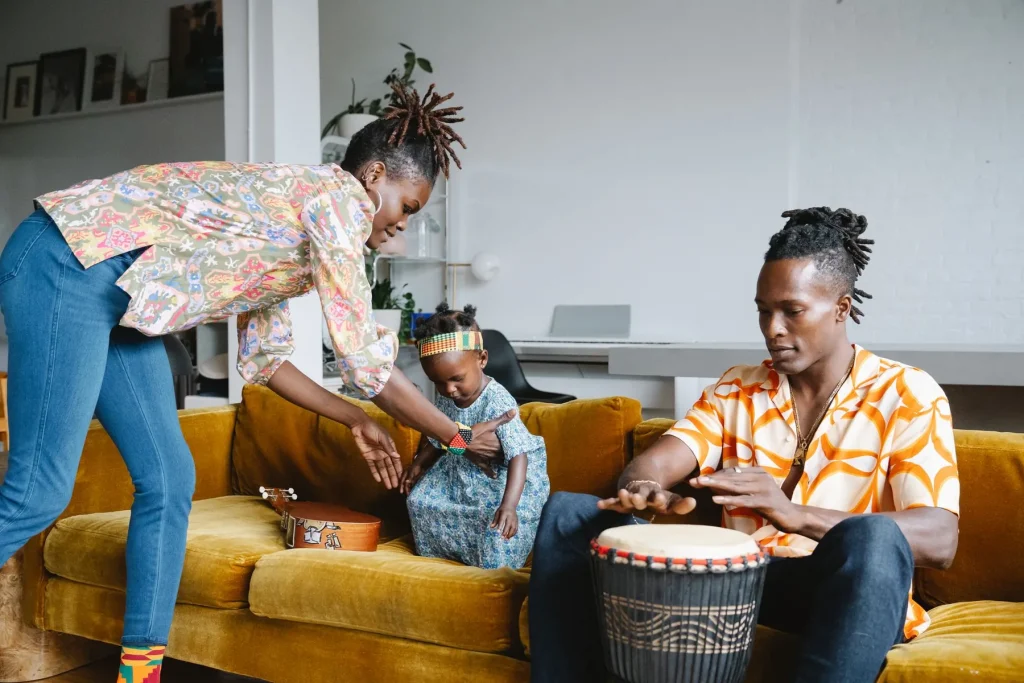
The djembe is an iconic West African percussion instrument: accessible, lively, and engaging.
Your progress depends heavily on the training format and the quality of the guidance. Regular practice and a good instrument help you improve faster.
This article helps you choose between a teacher, workshops, group sessions, and online options based on your level, constraints, and musical goals.
We offer a concrete method: criteria to check, questions to ask, and warning signs to avoid false starts.
The French context affects the choice: neighbors, options in cities or rural areas, budget, and access to organizations. To go further, see a practical resource on online learning and good practices here.
The pillars of this guide: goals and level, formats, teacher quality, technique, equipment, and practice routine.
Tip: suitable training, supported by even a short structured practice routine, is better than piling up scattered tools.
To get started today, discover recommended resources and instruments in this guide.
Clarify your goals and level before taking djembe lessons
Before you commit, clarify what you truly expect from your learning. This simple step keeps you from paying too much for the wrong level or wasting time in a poorly matched group.
Beginner, intermediate, advanced: what should you choose?
Beginner: posture, sounds, and tempo come first.
Intermediate: variations, rhythmic stability, and playing in a group.
Advanced: calls, polyrhythm, and lead work.
Your musical goals
State them clearly: learning African rhythms, improving technique, playing in a group, or developing improvisation. A mini checklist helps you choose between regular lessons, intensive workshops, or group sessions.
Practical constraints in France
Consider the time you have, neighbors, budget, and access to venues. A short daily session is worth more than one long weekly practice session.
| Criterion | Beginner | Advanced |
|---|---|---|
| Expected content | Posture, sounds, tempo | Polyrhythm, calls, variations |
| Recommended format | Regular lessons + daily practice | Workshops, intensive courses, and group playing |
| Constraints | Controlled volume, muted djembe, or suitable practice hours | Access to ensembles and personalized follow-up |
Practical rule: a clear goal, the right format, and a practice routine produce better results than a scattered path.
Djembe lessons: how to choose a teacher or workshop
Depending on your goals, each learning path offers distinct benefits and practical limits.
In-person lessons
Schools, conservatories, and associations are solid options in France. Look for local organizations, notice boards, Facebook groups, or listings in cultural centers.
Teachers and organizations often offer trial sessions: use them to check the sound, methodology, and atmosphere.
Workshops and intensive courses
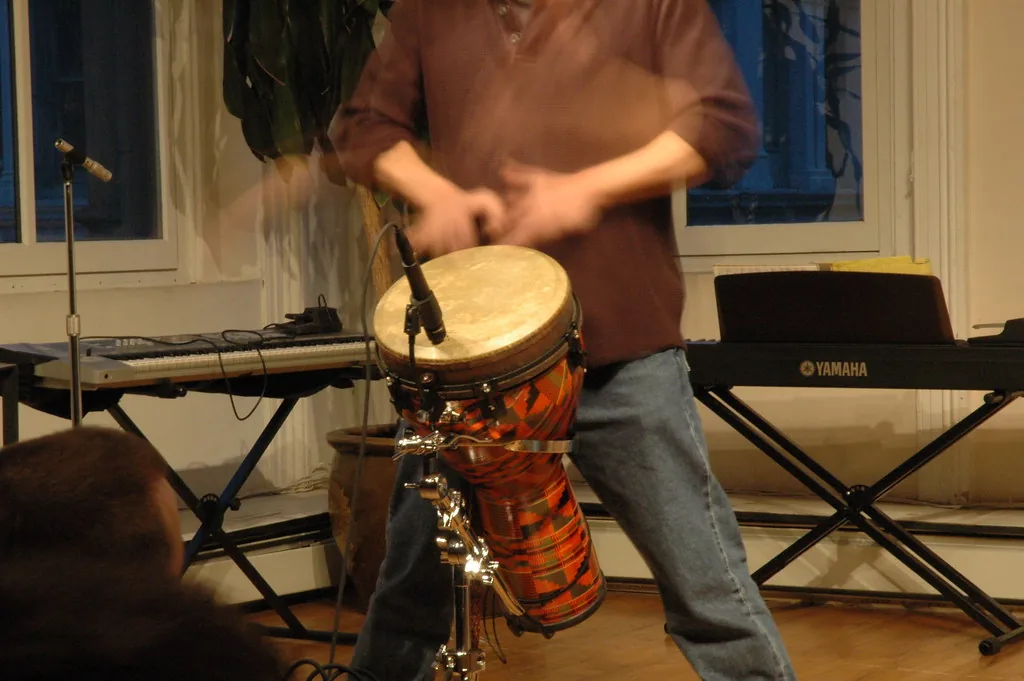
Group work speeds up listening and placement in the tempo. In an intensive workshop, immersion gives you many focused hours and recording material to take home for later practice.
Online courses and tutorials
Online learning offers flexibility and access to distant teachers. YouTube tutorials help with concrete topics, but be careful: posture mistakes are hard to correct without feedback.
To combine practice and follow-up, explore a structured platform or follow this guide on online learning.
Self-taught learning
Ideal for getting started or consolidating your skills. Organize short sessions, film yourself, and compare with models. Do not play louder to hide weak technique: prioritize precision.
- Safeguards: ask for human feedback as soon as possible (trial lesson, workshop, community).
- Compare formats based on your goal: clean sound, repertoire, group playing, or improvisation.
Recognize a good djembe teacher and avoid bad surprises
Spotting a good guide starts with observing how they correct posture and sound during a session.
Musical experience: good teaching shows active listening. The teacher immediately corrects relaxation, stroke precision, and rhythmic stability.
What pedagogy means in practice
Slow demonstration, pattern segmentation, and individual correction are essential. Targeted exercises (tempo, clarity, endurance) should adapt to your level.
Authenticity and cultural context
Quality teaching includes contextualizing the rhythms. Real training connects patterns to ceremonies, celebrations, and social functions. Listening to masters such as Mamady Keita develops your ear.
Feedback and progress
Look for weekly goals, the option to record, and practical instructions between sessions. Concrete indicators include a cleaner sound, steadier tempo, and better understood calls.
| Criterion | What to observe | Positive sign |
|---|---|---|
| Correction | Posture, wrists, strokes | Immediate and individual corrections |
| Pedagogy | Demonstration, segmentation | Clear, progressive exercises |
| Group management | Attention to levels | Constructive and dynamic atmosphere |
Warning signs: no correction, volume prioritized over technique, vague talk about progress, or levels that are too mixed.
To explore teaching methods and discover practical tools, see this pedagogical resource.
Choose a djembe workshop or intensive course suited to your progress
The right format and a well-matched group can save you weeks of practice.
Group size and consistency: a small, homogeneous group allows more individual correction. With 3 to 8 participants, each person gets more playing time and targeted feedback. A group that is too large dilutes the teaching.
Observable criteria: number of participants, distribution by level, real playing time per person (ideally 30 to 45 minutes per session), and question-and-answer slots.
A concrete example in France: accelerated training over 1 to 2 days, with a maximum of 3 students, in a nature-based studio near a campsite. This format supports immersion, respects neighbors, and offers personalized follow-up (Rémi, latelier-kora-djembe.fr).
Expected content and preparation
- Content: technique (sounds), repertoire, calls, variations, and long group-playing sequences.
- Prepare: hand/wrist endurance, recorder, notebook, and clear goals.
| Criterion | Recommended value | Impact |
|---|---|---|
| Number | 3 to 8 participants | More individual corrections |
| Duration | 1 to 2 intensive days | Immersion and fast progress |
| Playing time | 30 to 45 min/person | Enough real practice |
| Logistics | Isolated studio, nearby accommodation | Respect for neighbors and recovery |
Choosing method: compare 2 or 3 options on a grid (level, group size, content, feedback, logistics) and keep the one that best matches your learning goal.
To extend the experience, also explore online courses for beginners so you can keep the habits developed during the workshop.
What your lesson should teach you first
Good learning starts with knowing what to master first and why it matters.
Posture and placement
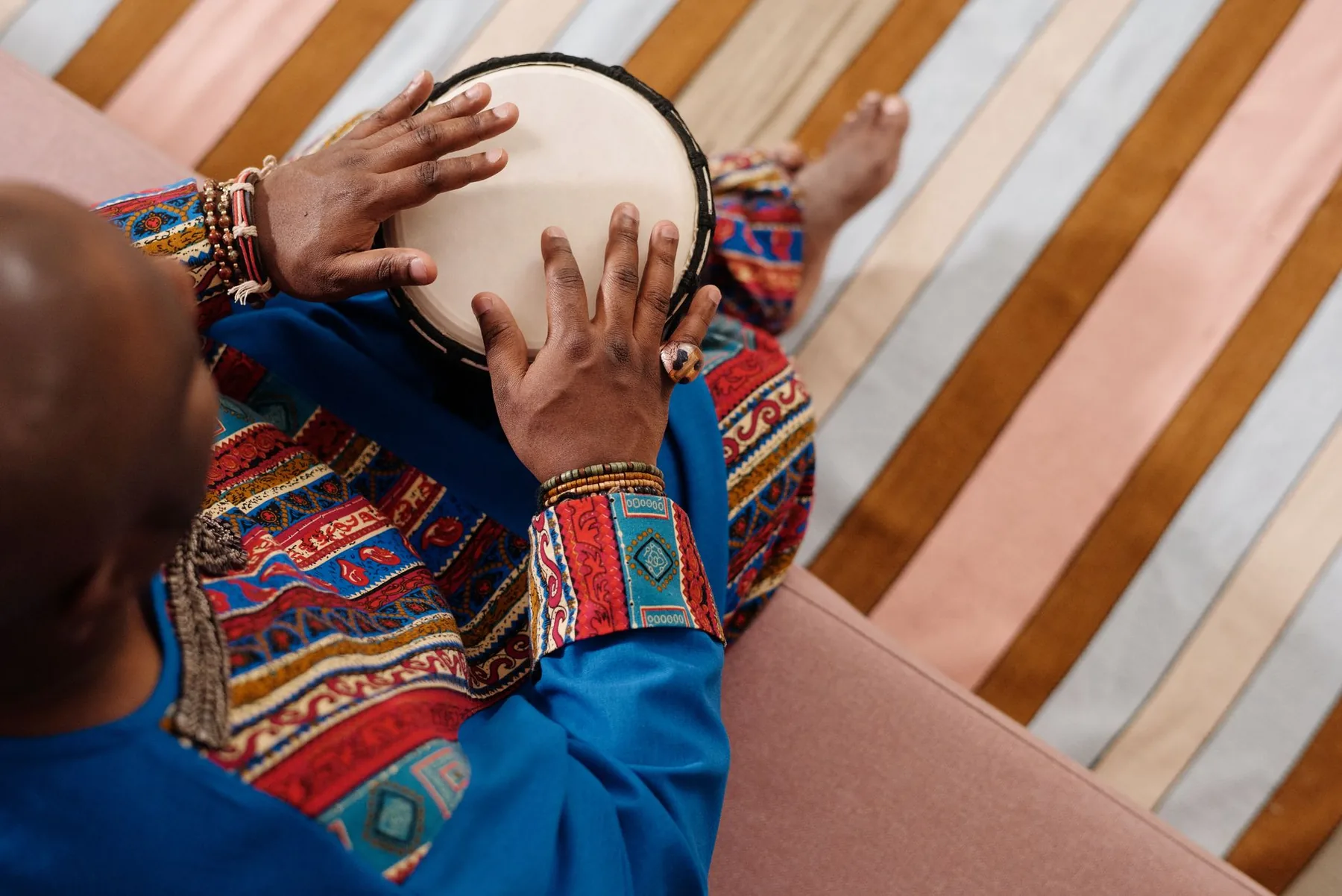
Seated, drum tilted at about 45°, back straight, shoulders relaxed. Your hands should stay loose to protect your wrists and shoulders.
The three fundamental sounds
Learn to distinguish the Bass (center), the Tone (edge), and the Slap (sharp crack). Clarity matters more than force.
Tempo work and endurance
Use a metronome to stabilize rhythm and subdivisions. Increase speed gradually.
Practice in short sets, take a break, then repeat. Control the sound without “hitting” harder.
Polyrhythm and your role in the ensemble
Understand the dialogue with dununs, bells, and other percussion instruments. Knowing how to listen keeps you from covering the cycle.
Calls and variations
First learn the accompaniment, then calls and variations. Anticipate, signal, and leave space for the group.
| Priority | Goal | Typical exercise | Expected result |
|---|---|---|---|
| Posture | Protect the body | Seated position + 10 min warm-up | Less tension, longer possible sessions |
| Sounds | Clarity: Bass/Tone/Slap | Isolate each sound in a slow loop | Precise sound vocabulary |
| Tempo | Rhythmic stability | Metronome + subdivisions | Consistent rhythm in a group |
| Ensemble | Polyrhythm and musicality | Exercises with dununs/bells | Better placement and listening |
To go deeper into basic rhythms and practical exercises, see this basic rhythms guide.
Evaluate the quality of a djembe and the equipment before committing
Your choice of instrument directly affects your comfort and progress. A poor drum is tiring, sounds muddy, and makes lessons less effective.
Size and body type: check the height and diameter. The instrument should stay stable between your legs and be easy to position. Think about transport in the city.
Solid wood vs modern materials
Dense wood (mahogany, iroko) offers better resonance and strong durability. Modern materials are lighter and less sensitive to humidity. Choose based on use: lessons, outdoors, or stage.
Simple sound test
In a shop or upon delivery, listen for three tones: deep Bass, clear Tone, crisp Slap. The absence of stray vibrations is a sign of quality. A good djembe produces these distinct sounds.
Value for money
| Range | Indicative price | Audience |
|---|---|---|
| Entry level | €150 to €300 | Beginner |
| Intermediate | €300 to €600 | Intermediate |
| Pro | €600 and up | Professional |
Useful accessories: bag, tripod/stand, replacement heads, and maintenance tools protect your investment and improve the longevity of this instrument.
To test things in a lesson or workshop setting, also look at a local-style option such as percussion lessons.
Organize your practice to progress quickly, even between lessons
Daily consistency turns gestures into reflexes and stabilizes tempo. A few minutes a day are more effective than one long weekly session.
A simple, safe program
5 to 10 min of hand/wrist warm-up to prevent injury. Then work on the three sounds (bass, tone, slap) in slow loops.
Spend 10 minutes with a metronome on a precise rhythm, then 5 minutes of controlled improvisation.
Measure and adjust
Record audio or video every week. Compare: slap clarity, tempo stability, transition quality.
If the sound is muddy, return to your strokes; if the tempo drifts, slow down and build back up gradually.
Play in a group and respect your neighbors
Joining workshops or percussion ensembles speeds up learning through collective listening.
To avoid disturbing others: partially mute the shell (cloth, sponge), choose reasonable hours, practice outside when possible, or choose an electronic drum with headphones.
Practical tip: for local and immersive sessions, also look at community percussion options.
Conclusion
The key to moving forward quickly lies in a simple method: goal, format, feedback, and regular practice.
Practical summary: clarify your goals and level, compare two options (in person, workshop, online), check the teaching approach, and structure short sessions between meetings.
To choose a good teacher, look for concrete corrections (posture, sounds, timing), measurable progress, and respect for West African roots and African rhythms.
First prioritize the three Bass/Tone/Slap sounds, metronome stability, and endurance without forcing. Group playing complements individual learning.
Recommended action: book a trial lesson, record the session, compare two workshops, and start a realistic routine this week to gain confidence and enjoyment.