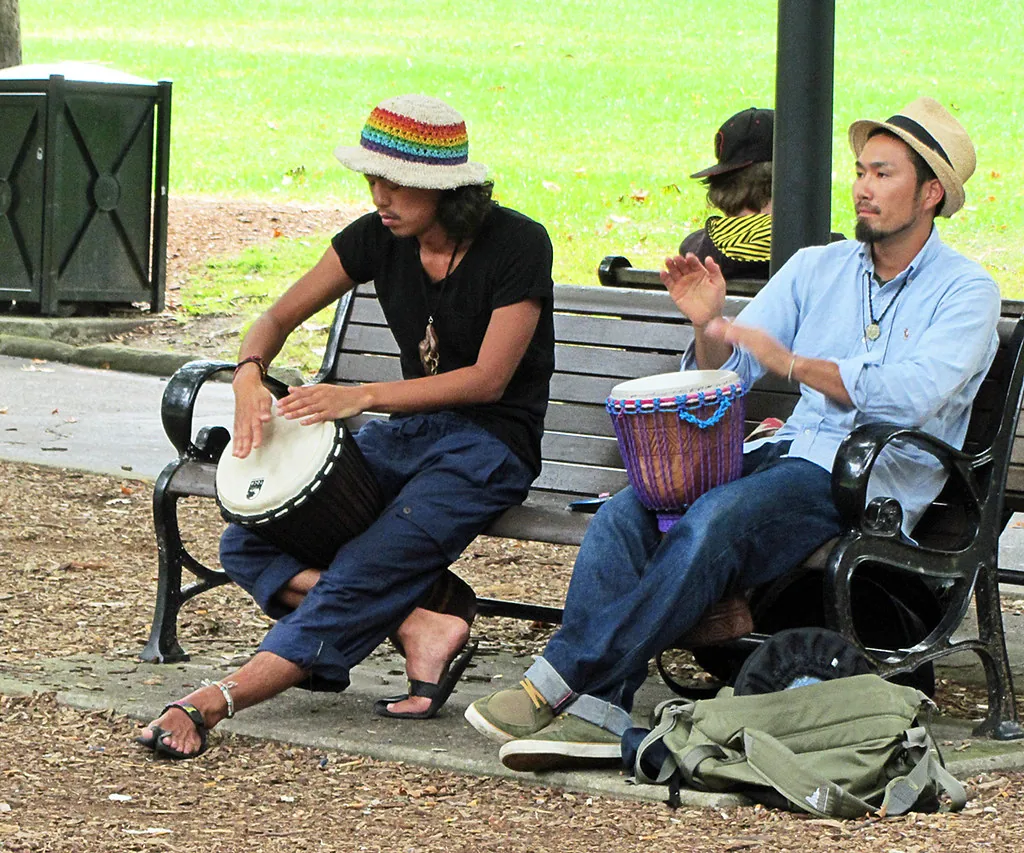
The djembe speaks to the heart before it speaks to the ears. This article promises to teach you how to play in a way that guides real movement, not just produces sound.
We offer concrete reference points: tempo, accents, cycles and breaks. The goal is simple: trigger and support dance by creating a clear pulse.
The progression is clear. First, understand the relationship between percussion and the body. Then master the sounds of the instrument and establish traditional rhythms. Finally, learn to communicate in a group to manage collective energy.
French context: this guide applies to studios, classes, workshops and community events, sometimes even in apartments with noise constraints.
This text is for motivated beginners, intermediate percussionists and dancers who want to communicate better with the music and the movement.
Getting people dancing means creating a readable pulse, giving choreographic cues and managing energy without blurring the message.
Understanding the djembe-dance synergy in West Africa
The meeting of percussion and movement turns sound into a visible cue. In West Africa, the drum acts as the backbone of the choreography.
Rhythm as a guide for dancers’ movements
The rhythm-movement relationship acts like a track: a stable pulse anchors the step. Variations remain possible as long as the reference points stay clear.
An immersive experience between percussion, bodily expression and group energy
The dancer listens to the tempo, accents, phrase endings, breaks and density of the playing. These elements dictate starts, stops and changes in energy.
This synergy creates powerful bodily expression: percussion launches the impulse, and choreography gives it a visual form. The audience and the group amplify the tension.
- Human connection: an implicit call-and-response links drum, body and audience.
- Practical rule: the more collective the dance is, the more readable the pulse and cycles must be.
Ultimately, this instrument plays a central role in the artistic expression and creativity of the choreographic world.
The roots of the djembe: an emblematic instrument of African culture
Since the Mali Empire, this drum has accompanied ceremonies and collective life in the west of the continent. It originated in West Africa and has been part of Manding heritage since the 12th century.
In ritual settings, the drum plays a central role: weddings, harvests and rites of passage use its patterns as signals. People often say that this instrument speaks, because its accents and variations form a true language.
Griots ensure the transmission of stories and codes. They tell histories, preserve memory and give music its social framework.
Today, these principles — cues, signals, energy — appear in classes and performances. Understanding this past helps you play with intention and respect the drum’s central role.
- Manding origin: understanding patterns and cycles.
- Communication: the drum as a community signal.
- Griots: transmitting and telling stories.
To go further on traditional instruments, see traditional African instruments.
Djembe and African Dance: How to Play to Get People Dancing
Holding a steady tempo immediately transforms dancers’ confidence. A clear pulse prevents hesitant steps and opens up the range of movement.
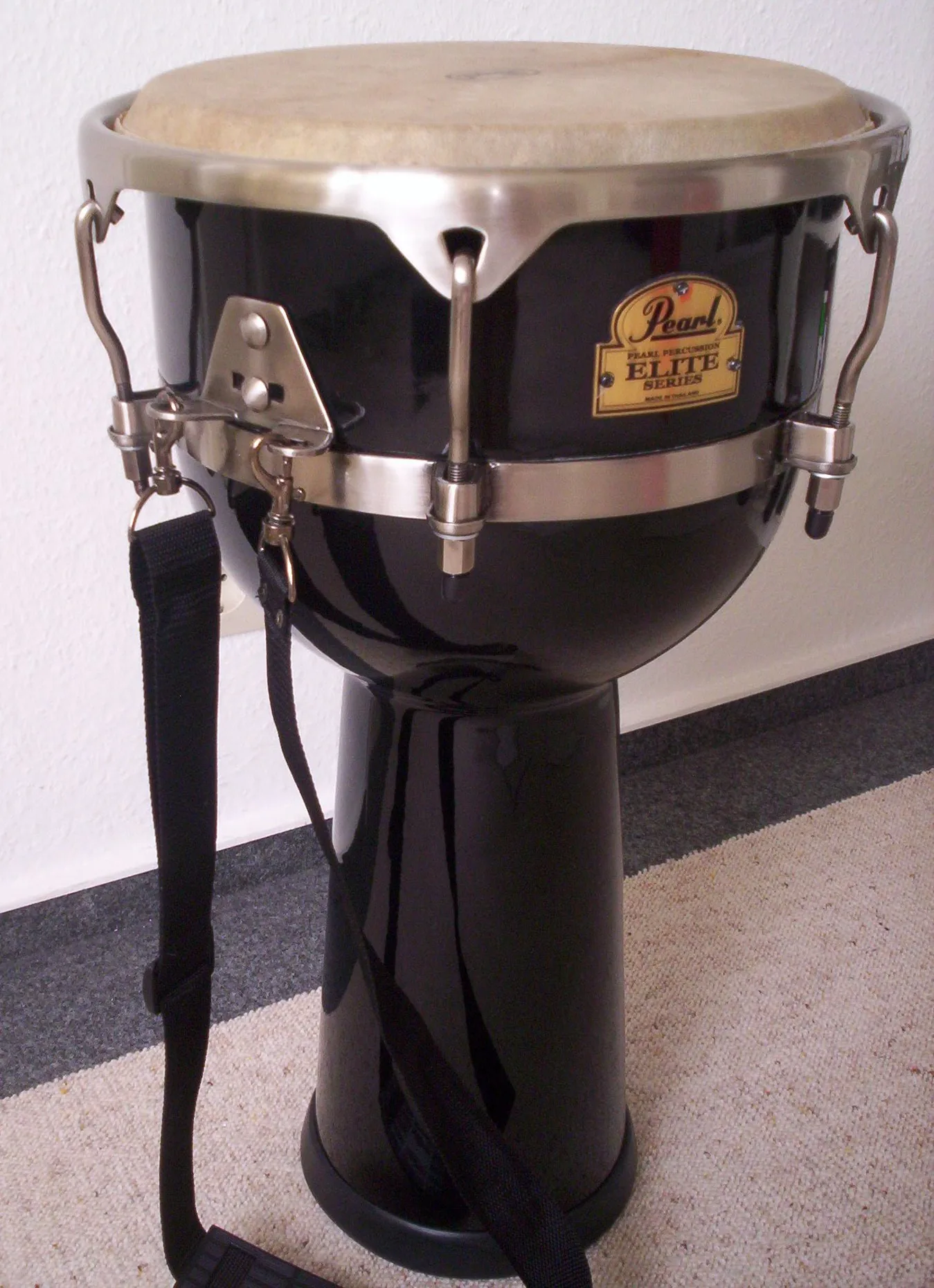
Hold the tempo and establish a clear pulse
Count the cycles (12/8 or 4/4) and identify the “1.” Making that beat audible without overplaying helps performers know where they are.
A vague pulse = uncertain steps. A precise pulse = confidence and amplitude.
Play with intention: nuance, energy and “breathing”
Vary volume, density and accent placement to carry the energy.
Leaving silences prevents constant filling. These breaths make phrases readable.
Create cues for the choreography
Use repeated phrases, calls and clear cycle endings. Short breaks, followed by a clear return, allow clean transitions.
On stage, your signals must be understandable in one listen, even by beginners.
- Simple technique: count and mark the “1”
- Intention: balancing volume and accents
- Breathing: spaces and returns
| Cue | Goal | Practical example |
|---|---|---|
| Stable pulse | Secure the balance of the steps | Mark the 1 with a clear tone every four pulses |
| Accents | Direct the intensity | Accent the 3rd beat to call a movement |
| Short breaks | Allow changes | One-measure pause, return on a call |
“Stability in time creates the space where dance can express itself.”
To explore movement accompaniment in more depth, discover dedicated classes and resources in this practical guide.
Adopting the right posture for comfortable, powerful and precise playing
Good posture protects the body and reveals the instrument’s resonance. Before detailing each position, keep in mind that stability goes hand in hand with clean sound and endurance.
Seated position on a chair
Sit on the edge of the chair, instrument between your legs, slightly tilted. The skin should be at navel height. Back straight: less fatigue and more regular strokes.
Key adjustments: chair height, knees apart, feet flat. Tilt the shell to free the resonance.
Floor position
Cross-legged or kneeling, you gain grounding. The torso can move without losing stroke precision.
Advantages: better endurance and freedom of movement. During long sessions, pay attention to back support.
Standing position with a strap
The strap or harness must hold the instrument securely. Tilt it forward; the skin should sit at pelvis height.
Ideal for mobile performances, events and processions. Adjust the strap before raising the tempo.
Why posture changes the sound: stability = regular strokes, better resonance and less fatigue. Avoid tension in the wrists and shoulders.
“A stable posture ensures a reliable, lasting pulse, an essential condition for keeping the audience in motion.”
| Position | Key adjustment | Main advantage |
|---|---|---|
| Chair | Skin at navel height, high chair | Stability, clean resonance |
| Floor | Cross-legged or kneeling, straight back | Grounding, endurance |
| Standing | Adjusted strap, forward tilt | Stage mobility, safety |
Practical tip: take breaks, release the shoulders and adjust your position before increasing speed. A comfortable posture serves the pulse and the passion of playing.
Mastering the essential sounds so the dance can “understand” your playing
Clear timbres allow the choreography to read your intention.
The bass stroke (bass) sets the support. Place the palm in the center for a deep sound. Let the hand rebound; the low tone should stabilize the movement and give dancers an anchor point.
The tone stroke (tone) clarifies the pattern. Touch the edge with the fingers, wrist relaxed, for a clean midrange sound. This tone structures the phrase when several percussion parts are in dialogue.
The slap stroke (slap) brings momentum. Use a whipping motion of the fingers on the edge. The slap creates accents, relaunches and calls before a return or a break.
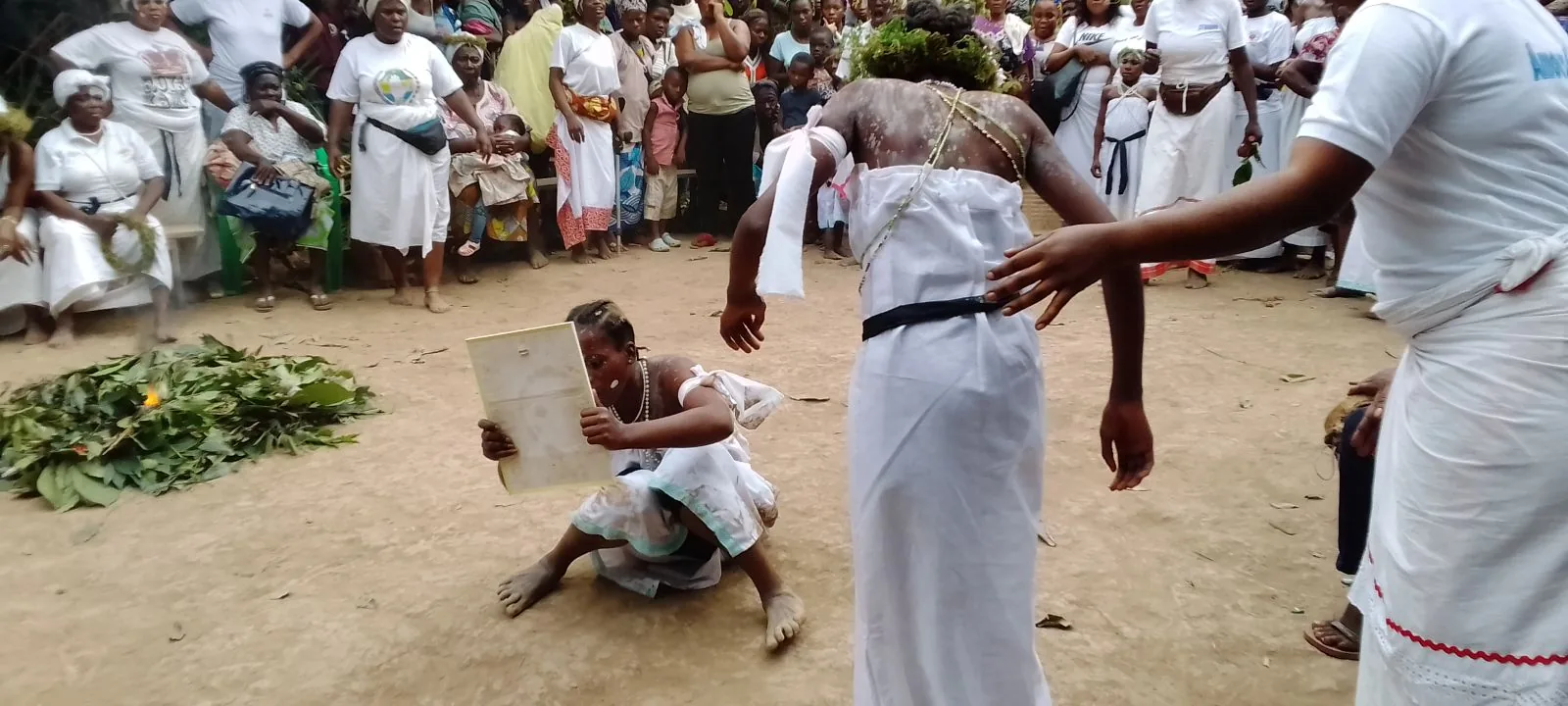
Zones and rebound: center or edge, hand angle and rebound determine quality. Avoid tense fingers, flat strokes or a bass that slaps without resonance.
- Key idea: identifiable sounds (low/mid/high) make the rhythm readable.
- Common mistakes: inconsistent volume, lack of rebound, tense fingers.
“Clear sounds are the best tool for leading collective energy.”
Establishing traditional rhythms that make people dance
Traditional rhythms establish a clear backbone that draws out collective movement.
How a rhythm engages: a stable structure, recognizable accents and constant energy create a readable path. These elements make the music accessible and trigger audience involvement.
Dununba: power in 12/8
Dununba pulses in 12/8. Its power calls for collective effort. Famoudou Konate spread this pattern through recordings that show its impact on a crowd.
Place marked supports and keep the power controlled. Avoid speeding up unintentionally.
Sangban: polyrhythm and dialogue
Sangban works in dialogue with the dunduns. It requires listening and precision. Do not overload the pattern; leave space for the interlocking of the other percussion parts.
Kenkeni: accompaniment engine
Kenkeni often holds a steady 4/4. It creates a solid base. This engine makes it easier for the soloist to improvise without losing the dancers.
Choose according to style and level
- Beginners: simple cues, clear beat.
- Traditional style: respect the original cycles (Guinea, Mali, Cote d’Ivoire).
- Fusion: adapt accents and density for creativity, without blurring the pulse.
| Rhythm | Time signature | Origin | Role |
|---|---|---|---|
| Dununba | 12/8 | Guinea | Powerful supports, collective energy |
| Sangban | Polyrhythm | Mali | Dialogue, coordination |
| Kenkeni | 4/4 | Cote d’Ivoire | Engine, improvisation base |
“A good rhythm choice makes the audience more receptive and supports the narrative of the performance.”
Playing in a group: rhythmic communication and synchronization with dancers
When musicians speak the same rhythmic language, transitions become clear. In a group, cohesion determines whether the steps are readable: if everyone follows their own pulse, dancers instantly lose their bearings.
Signals, “eye contact” and clean transitions
Adopt simple signals: a look, a nod, a shoulder gesture or a short rhythmic call. “Eye contact” confirms the intention before executing a break.
Transition method: announce briefly, execute a very short break, mark the “1” clearly on the return, then stabilize the tempo.
Call-and-response: a conversation between percussion, movement and audience
Call-and-response organizes the dialogue: soloist’s phrase -> group response -> dancers’ response -> audience reaction. This chain creates an interactive dynamic and strengthens collective expression.
Role distribution: soloist, accompaniments and sound space
Clarify roles before the performance: accompaniment = stability; soloist = controlled variations. Define who handles lows, mids and highs to avoid clutter.
In a French context (workshops, jams, events), set simple communication rules and test them in rehearsal. To round this out, see classes and resources suited to groups.
“Synchronization is a shared language: without it, movement fades away.”
Practical exercises to progress and get people moving without forcing
Coordination and metronome: work for 5 minutes at 60 BPM. Isolate the bass, tone and slap. Repeat each sound, then link them while keeping the cycle’s “1.”
Hand coordination
Play short patterns with alternating hands. Lock the tempo to the metronome before adding speed or volume.
Rolls and rolled strokes
Practice two approaches: fingers/wrists for finesse; palm/fingers for sound mass. Look for cascading fluidity without losing the pulse.
Guided improvisation
Set one simple rule: change one parameter at a time (accent OR intensity). Lay down a question phrase, wait for the response and return to the “1.” This lets you explore creativity and expression without disorganizing the base.
- Routine: warm-up, precision, gradual build.
- Goal: transmit emotion through regularity, not brute force.
“Effectiveness comes from a clear pulse; technique serves passion.”
Choosing and tuning your djembe for projection suited to dance
Choosing the right instrument influences projection, clarity of cues and long-term comfort.
Size, wood and skin: sound impact and comfort
Choose a solid lenke or mahogany shell if you want power and sustain. These woods strengthen the bass and projection.
Goat skins offer a good balance between bass and slap. They remain the majority choice in traditional making and give a responsive tone.
Tuning and maintenance: stability and clear strokes
Tune gradually and check tension according to the season. A sudden rise can break the skin or unbalance the shell.
Check the ropes, protect the skin from humidity and tighten in stages to keep strokes clean and free of muddy overtones.
Practicing in France without disturbing others: practical solutions
In an apartment, use silent pads or a thick rug. Set up away from shared walls and avoid sensitive time slots.
Reminder: an overly muted drum loses its cues. Good projection helps the troupe and the music remain intelligible.
| Criterion | Recommended option | Impact |
|---|---|---|
| Size | Medium to large (depending on body type) | Stronger projection and bass |
| Wood | Lenke / mahogany | Sustain, controlled power |
| Skin | Goat | Balance between bass/tone/slap |
| Damping | Silent pad + rug | Less disturbance in an apartment |
“Stable tuning and an instrument suited to the context keep the pulse readable and serve the group’s passion.”
Conclusion
As a summary, remember the principles that make music readable and alive. Play first to be understood: clear pulse, clear cues, simple intention.
The progression covered in this article moves from body-rhythm synergy to cultural heritage, through tempo, posture, timbres, rhythms, group playing, exercises and tuning.
African culture offers a rhythmic and narrative framework. It helps tell stories, transmit emotions and express creativity with accuracy.
Practice responsibly: listen to the dancers, adjust the level and prioritize clarity. To deepen your understanding of transmission, see the transmission process.
The djembe remains a tool for artistic expression and social connection, capable of telling stories and moving people beyond words.