

Mastering the art of tuning is essential for every musician, whether beginner or experienced. A properly adjusted instrument guarantees pure, harmonious tones, whatever the musical style.
The Celtic harp requires particular attention. Its strings must be checked regularly to keep them in tune. This directly influences playing quality and adaptability to different repertoires.
Whether you play solo or in a group, taking the time to tune it correctly makes all the difference. Artists such as Alan Stivell show the importance of this practice for reaching a high level.
This article guides you step by step toward an optimal result, without complications.
Introduction to Tuning the Celtic Harp
The Celtic harp, with its unique acoustic charm, requires careful attention when tuning. Unlike other instruments, its strings react quickly to environmental changes.
The Specific Features of the Celtic Harp
Unlike pedal harps, it uses manual levers to alter notes. This simplified mechanism takes some time to get used to, but offers great expressiveness.
Variations in temperature or humidity change string tension. A difference of just a few degrees can upset the harmony, especially in a stage setting.
Why Regular Tuning Is Essential
Poor tuning alters the sound and wears out the strings prematurely. Sound beats, which indicate tuning accuracy, then become noticeable.
Professionals, such as those who play electric harps, emphasize this point. Precision directly influences the musical level and the durability of the instrument.
Preparing Your Equipment to Tune Your Harp
Good tuning begins with careful preparation of the equipment. The tools you choose directly influence the precision and durability of the strings.
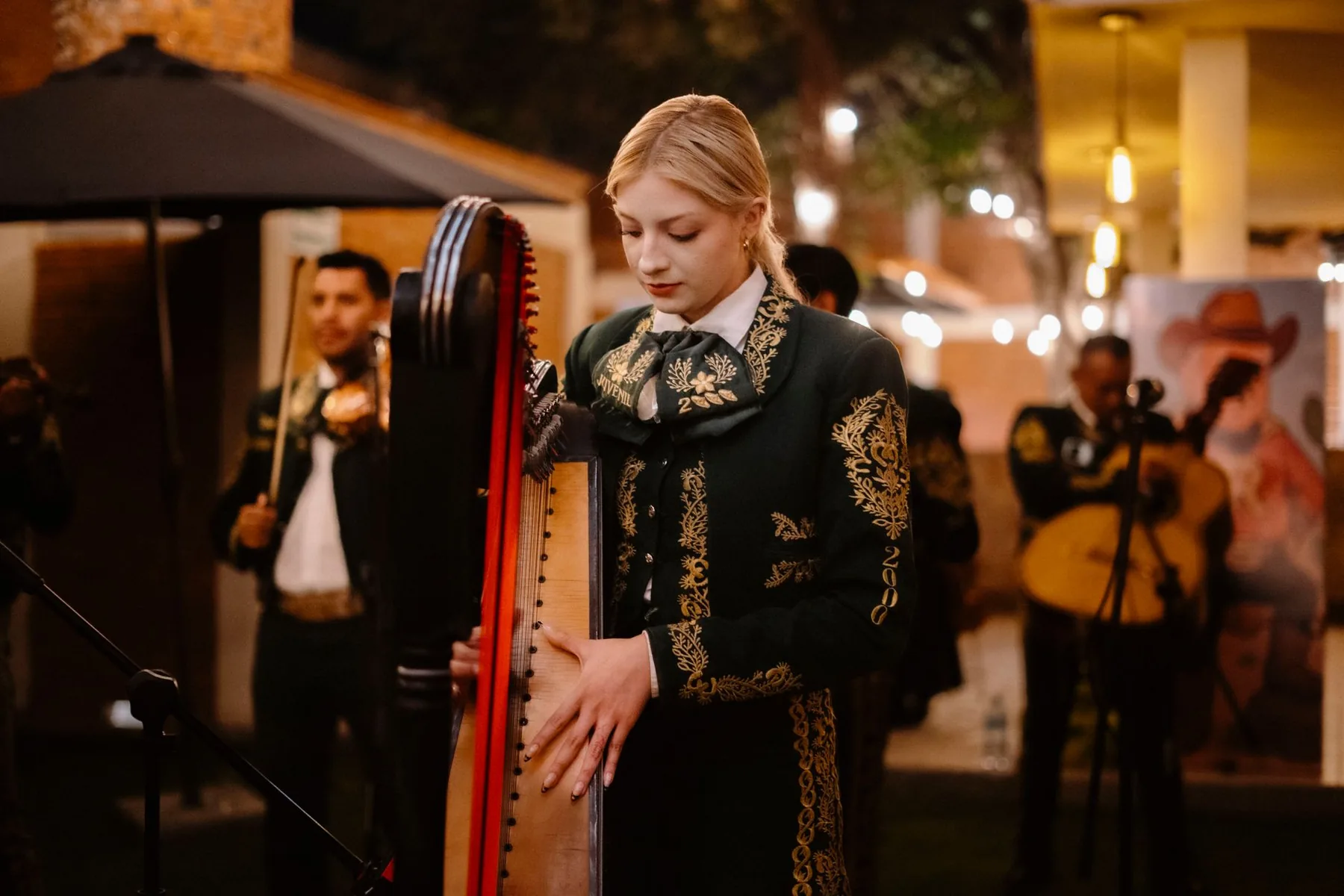
The Necessary Tools: Tuning Key and Tuner
The tuning key is essential for adjusting the tuning pins. Choose an ergonomic model to save time and avoid unnecessary effort.
Electronic tuners, often criticized, can be effective if they are good quality. One example: professional models with a built-in microphone for noisy environments.
Choosing Between Electronic Tuning and Tuning by Ear
Tuning by ear develops musical listening. Use a tuning fork on the soundboard to obtain a reference A at 440 Hz.
For beginners, an electronic tuner makes the task easier. But to reach an advanced level, mastering both methods is ideal.
Turn the pins clockwise to raise the note, and counterclockwise to lower it. This technique preserves the tension of the strings.
Understanding the Lever and Accidental System
Accidentals on a Celtic harp rely on an ingenious lever mechanism. Unlike pedal models, these manual systems offer flexibility suited to traditional styles.
How Camac Levers Work
Camac levers use a color code (white/blue/red) to indicate semitones. Each lever acts on a specific string, changing its tension to produce quick accidentals.
A common problem is stiffness in the pivots. A mechanical solution is to apply paraffin oil, while avoiding WD-40, which corrodes parts.
Difference from Pedal Harps
Pedal harps allow real-time tuning changes. However, their mechanical complexity makes them less suited to a traditional acoustic setting.
| Criterion | Levers | Pedals |
|---|---|---|
| Speed of alteration | Moderate | Immediate |
| Maintenance | Rivets to check | Delicate cabling |
| Price | Affordable | High |
Inspiring example: Alan Stivell adapted South American techniques to optimize his levers. His approach shows the importance of preventive maintenance.
The Step-by-Step Method for Tuning Your Celtic Harp
Accurate tuning relies on a clear method and reliable sound references. Follow these steps for a harmonious result, even without advanced experience.
Step 1: Find the Reference Note (A 440 Hz)
Start by playing A 440 Hz using a tuning fork or tuner. Place it on the soundboard to amplify the sound. This note serves as the basis for all the others.
Tip: use a tuning app if the tuning fork lacks precision. Check that the needle stays centered.
Step 2: Tune the Fifths and Fourths
Starting from A, tune the fifths (C-G) and fourths (G-C) while listening for interharmonic beats. The less noticeable they are, the more accurate the interval is.
Pay attention to the low strings: adjust their tension proportionally to avoid distortion.
Step 3: Carry the Tuning Across the Other Octaves
Use natural harmonics to save time. Play a note an octave higher while lightly touching the string halfway along its length.
Verification method: compare major thirds (C-E) to detect any remaining discrepancies.
| Method | Advantage | Risk |
|---|---|---|
| Harmonics | Fast | Errors in the bass strings |
| Intervals | Precise | Requires experience |
Concrete example: professionals combine both approaches to find a balance between speed and accuracy.
Traditional Tunings to Know
Exploring traditional tunings opens up a world of rich, historic sounds. These settings, inspired by Celtic bards, offer unique keys suited to various pieces.

E-flat Tuning with Levers Down
E flat is favored for instrumental ensembles. Its characteristics:
- A softer sound, ideal for meditative compositions
- Compatibility with brass instruments (for example: B-flat trumpets)
- Historical use in Scottish modes
Tip: for metal rock, transpose by a semitone with the levers. This avoids retuning the entire instrument.
C Tuning and Its Advantages
C major, a diatonic tuning, simplifies the performance of traditional pieces. Its strengths:
- No sharps or flats to manage
- Suited to beginners and narrative music
- The basis of Irish modes (for example: Port Ui Mhuirgheasa)
The Sumerian system of tuning by pure fifths (+90 cents per lever) can be applied here for historical accuracy.
Solving Common Tuning Problems
Even with impeccable technique, certain problems can arise during tuning. Quickly identifying these issues avoids long, frustrating adjustments.

Difficult Levers: Solutions
Stiff levers are common on older or poorly maintained harps. To remedy this:
- Partially disassemble the mechanism according to the Camac model
- Clean the pivots with a lightly oiled microfiber cloth
- Avoid abrasive products that damage the rivets
“A lever that resists may be hiding a misalignment of the metal plates. A quick visual check is often enough to prevent premature wear.”
What Should You Do When a String Will Not Stay in Tune?
Several factors explain this common case:
- Check the condition of the string (cracks, discoloration)
- Check the tuning pin (optimal tightening at 45 degrees of rotation)
- Inspect the anchor point on the soundboard
| Problem | Immediate solution | Long-term solution |
|---|---|---|
| String slipping | Temporary octave tuning | Replacement with a carbon string |
| Pin turning | Application of rosin | Reaming the pin hole again |
In concert, one trick is to tune slightly higher to compensate for gradual slackening. This method saves time between two pieces.
Adapting Tuning to Different Pieces
Playing different musical styles requires adapting the tuning. Traditional, classical, or contemporary pieces call for specific settings to respect their character.

Changing Key Without Retuning Completely
The levers allow quick accidentals. With 168 available modes, such as Phrygian, you can modulate a key in just a few seconds.
The Panoramodes technique smooths out transitions. It combines flats and sharps to avoid breaks in the sound.
Using Accidentals While Playing
Micro-intervals, drawn from the Icelandic repertoire, enrich pieces. They require precise control of accidentals.
Example in progressive rock:
- Modulate between the cycle of fourths and Spanish sequences
- Draw inspiration from Indian systems (Melakarta)
- Optimize the levers for quick changes
“A good musician thinks of tuning the way a painter thinks of a palette. Every shade has its place in the final work.”
Advanced Tips for Optimal Tuning
To obtain a perfect sound, maintenance and environmental conditions play a key role. Harps are sensitive to outside variations, and regular maintenance extends their lifespan.
Maintain Your Levers Regularly
The levers require special attention. Monthly cleaning prevents dust buildup and ensures smooth operation.
Use a slightly damp microfiber cloth for metal surfaces. For the pivots, one drop of paraffin oil is enough.
“A well-maintained lever reduces tuning time and improves accuracy.”
The Importance of Temperature and Humidity
Temperature and humidity directly influence string tension. A digital hygrometer helps monitor these parameters.
Tips for optimal control:
- Store spare strings in a humidified case.
- Avoid prolonged exposure to sunlight or drafts.
- Tune the instrument after 30 minutes of acclimatization in a new room.
These practices maintain a consistent sound level, even on tour.
Conclusion: Mastering the Art of Tuning
Getting to know your instrument takes patience and regular practice. Each tuning session refines the ear and strengthens musical sensitivity.
Start with simple settings, then explore alternative modes. Workshops with experts such as Morgan de Glencoe help you progress toward a higher level.
Developing relative pitch is crucial. Listen closely to intervals and harmonics to gain precision.
In music, experimentation opens new horizons. Try microtonal tunings to obtain original sounds.
Take the time to practice. Good tuning turns every note into pure emotion.