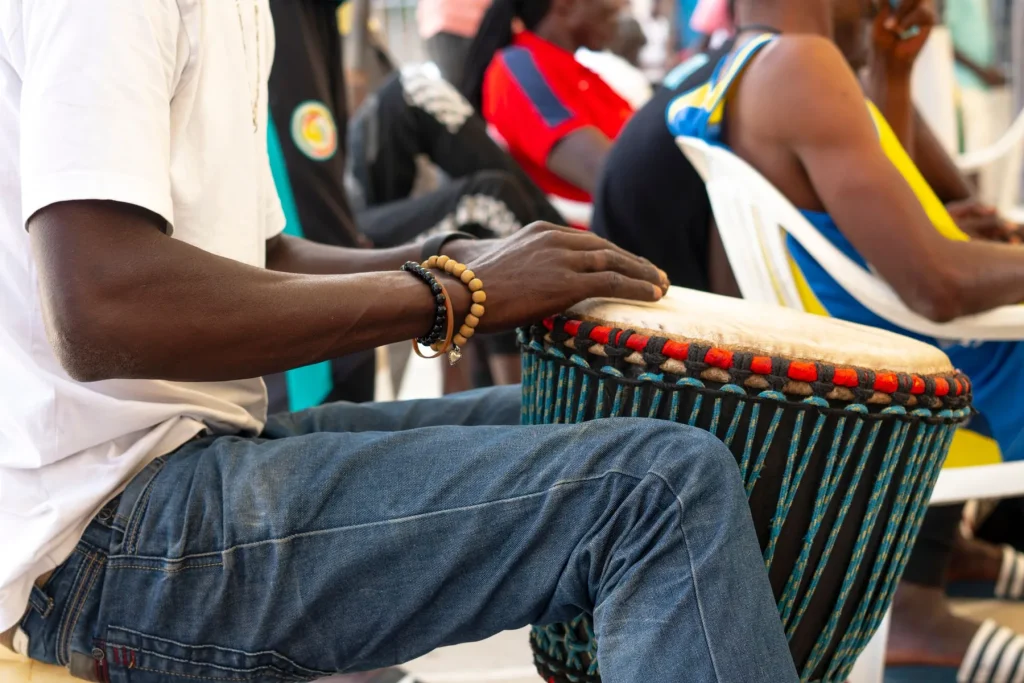
Practical buying guide for choosing your drum in France today. The djembe has traveled from West African villages to stages all over the world. Its range of sizes, woods, skins and tensions influences the sound, projection and playing feel.
Goal: help every reader find the right instrument for their use — beginner, child, workshop or stage — and for their expectations in bass, tones, slaps and projection.
The cost does not depend only on a brand. It reflects a set of concrete criteria: materials, construction, tuning, finishes, accessories and delivery. Here, we compare what really matters, such as the skin, the wood and the tension.
The rest of the article gives price-range benchmarks, variation factors, technical criteria for sound, budgets by use and smart buying advice. Also read this page for current ranges and practical examples: estimate prices.
Understanding djembe price ranges in France today
On the French market, price ranges quickly reveal the profile of an instrument and its intended use.
Entry-level and small formats: what to expect under €70
Under €70, you mostly find small formats (7–8″) and models designed for initiation or school use. These products often use synthetic materials. They remain stable in tuning and are lightweight for children.
Examples: Meinl Junior €52, Toca 7″ €55, Nino ADJ4-XS €62, Terre Carved Dragon €68.
Be careful with very low-price offers seen on some sites at around €30–40: they may be decorative or not very sturdy. Always check the size, skin and product sheet.
Versatile mid-range: benchmarks around €90 to €150
The €90–150 zone often corresponds to a first real djembe for adults. You gain diameter, projection and response on basses, tones and slaps.
These models offer a better value-for-money ratio and improved tension stability for workshops or regular practice.
High-end and character pieces: when the budget exceeds €200
Beyond €200, you enter craftsmanship: selected solid wood, careful finishes and greater power.
Concrete benchmarks: Meinl JD10DA / JD10BW €209, sets around €215 with a bag.
Practical point: stock influences the price. A handcrafted instrument may be a one-off piece and involve delays. Use these ranges to shortlist three models, then refine your choice with the technical criteria in the following sections.
To compare references and estimate current prices, see this page: estimate prices.
Price of a djembe: what makes the budget vary
The origin and manufacturing method often explain the price gap between two visually similar drums.
Craftsmanship vs industrial series
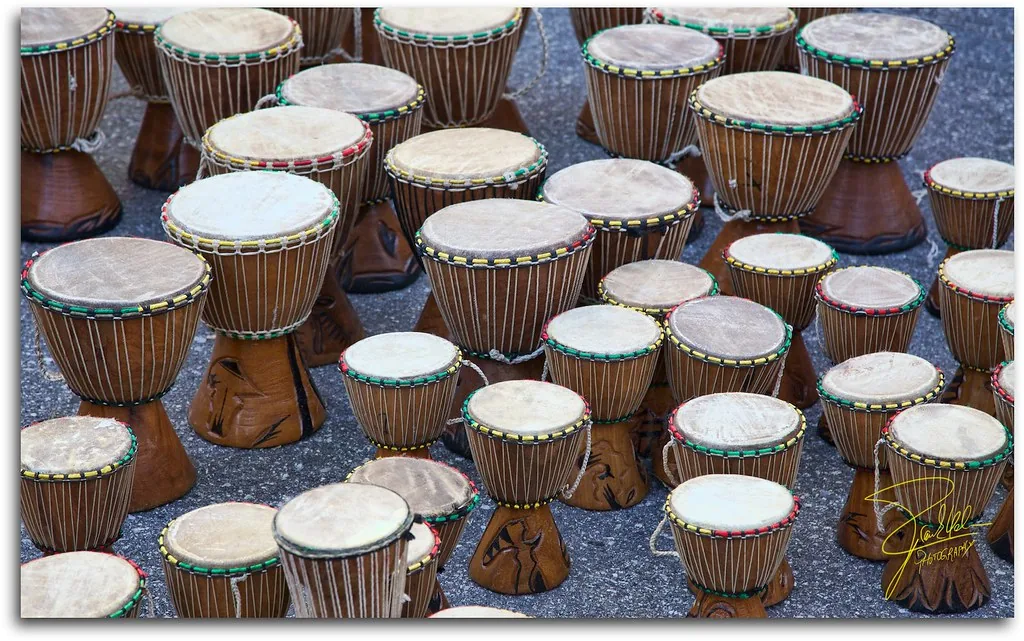
Handmade pieces often come from West Africa. They are carved from a single block of wood, mounted with goatskin and rope tension. This approach takes time, wood selection and carving work.
The extra cost is explained by uniqueness: each instrument has its own resonance. This improves sound quality and dynamic response, but brings natural variation.
Industrial manufacturing offers more consistency. It sometimes uses synthetic heads to stabilize tuning. This choice suits beginners and repeated workshops well.
What the price includes — watch the total
A displayed price does not always show the final amount. Transport, packaging, insurance and return costs can increase the total.
- Bag included: immediate gain (e.g. a set with bag around €215).
- Delivery: sometimes an extra €10–15 depending on the site.
- Stock and availability: an in-stock piece can go quickly; a handcrafted order may take weeks.
“Express delivery and appreciated after-sales service are useful, but watch for shipping costs shown at the end of checkout.”
| Type | Key advantage | Impact on price |
|---|---|---|
| Craft (handmade) | Unique sound, selected wood | High (uniqueness, delay) |
| Industrial | Consistency, stability | Medium to low |
| Set with bag | Ready to play, protection | More cost-effective if included |
| Logistics options | Packaging, insurance, delivery | Can greatly increase the total |
In practice, always compare the displayed price with the final price and check whether a bag is included. To estimate prices, review in-stock offers and anticipate fees.
The next section details the technical criteria (wood, skin, tension) that explain sound and price differences.
The criteria that raise or lower sound quality and value
Choosing means comparing. Several technical elements change an instrument’s warmth, projection and longevity. Here are the points to check when evaluating quality and cost.
The shell
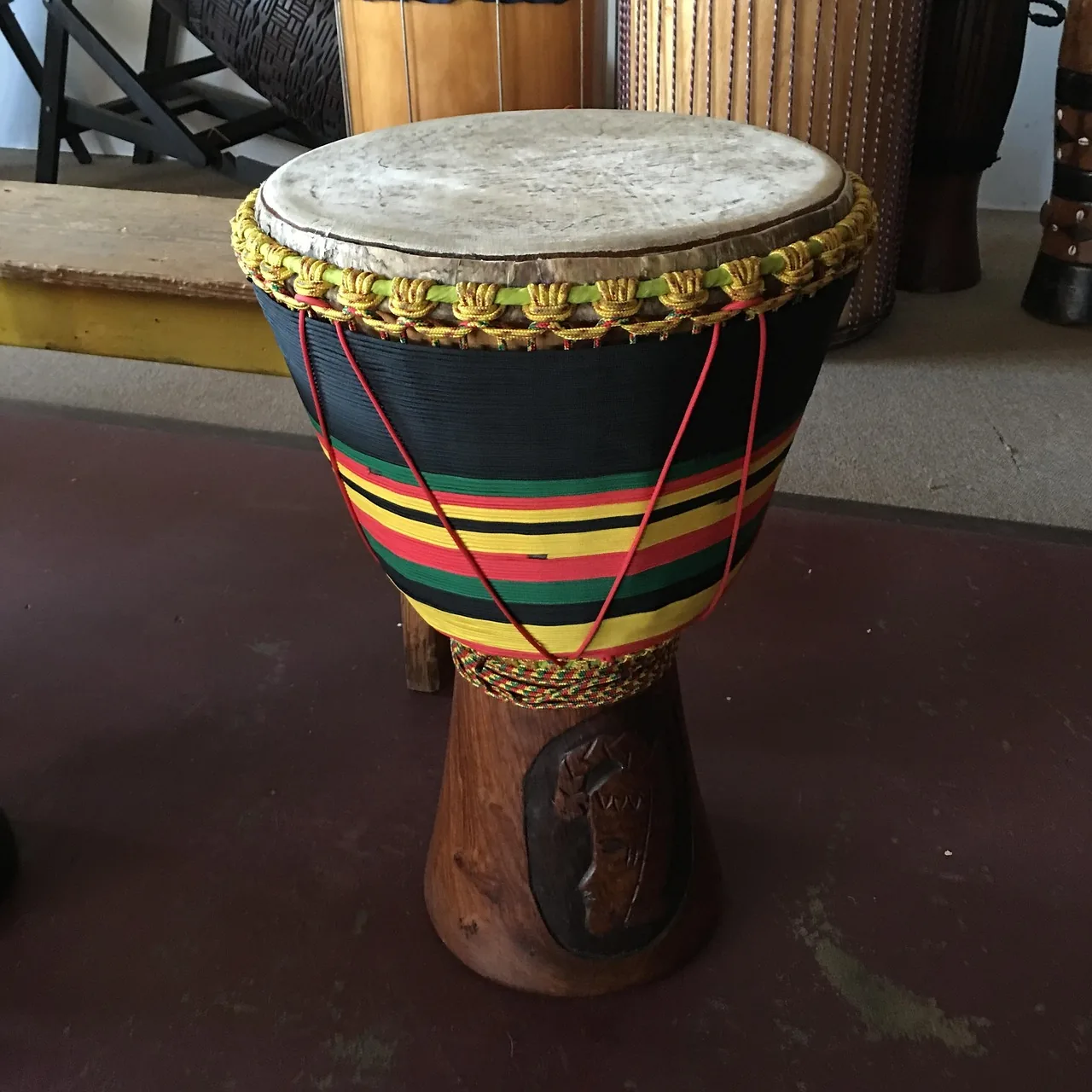
Solid wood: mahogany or gmelina bring warmth, deep bass and harmonic richness. These qualities affect the price, because the material and carving require selection and machining.
Synthetic materials: ABS or fiber offer stability, lightness and easy transport. They suit schools and travel.
The skin
Goatskin gives a lively grain and better dynamics. Natural skins require care and retensioning.
Synthetic heads remain consistent and durable outdoors. They limit tuning adjustments.
Size, tension and finish
Size influences bass and projection: 7–8″ for initiation, 10–12″ for versatility, more than 13″ for stage use. Tuning by rope and cord (e.g. 5 mm) determines clarity.
Check the rope margin for retensioning, knot stability and polished edges for comfort.
Reference sheet
Medium djembe: diameter 25–26.5 cm; height 52–56 cm; weight 3.5–5.5 kg; gmelina wood; fine goatskin; 5 mm cord.
- Quality signs: stable knots, rope margin, skin without visible veins.
- Customer feedback: clear sound, good value for money, responsive after-sales service and fast delivery.
To complete your comparison, also see everything about the tongue drum.
What budget should you plan for your use: beginner, child, workshop, stage
Depending on the intended use, the same price can correspond to very different instruments.
For children and schools: compact, light and resistant
Recommended models: Meinl Junior, Toca 7″. These synthetic shells and artificial heads are easy to carry.
Advantage: stability in the classroom and low sensitivity to climate variations.
For demanding beginners: aim under €120
Look for a real musical drum, with a versatile diameter and, if possible, a natural skin.
Useful benchmarks: Afroton AD 006 (~€57), Thomann BN23 (~€66) and Toca Street 10″ (~€119).
For musicians and performances: justify ~€200+
For stage and studio, power, tension stability and dynamics are worth the investment.
Examples: Meinl Jumbo €209 or sets around €215 including a bag for protection and transport.
Accessories and smart buying
Bag: essential for lifespan and transport. A pack with a bag is often cheaper than buying separately.
Check stock, compare on a reliable website and include delivery costs in the total.
| Use | Typical models | Key strength |
|---|---|---|
| Children / schools | Meinl Junior, Toca 7″ | Sturdiness, lightness |
| Beginners | Afroton AD 006, Thomann BN23, Toca 10″ | Better value for money |
| Musicians / stage | Meinl Jumbo, craft sets | Projection, stability, reliability |
“Always check whether the bag is included and review shipping costs before confirming the purchase.”
Conclusion
The right investment is seen above all in the instrument’s musicality and stability.
In summary, here are the practical benchmarks: under €70 for initiation and small formats, €90–150 for a versatile model, €200+ for a high-performing piece. Quality comes from the wood, the skin and the tension.
Aim for a sound that clearly distinguishes bass, tone and slap. Consider comfort, weight and edges so you can play for a long time.
Compare 2–3 models, check the specifications and additional costs (delivery, bag). For more information and detailed ranges, see this page: how much a djembe costs.
Choose the object that makes you want to play often, work on your rhythms and progress in percussion.