

Practical guide for anyone who wants to make a good purchase in France. This short article sets out a simple, repeatable framework. It helps reduce unpleasant surprises on the secondhand market.
The idea: offer a clear checklist of ten items — wood, base, head, ropes, sound, origin, price, seller, negotiation, care — to follow before paying.
The used market often offers better workmanship. It also carries risks: a fragile head, a poorly maintained instrument, or one that has been neglected. Inspecting the shell, membrane, and ropes remains essential.
This guide is for beginners, musicians getting back into playing, and percussionists who want to upgrade without buying new. Read the article once, then use each point when meeting the seller.
Definition of a good instrument: solid, adjustable, with a clear sound (bass, tone, slap) and a coherent provenance. Then follow the practical sequence: need → places to buy → price → inspection → sound test → authentication → transaction → negotiation → care.
Why choose a used djembe rather than a new instrument
Access better quality at a lower price. With the same budget, secondhand buying often makes it possible to purchase a model made from better wood or with a better finish. For example, a handmade drum advertised at €300–500 new may be found for around €80–180 depending on its condition.
An instrument that is already “broken in” for stable sound
Breaking in stabilizes the wood fibers and the head. This makes the sound more predictable than on a new instrument that is still stiff.
A responsible choice, with a few precautions
Choosing secondhand extends the life of a drum and reduces demand for new resources. A notable ecological advantage.
- Economic advantage: better possible quality at the same price.
- Market benchmark: handmade models are often much cheaper secondhand.
- Nuance: a worn head or ropes that need replacing can cancel out the savings.
In short, buying used offers real advantages — quality, price, and durability — but it requires an inspection and a sound test before closing the deal. To prepare for your trial, also consult resources for beginners.
Define your needs before buying
Defining your playing goal makes the final choice much easier. Start by clarifying whether you want to learn the basics, play regularly at home, join a group, or aim for the stage.
Intended use
For a beginner, prioritize an instrument that is easy to hold and tune. For regular practice, choose comfort and stability.
If the goal is the stage, look for power and projection. In a group, tonal consistency with the other instruments is important.
Transport and size
Size affects ergonomics, volume, and hand fatigue. A large model gives more bass and projection.
If you travel often, prioritize a compromise between bulk and weight, and plan for a suitable bag.
- Practical criterion: a robust, adjustable instrument for intensive use.
- Progression: anticipate your practice time; it is better to choose a slightly higher-grade option if the condition allows.
Sound quality also depends on how to play: posture, gestures, and training. For ideas on where to find a good model, consult this useful resource: where to buy an instrument.
Where to buy a djembe in France without getting it wrong
Each sales channel offers a different balance between safety, choice, and advice. Below is an overview of common channels to help you decide where to look according to your risk level and needs.
Specialist online stores
Advantage: carefully selected ranges, detailed product pages, and customer service. Many offer a minimum 14-day withdrawal period, useful for testing the instrument at home.
Concrete example: Instruments du Monde lists more than 50 djembes, which makes comparison easier.
Generalist websites
Prices are often attractive, but caution is required regarding quality and the seller. Check return conditions, the seller’s rating, and reviews.
Classified ads / secondhand market
Good deals are possible, but with few guarantees. Go in person to test and inspect the condition in full light.
Music stores
Major benefit: you can try and compare immediately. The choice may be limited depending on the store size and city.
Craft markets and festivals
Cultural atmosphere and handmade instruments. Make the most of conversations with makers, but keep the same inspection discipline despite any impulse buy.
| Channel | Risk level | Choice | Support |
|---|---|---|---|
| Specialist online stores | Low | High | Good (product pages, reviews, support) |
| Generalist websites | Medium | Medium | Limited (check seller) |
| Classified ads | High | Variable | Low (personal trial recommended) |
| Stores | Low | Variable | Good (in-store trial) |
| Markets / festivals | Medium | Special | Variable (meetings with craftspeople) |
Assess the price of a used djembe and read the market
Understanding market pricing helps you spot a genuinely good deal. Do not focus only on the label: compare the instrument’s origin, manufacture, and condition.
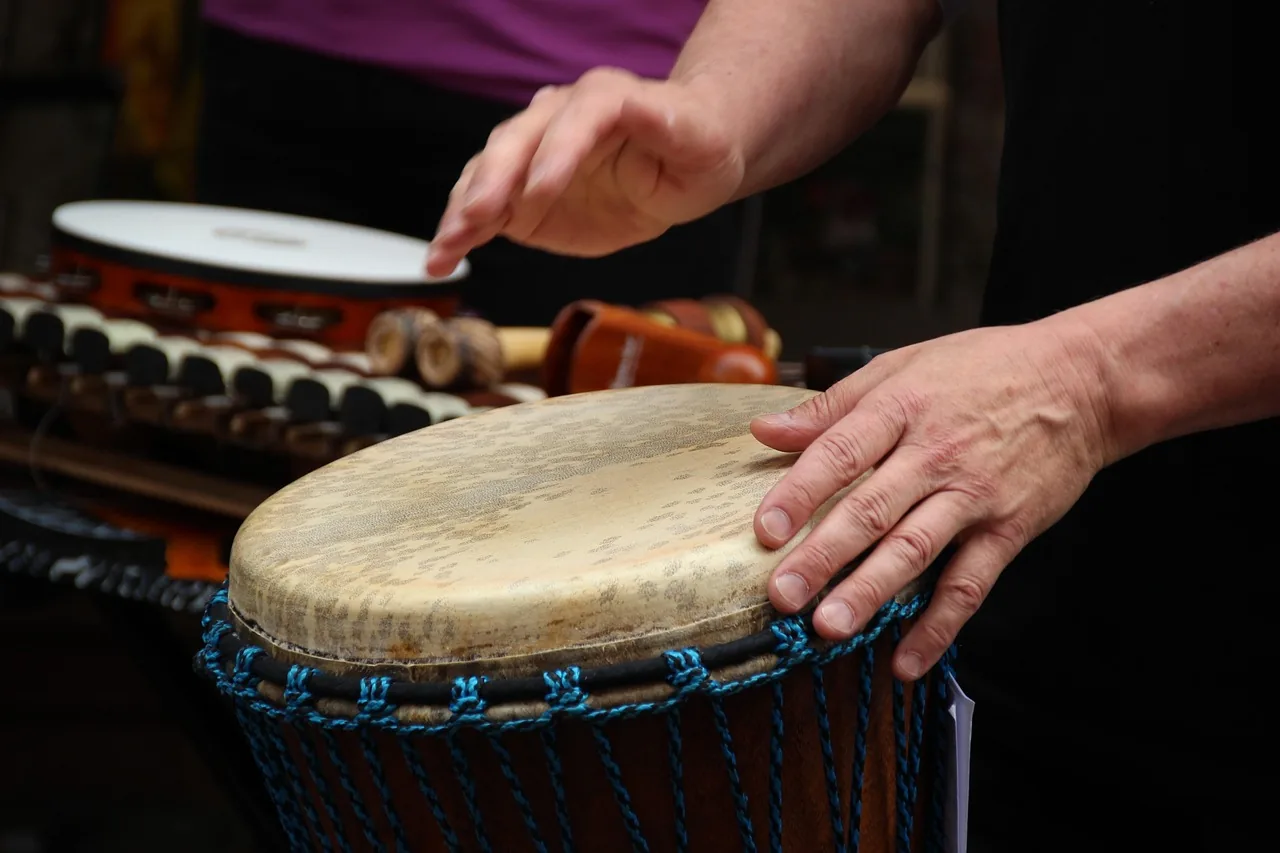
Indicative ranges: for a handmade Malian model, expect €300–500 new versus roughly €80–180 secondhand depending on condition. These figures are benchmarks, not absolute rules.
What makes the price vary
- Wood species: some woods resonate better and are worth more.
- Head quality and rope condition: a worn head sharply reduces value.
- Finish and sound stability: fine carving and stable sound increase the price.
Anticipate the total cost. Replacing a head often costs between €40 and €80 depending on size. Add rope, a bag, and labor if necessary.
Be wary of instruments stored for years: loss of tension, a weakened head, and a base affected by humidity should be reflected in the negotiation.
Inspecting the shell and wood: solidity, species, and defects
Start by examining the shell as you would check the frame of a house. The shell is the structure: a drum can be retensioned, but a weakened shell creates a lasting problem.
Sought-after woods. Look for lenke, often called the “king” wood for its resonance and projection, and African mahogany, which offers warmth and softness. These woods influence sound quality.
Methodical visual inspection:
- Turn the instrument and look against the light to detect hairline cracks.
- Run your hand along the shell to feel bumps, hollows, or irregularities in the carving.
- Check the base: it is the area most exposed to knocks and humidity.
Repairs: a crack cleanly filled with epoxy resin can be acceptable. Avoid staples, visible glue, or crude patches: these are signs of DIY repairs that justify strong negotiation or walking away.
Finally, a one-piece shell and regular carving are indicators of good workmanship and longevity.
Checking the head: wear, tension, and tear risks
The head directly shapes the instrument’s sound personality. It determines the response of basses, tones, and slaps. A quick examination helps avoid a regrettable purchase.
Normal signs of wear: playing patina and even softening. These marks may remain acceptable if the membrane shows no structural damage.
Distinguishing wear from humidity
Look for dark stains, odor, or soft areas: these are signs of humidity. “Spiderweb” cracks or pinholes indicate a real problem. A dampened head can be fragile and tear quickly.
Simple tests to perform
Press the center: the membrane should flex slightly, then resist. Pinch the edge: feel the elasticity. Listen: a clean slap indicates good tension. Too tight, the head gives a metallic sound; too loose, it produces muffled sounds.
“A healthy head is often more decisive for sound quality than color or decoration.”
Replacement: holes or cracks mean the membrane must be changed. Budget €40–80 depending on size; this cost must be included in the purchase negotiation. Ask the seller for information about storage, exposure to humidity, playing frequency, and the date of the last head change.
| Signal | Interpretation | Recommended action | Urgency |
|---|---|---|---|
| Playing patina | Normal wear | Test the tension, accept if stable | Medium |
| Dark stains / odor | Humidity | Ask about history, avoid if there are soft areas | High |
| Cracks / pinholes | Structural fatigue | Replacement required (€40–80) | Very high |
| Head too tight | Metallic sound | Test whether adjustment is possible | Variable |
Check ropes, knots, and the tensioning system
The quality of the rope determines an instrument’s ability to stay in tune and sound good. Without a healthy tensioning system, even a perfect shell will not give the expected result.
Identify healthy ropework
Check the condition of the strands: no fraying, no excessive abrasion, and no patched areas. Check the regularity of the tension knots; they should be clean and aligned.
Traditional vs modern ropes
Traditional ropes: natural fibers, appearance, and gradual hold. Maintenance is minimal, but sensitivity to humidity is higher.
Modern ropes: nylon or polypropylene, more resistant and stable. They may feel less “organic” to the touch, but they reduce maintenance.
Adjustment capacity and warning signs
- Quantitative benchmark: professional instruments often have 24–30 strands depending on size; incomplete ropework should be a warning sign.
- Make sure the tension can still be increased or decreased without forcing.
- Pay attention to time: a drum that has remained slack for a long period may have a deformed head that limits tuning.
Ropework that needs redoing is a real cost: use it as leverage during negotiation.
Test the sound before paying
A tactile examination is worth little without attentive listening: the sound reveals the instrument’s real condition. This test is non-negotiable, even for a model that looks very well cared for.
The fundamental sounds to obtain
Bass: palm in the center, round and deep sound. Tone: fingers between center and edge, clear, dry note. Slap: edge, dry and percussive stroke.
Spotting defects and unwanted overtones
Listen for separation between registers, resonance duration, and overall sound coherence. Beware of abnormal shell vibrations, rope noises, and unwanted overtones. Lack of projection often points to a problem with the head, ropework, or shell.
Discreet test techniques
Start with light strokes and gradually increase. To limit volume at a flea market, place your non-striking hand on the head to dampen the sound and feel the vibrations. Musicians quickly recognize whether the instrument “responds” under the fingers.
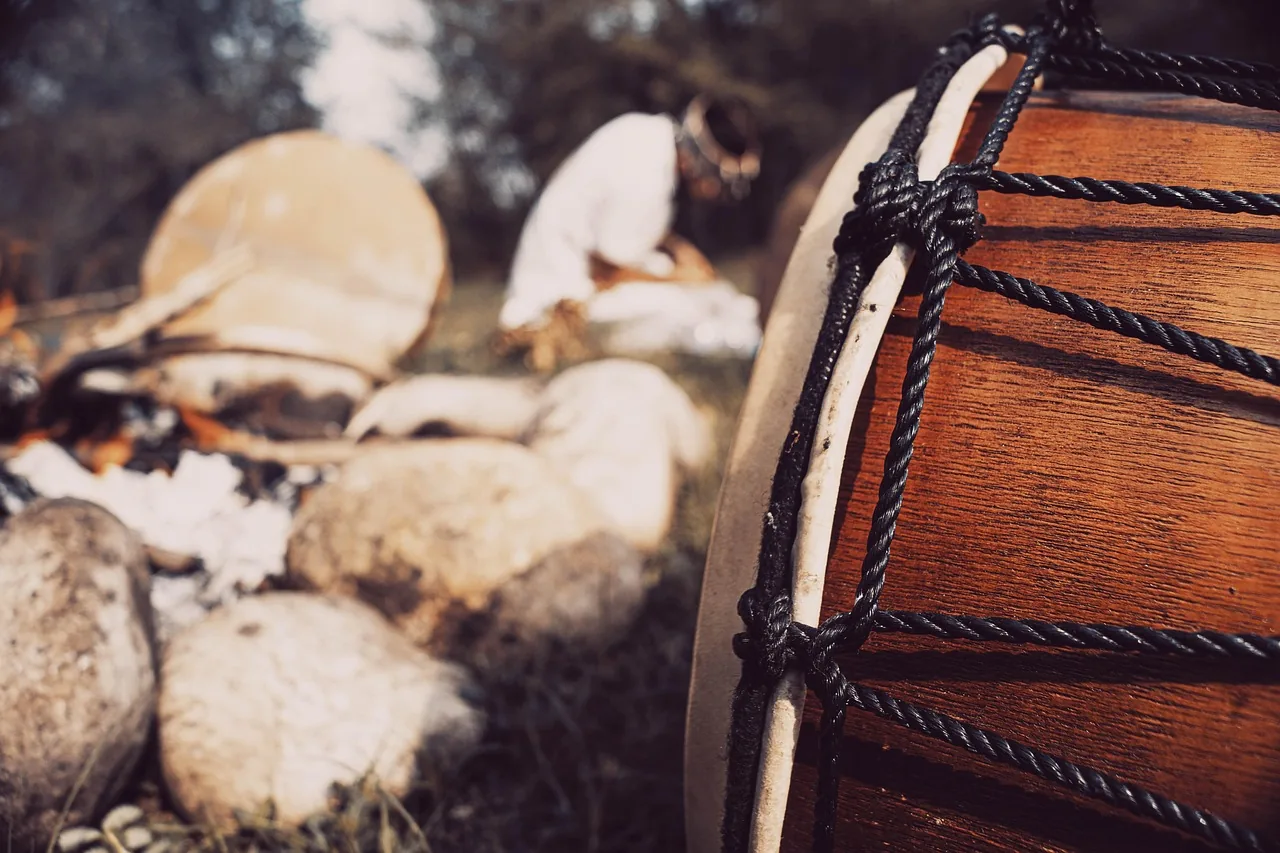
Connect sound defects to the previous sections: if the slap is weak, check the head; if the resonance is short, inspect the shell; if mechanical noises appear, check the ropework. To compare models and places to buy, also consult where to buy an instrument.
Authenticate the origin and avoid unpleasant surprises
Knowing where an instrument comes from often helps predict its durability and tone.
Why origin matters: it affects wood density, carving style, and sound coherence. A credible provenance or story often explains workmanship quality and longevity.
Look for visual signs of a traditional West African model: goblet silhouette, narrower foot, and gradual flare. Harmonious proportions and slightly irregular carving are often signs of craftsmanship.
Distinguish handmade, semi-industrial, and mass-produced instruments: excessive regularity, standardized materials, and identical finishes reveal series production. Clean ropework and knots often indicate careful manufacture.
Ask the approximate age, usage (frequency), maintenance (adjustments, cleaning), and storage location (garage, cellar, dry place). Many instruments imported 15 to 20 years ago are still circulating; the history helps estimate remaining wear.
Cross-check story and condition: compare the answers with visible signs (head, ropes, base). If origin is emphasized without proof, stay cautious. If the instrument sounds good and is solid, quality matters more than the label.
| Type | Visual clues | Materials | Advantage |
|---|---|---|---|
| Handmade | Goblet silhouette, unique carving | Dense wood, natural head | Rich, durable sound |
| Semi-industrial | Regular finishes, variability | Wood/standard mix | Good value for money |
| Mass production | Perfect symmetry, identical decoration | Standardized materials | Low price, uneven quality |
To take your research on places to buy and origin further, consult where to buy an instrument.
Assess the seller and secure the transaction
Before any trip, seller quality strongly influences the success of a purchase. A transparent and available contact makes the trial easier and reduces scam risk.
Key questions to ask
- Why are they selling?
- How long has the owner had the instrument?
- Where and how has it been stored?
- Date of the last adjustment or repair, and any known incidents (fall, humidity).
Try the instrument in person
Nothing replaces listening and handling on site. Testing the head, base, and ropework makes it possible to assess comfort and projection.
Payment and proof
Prefer a public place and traceable payment. Keep all messages, photos, and exchanges as proof. This information can be useful in case of a dispute.
Buying online
If the sale goes through a platform, check the seller’s reputation and return policies. A serious seller accepts inspection and does not downplay defects.
A good seller answers precisely, accepts a trial, and provides clear responses: this is often the best protection against scams.
Negotiate a used djembe intelligently
Knowing how to negotiate starts with turning an inspection into factual arguments. Approach the discussion calmly and remain respectful. The goal is to align the price with the real condition, not to “win” at any cost.
Concrete arguments:
Arguments based on condition
- Marked or cracked head: estimated replacement cost €40–80.
- Frayed ropes: work and materials to budget for.
- Cracks at the base or unwanted noises: repair or structural risk.
Mistakes to avoid
Do not make an offer on an impulse. Demand a full trial. Never ignore a structural problem, even if the sound is appealing.
| Defect | Impact | Estimated cost |
|---|---|---|
| Worn head | Loss of dynamics | €40–80 |
| Ropes to redo | Tuning instability | €15–40 |
| Crack at the base | Structural risk | Variable (professional repair) |
Simple advice: list no more than three defects, connect each one to a cost or risk, and propose a coherent offer. If the seller refuses a trial or denies the obvious, it is better to walk away.
After buying: basic care to preserve quality
Sound quality is preserved if you adapt storage and tension to the climate. Regular care prevents the wood and head from weakening over time.
Storage and humidity
Avoid damp cellars or garages. Do not place the instrument against a radiator or in direct sunlight.
Tip: store it in a breathable bag and choose a dry, temperate place.
Simple seasonal adjustments
The head loosens in winter and tightens in summer. Check tension and readjust with small pulls if needed.
Watch the signs: muffled sounds indicate a head that is too loose; metallic slaps mean too much tension.
First steps to play better
For how to play percussion music, work on posture and hand placement. Clean gestures improve the sounds without forcing.
- Quick check: base, ropes, head.
- Short listening test before each session.
- Micro-adjustments of tension according to use.
“A small care ritual often prevents an expensive repair later.”
To progress, consult our guides on how to play and choosing the right size. They will help you maintain good quality over the long term.
Used djembe: 10 points to check before buying
Before the trial, keep this short list at hand. It lets you quickly assess the wood, base, head, ropes, sound, and origin.
- Wood species and density — feel and sound.
- Base — visible cracks or impacts.
- Head — stains, cracks, pinholes.
- Ropes and knots — fraying or patching.
- Adjustment margin — possibility of increasing tension.
- Quick sound test: bass, tone, slap.
- Unwanted overtones or abnormal vibrations.
- Consistency of shape and clues of handmade origin.
- History: storage, frequency of use, latest repairs.
- Simple 0/1 rating (ok/warning) for each item.
Warning signs
Walk away if two major warning signs appear: structural crack at the base, cracked or damp head, badly damaged ropes, inability to obtain clear sounds, or a pushy seller.
“If two major warnings are present, even an attractive price is not worth the risk.”
For more practical benchmarks on places to buy, consult where to buy an instrument.
Conclusion
Ultimately, a simple method turns a good find into a safe purchase. To buy a djembe in France, prioritize an in-person trial or a specialist online store that offers a withdrawal period.
Remember the keys: condition of the shell, head, ropework, adjustment margin, and sound test. Adapt the choice to your needs — home practice, group playing, or stage use — and think about size and transport.
Action plan in 3 steps: (1) define budget and use, (2) select three listings or models, (3) apply the checklist and negotiate. Consult our related guides where to buy, how much it costs, choosing your djembe, and how to play to go further.
If the instrument passes your tests and sounds good, secondhand becomes a purchase built to last.