
70% of beginners make the wrong choice with their first purchase. This guide is here to correct that by explaining why a low price does not necessarily mean a bad instrument, but can hide compromises in tone, durability and tuning.
Our goal is simple: to help you make a smart purchase. You will learn how to spot common flaws — fragile wood, a poorly holding skin, imprecise roping — and estimate a realistic price before buying.
Guiding thread: understand the market, identify the real price factors, set a coherent budget, check quality, test the sound and choose the right size. We will also cover where to buy an instrument in France and the extra costs involved (skin, ropes, remounting).
Promise: you will come away with a djembe suited to your level and use — home practice, classes or circles — without overpaying or regretting the purchase.
Cheap Djembe: How to Avoid Entry-Level Traps
Before buying, you need to understand why some models are attractive because of their price but disappointing in use.
Common flaws usually come from a low-density shell, rough finishing and a skin that is sensitive to humidity. The tension becomes unstable and the tone eventually feels choked.
Typically, you may hear flat bass notes, metallic slaps and unwanted overtones. Often, proper tuning is impossible, even after tightening the rope.
Expectations According to Your Practice
For a first musical experience at home, a simple instrument can be acceptable. But you should still require good response and playing comfort.
A regular player or weekly drum circle should aim for adjustable tension and reliable projection. Otherwise, the instrument’s life quickly drops.
A Quick Map of the Market in France
- New industrial models: mechanical stability, sometimes less musical.
- West African handmade models: authentic sound, natural variations.
- Used instruments: good value for money if the inspection is serious.
“A handmade djembe advertised new at €300–500 can be found in good condition for €80–180, but check the skin and roping.”
Tip: breaking in and maintaining the instrument can clearly improve how well it holds tension. When buying from a private seller, go in person and test before paying.
Understanding the Real Factors That Affect the Price of a Djembe
An instrument’s price rarely reflects just one factor, but rather a combination of technical and human choices.
Quality, Size and Materials: Three Clear Drivers
The denser the shell, the better the sound. Good wood (a species such as mahogany or iroko) increases both quality and cost. A larger size requires a wider skin, more rope and more material, so the price rises.
Origin and Manufacturing Methods
Handmade work from West Africa (Mali, Guinea, Senegal) favors noble wood species. Industrial manufacturing standardizes the instrument, which can improve stability, but may reduce warmth of tone.
The Hidden Cost of Repairs
A good deal at €60 may require a new skin (around €30 for a medium size, over €50 for a large size or higher quality), new ropes and remounting. These costs can quickly bring the price close to a more reliable model that will last several years.
| Factor | Impact on cost | Numerical reference |
|---|---|---|
| Wood / species | High (sound and durability) | Mahogany / iroko = + |
| Size | Medium to high | Medium skin ~€30, large >€50 |
| Goatskin & ropes | Significant hidden cost | Remounting + materials = €40–100 |
| Origin / manufacturing | Variable (aesthetics vs. stability) | Handmade vs. industrial |
Tip: sometimes it is better to spend a little more upfront to get stable tension and long-lasting tone.
Realistic Budget Markers for Buying a Good Cheap Djembe
Setting a clear budget helps you choose an instrument that truly meets your needs. Here are practical price brackets for assessing what you actually get in terms of price, sound and lifespan.
Very Tight Budget
€0–50: avoid this range if the height is over 30 cm. For children or mobile initiation, a small format may be suitable.
Beyond that, quality drops quickly: fragile skin and limited projection. Avoid this bracket for regular practice.
Accessible Budget
€50–100: aim for 30–50 cm. Here, you can get the three fundamental sounds, usable roping and a shell without major defects.
Do not choose a larger instrument at this price: tuning stability is often unreliable.
Comfort Budget and Beyond
€100–200: the best balance. Better projection, a more reliable skin and tension that is easier to adjust.
>€200: what the higher range pays for: selected wood species, graded skin, careful finishing and a richer tone. It is an investment that can last several years if maintained.
Tip: prioritize your use (home, classes, circle) to adjust your budget and maximize durability.
Quality Criteria to Check Before Buying
Knowing what to inspect changes everything. Especially if you are looking at a used offer, follow a simple routine to secure the purchase.
The Shell and the Wood
Check the base of the shell for vertical micro-cracks and stress areas. Look for traces of glue or improvised repairs.
Wood species such as mahogany and iroko provide better resonance and greater durability.
The Skin
An even patina signals normal wear. Cracks, thinned areas or holes indicate a brittle skin that should be replaced.
Beware of humidity: it causes slackening, stains and rapid deterioration of the skin.
Roping and Tension
Check that the knots are regular, that there are no frayed ropes and that the tension is even. Test whether simple adjustment is possible without complex tools.
Weight, Balance and Authenticity
An overly light weight may reveal a low-density shell and a less deep sound. Too heavy, and it becomes inconvenient to carry and tiring to play for long periods.
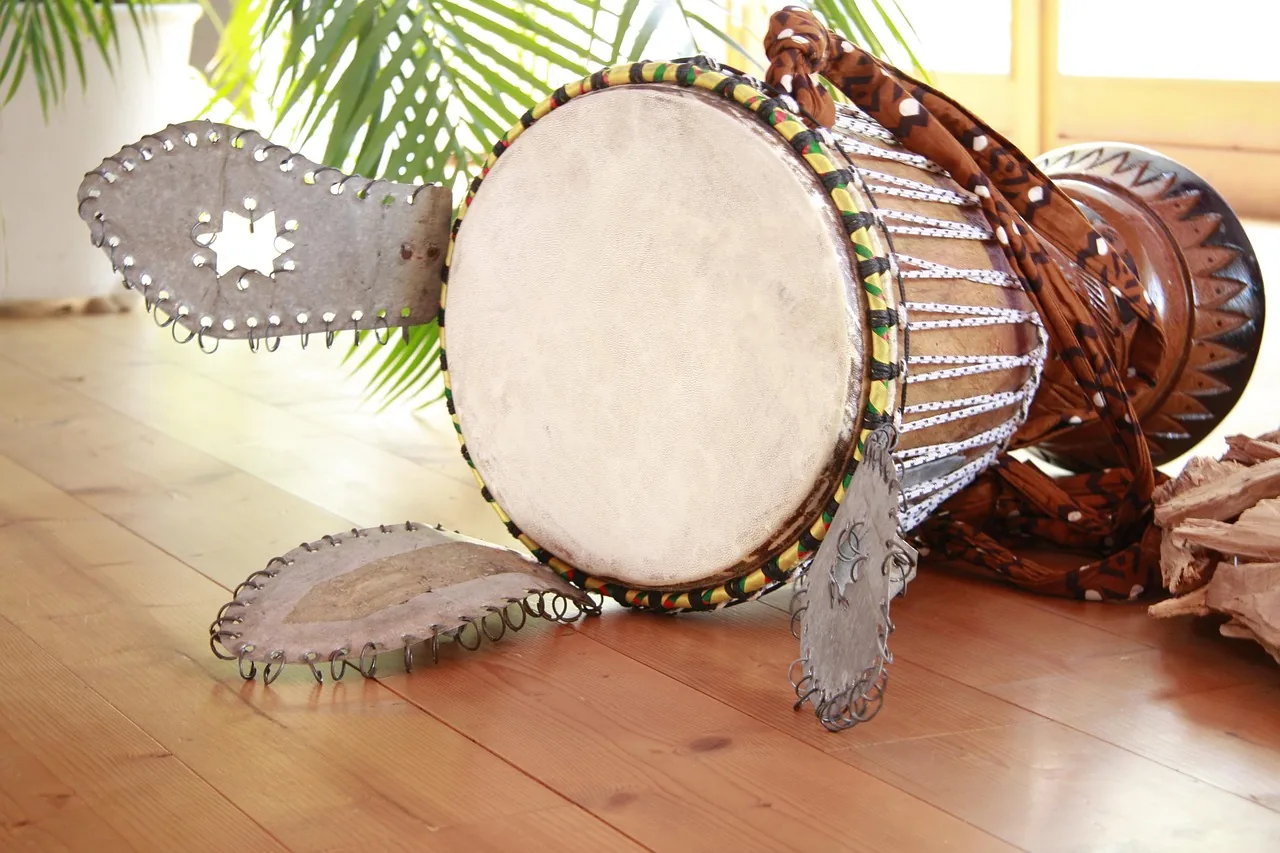
For authenticity, look for the goblet shape and harmonious proportions, without crude assembly or visible glue joints.
“Run your fingers over the wood: touch often reveals what the eye misses.”
Checklist before payment: shell base, skin, roping, balance and proportions. To go further, consult this practical guide.
Testing the Sound Like You Would in a Shop (or at a Flea Market) Without Being Fooled
Knowing how to distinguish three key strokes can save you from a bad purchase.
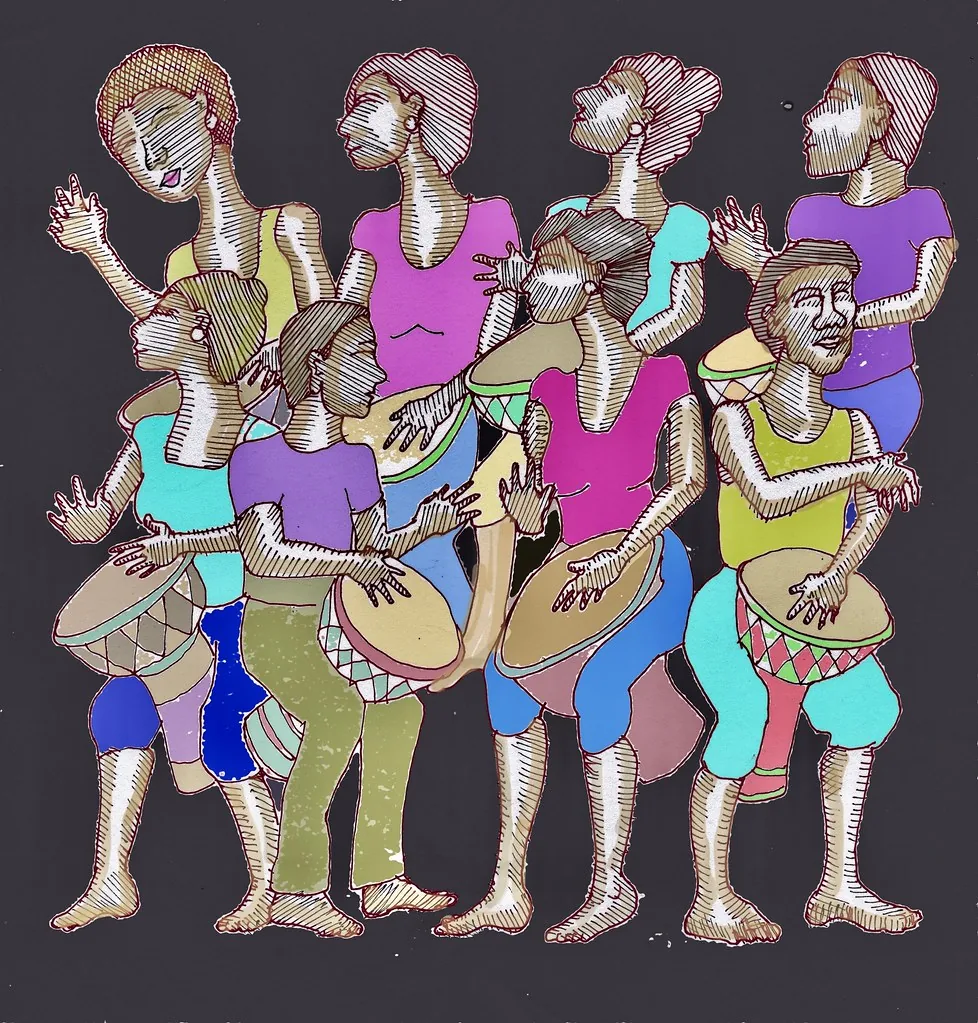
60-second method: center for the bass, between center and edge for the tone, edge for the slap. Play three calm strokes and listen to the sound quality.
The Three Fundamental Sounds
The bass should be deep and last a little. The tone should be precise. The slap should be clear, with no buzzing.
Warning Signs
Watch for metallic sounds, a buzzing slap or a short, muffled bass. A skin that is too hard or too soft may indicate a limited percussion range and future repairs.
Discreet Testing Techniques at Flea Markets and With Private Sellers
Start gently and increase the intensity. Stand a little aside. Use your non-striking hand to mute slightly so you reduce volume and feel the vibration.
| Quick test | Indicator | Action |
|---|---|---|
| Bass | Length and depth | If short, suspect the skin/shell |
| Tone | Precision | Blurred tone = uneven tension |
| Slap | Clarity | Buzzing = metal/rope issue or worn skin |
For good learning, the sound quality should allow you to distinguish these three sounds even at moderate volume. If in doubt, ask about the history (storage, humidity, last tightening) and refuse the purchase if the tone does not open up.
Tip: an instrument that responds well to several strokes will keep its musicality and cost less in repairs.
Choosing the Right Size, Diameter and Materials for Your Use
Choosing the right size and diameter deeply changes playing comfort and projection.
Height and diameter: the larger the diameter, the stronger the bass and projection. In return, weight and bulk increase, as does the tension needed to keep good sound quality.
Practical markers: for an adult, aim for a height of around 60 cm; for children, around 40 cm. A large diameter (~32 cm) can reach around 105 dB, while a compact format (~20 cm) is closer to 92 dB.
Solid Wood vs. Synthetic Materials
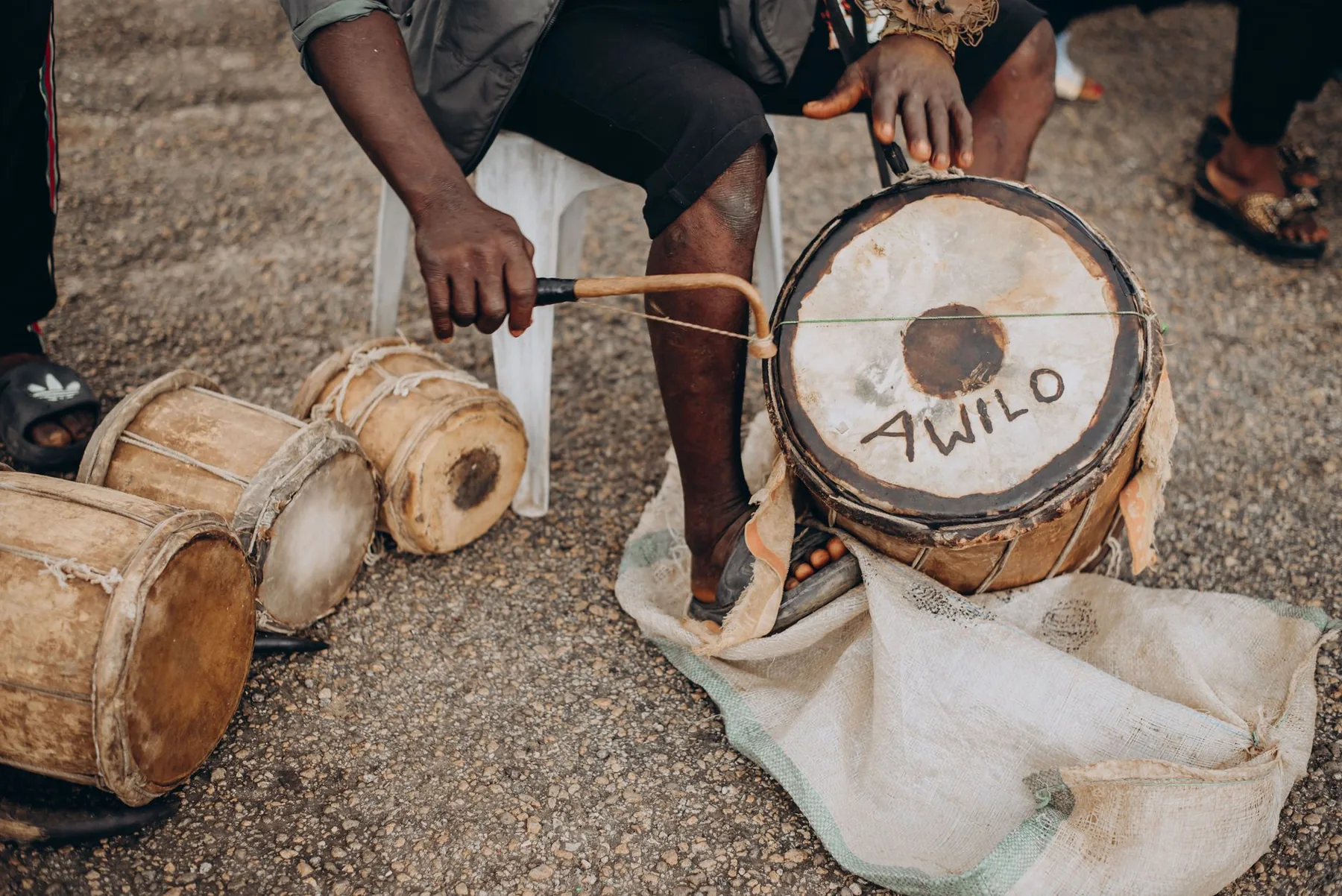
Solid wood offers a warm, traditional result. Synthetic materials (ABS, reinforced fabric) are lighter, more impact-resistant and more stable in changing climates.
Animal Skin (Goat) vs. Synthetic Head
Goat skin gives organic feel and a beautiful palette of timbres, but it requires more maintenance and reacts to humidity. Synthetic heads remain stable, making them ideal for outdoor use and frequent transport.
Choose according to your use: apartment (controlled volume), lessons (projection), outdoors (stability) or transport (weight).
To explore instrument choices and alternatives in more depth, consult our handpan guide.
Where to Buy a Cheap Djembe in France Without Bad Surprises
Finding a good instrument without being misled requires method and practical reference points.
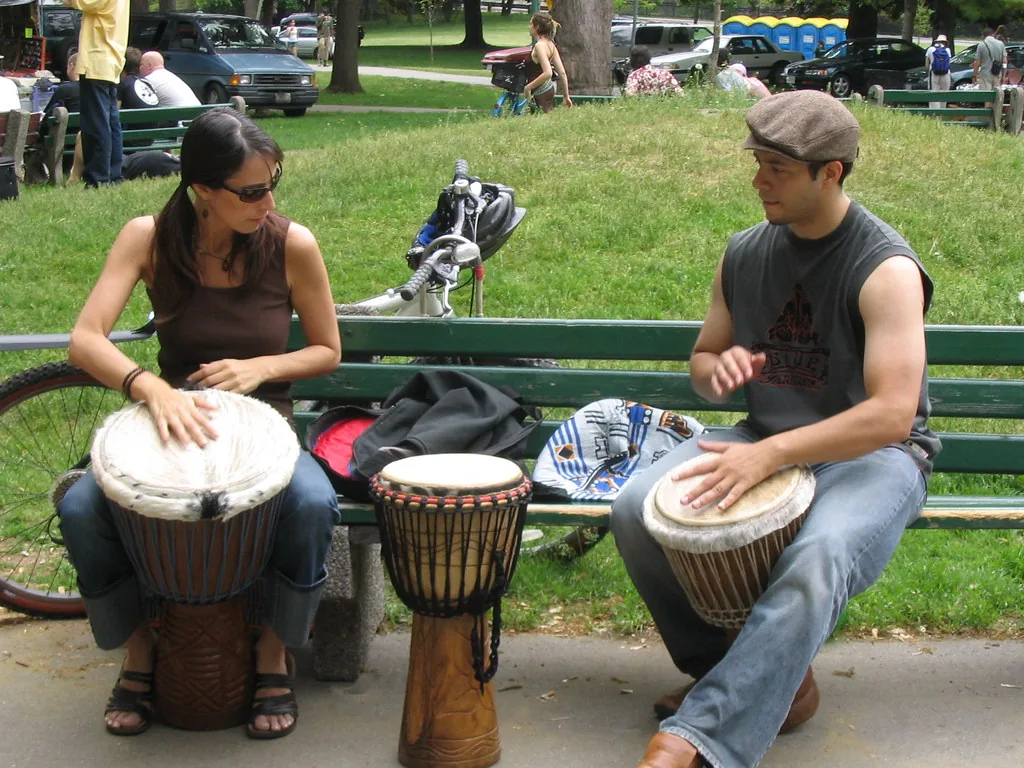
Used: Check and Negotiate at a Fair Price
Look at garage sales, classified ads and specialist music platforms. Private sellers can offer very good deals, especially handmade Malian instruments often sold for €80–180 instead of €300–500 new.
Before paying, check: a shell without active cracks, a skin that is not brittle, coherent roping and the three-sound test. If the skin needs replacing, allow around €30 for a medium size.
Negotiation tip: base your offer on repair costs (skin, ropes, remounting) and propose a respectful price rather than aggressive bargaining.
Shops, Makers and Platforms: Security and Guarantees
Shops and makers charge a little more, but they offer preparation, tuning and sometimes a guarantee. If you want stability, it is better to prefer recognized brands (Meinl, Remo, Tycoon, NINO, Toca): parts and accessories remain available.
Tip: first define the use, size and your total budget (instrument + accessories + possible skin) to choose the safest buying channel.
Conclusion
Real savings come from a thoughtful choice: prioritize the shell, skin, roping and size rather than price alone. A good choice protects your investment and your pleasure in playing.
Follow this simple path: understand the market, set a realistic budget, check quality, test the sound, then adjust size and materials according to use. Try several examples before buying.
Keep the total cost in mind: accessories and repairs often cancel out a low initial spend. If in doubt, prefer a seller who offers advice and accepts returns rather than an impulsive purchase.
In the end, choose a percussion instrument that makes you want to play, improve and make music without frustration.