
Choosing a djembe starts with understanding how the shell influences the sound. The material changes resonance, projection, timbre, and dynamic response.
In this article, we explain what to listen for: readable bass in the center, clear tones, and dry slaps at the edge. Goal: to get these three sounds without forcing.
The guide always connects material and construction: the skin, tension, and assembly quality play just as large a role as the shell. We compare mahogany, vène, Senna siamea, and other options, looking at moisture resistance and sound variability.
Useful reference point for France: to help you choose according to use – apartment, lessons, stage, or outdoors -, budget, and transport. We outline the common compromises: power over finesse, depth over stability, weight over portability.
Why wood has such a strong influence on the sound and playability of a djembe
The shell material acts like a sonic fingerprint: it colors the entire spectrum. Density determines resonance and projection. A very dense shell favors clean attacks and strong projection, useful outdoors or in a group.
Timbre depends on the wood species: some favor bright highs, others round bass. Harmonics create the instrument’s character: two similar shells can still offer noticeable variations.
Density, timbre, and balance
A balanced instrument distributes deep bass, midrange, and highs evenly. This balance makes the sound palette more versatile and makes varied rhythms easier to play.
Dynamic response and use
Dynamic response changes according to playing style: a responsive shell accepts the nuances of light indoor playing, while a more forgiving shell supports powerful strokes on stage.
Durability and humidity
Moisture resistance affects tuning and sound stability. Durability varies according to wood quality, drying, and manufacturing: the same species does not always produce the same result.
“A good shell amplifies the skin without overpowering it.”
To explore model differences further, see our notes on types and constructions.
Djembe wood: iroko, lenke and other species, advantages and limits
Choosing a shell requires a method: first clarify the intended use, test the sound (bass, tone, slap), then inspect the construction.
What to compare before buying
Set up a simple checklist: sound (projection, depth, clarity), resistance (impacts, humidity), weight (transport), and a realistic price for France.
- Practical question: Do I play in an apartment?
- Practical question: Do I travel often?
- Practical question: Do I need stage projection?
Recommended uses
Indoors = prioritize volume control and stability. Outdoors = robustness and tolerance of weather changes. Stage = power and projection. Lessons = comfort and versatility.
Compromises and decision method
A very stable wood may sacrifice a little perceived depth. A shell with a strong character may evolve with humidity and the life of the instrument.
Method: prioritize 2 to 3 criteria (for example, projection + stability), rather than looking for an unreachable perfect instrument.
Iroko, “African teak”: robust and stable, but not always the deepest
For players who often perform outdoors, iroko combines strength and projection. Sound signature: warm lows, direct attacks, and punchy highs that cut through without a microphone.
Why density favors reach
The high density of the wood increases resonance and power. Strokes transmit more energy to the edge, making the instrument audible in events or open-air settings.
A practical advantage in France
This species tolerates humidity changes better. When traveling or storing the drum imperfectly, its good durability makes it easier to use in rehearsal and on stage.
A limit to consider
In an ensemble, some players find that the harmonics can be less rich than on other models. For very subtle rhythms, the depth may be less pronounced.
- Suitable for: mobile percussionists who want stability and confidence during performances.
- Watch point: require the “iroko” label and ask for photos of the grain and underside of the shell before buying.
| Attribute | Strength | Limit |
|---|---|---|
| Signature | Warm lows, punchy highs | Lower harmonic complexity |
| Use | Good outdoor projection | Less suited to refined ensembles |
| Durability | Moisture-resistant | May lack roundness |
To start with simple rhythms and compare the practical result, see our advice on beginner rhythms.
Lenke / doussie (Afzelia): power and richness, but durability to watch
Highly prized in West Africa, lenke has a strong sonic presence. This wood fills the space in group playing and helps the musician stand out within an ensemble.
Why it is sought after in West Africa
In West African practice, makers and players often choose this material for its ability to carry sound. It offers a raw presence that serves ensembles and celebrations well.
Sound palette: powerful bass and clear highs
The palette is characterized by deep bass and sharp highs. The result is a marked timbre, ideal if you want projection and immediate character.
Weak point: evolution over time and humidity
Pay attention to durability: humidity and intensive use can make the sounds evolve over time. Some musicians change instruments more often to keep the initial clarity.
Who it suits
This choice suits percussionists who prioritize projection and immediate richness over absolute stability. If you travel or play outdoors, plan for a case, dry storage, and frequent tuning checks.
Compared with mahogany, lenke offers more raw presence, at the cost of greater sensitivity to climate variation.
Mahogany: the versatile choice for a balanced and expressive sound
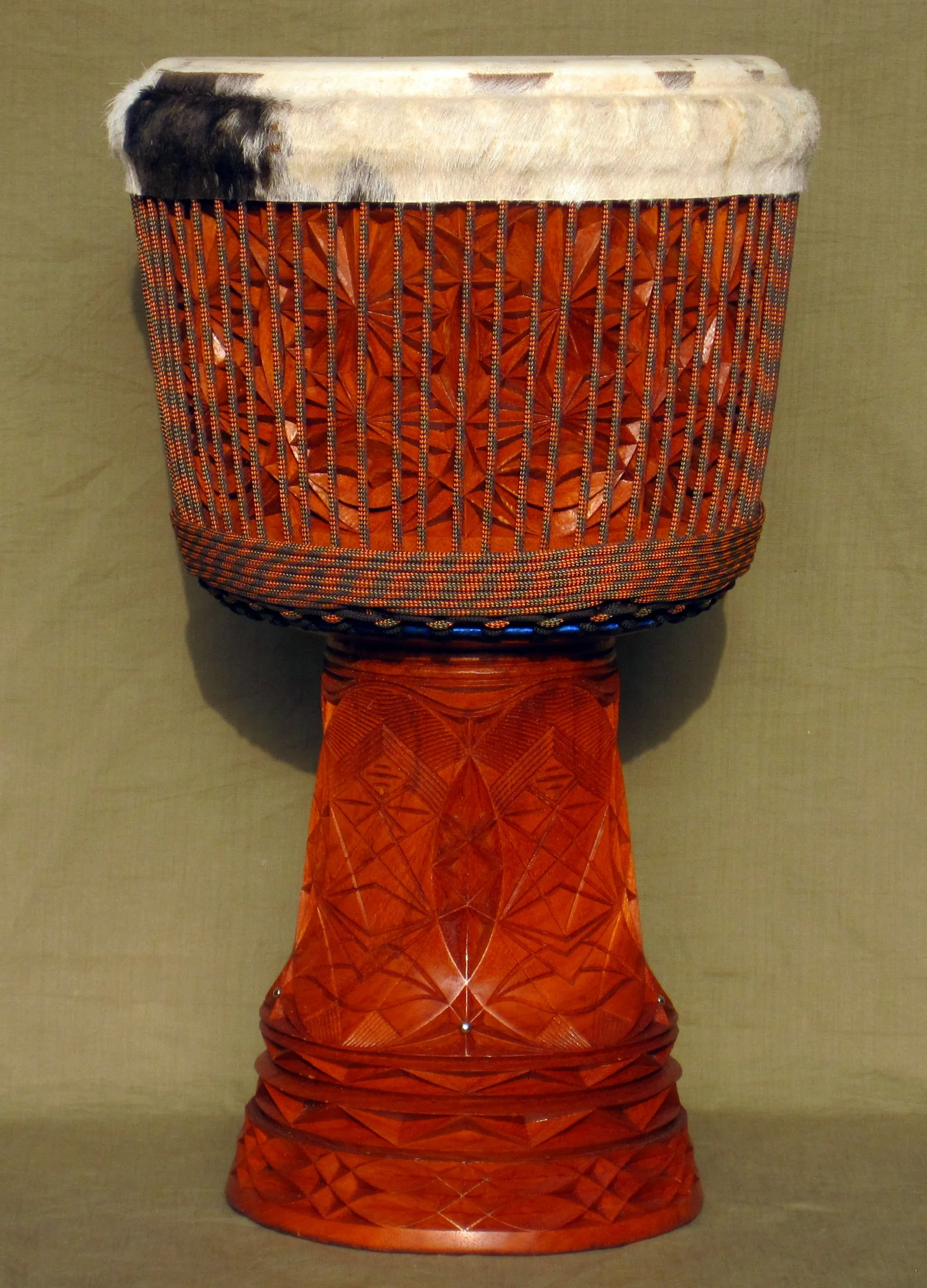
Mahogany often stands out as the versatile solution for anyone looking for a complete result without sacrificing musicality.
Tonal balance
Mahogany delivers deep bass that remains controllable, rich mids, and clear highs. This profile makes group and solo playing easier.
Dynamic response
The shell remains sensitive to nuance. Gentle playing produces subtle colors; a stronger stroke increases projection. This helps technical progress, especially in lessons.
Value for money
In France, accessibility depends mainly on manufacturing: carved solid wood or standardized production. Value for money varies according to the finish, not only the name of the species.
When to favor this choice
Recommended for learning, workshops, and mobile musicians. A good mahogany shell reveals its full potential when paired with a well-mounted skin and coherent ropework.
| Criterion | Strength | Limit |
|---|---|---|
| Balance | Even bass, mids, and highs | Less extreme than a very dense shell |
| Response | Sensitive to nuance | May require more care to maintain tension |
| Accessibility | Often offered with good value for money | Quality varies according to production |
Vène wood (Guénou / N’guénou): deep resonance and a durability issue
Guénou is recognized by its warm resonance and the sense of body it gives the shell. This wood offers full lows and gentle projection that fills the space without aggression.
Warmth, depth, and reputation
The material’s density favors enveloping bass. The result appeals to musicians looking for a round timbre and a harmonically rich sound.
Resistance for outdoors and travel
Solid in the face of temperature changes, this wood handles open-air concerts, festivals, and frequent travel well. It therefore suits mobile players.
Responsible buying and vigilance
Guénou can be rare because of strong demand, including for furniture. Require information on traceability.
- Ask for the origin and photos of the grain.
- Question makers about the supply chain and replanting.
- Check carving and finishing: they influence the sound as much as the species.
Advice: if ethics come first, favor a considered trade-off rather than an impulse purchase. A good instrument comes as much from careful making as from the material. For your djembe, this choice can transform playing without hiding the importance of the finish.
Senna siamea: a controversial species, often chosen for its price
Senna siamea often sparks debate among percussionists, especially when budget weighs heavily in the decision.
Expected sound
On good examples, you can find deep bass and clear highs. But quality varies strongly depending on density and finish.
Why prices are low
High availability and mass production pull the price down. Many entry-level models use this type of wood, which explains the abundant supply.
Who this choice suits
It suits beginners, workshops, and occasional use. It is a practical option when relative robustness and cost matter more than harmonic richness.
Anti-disappointment advice
Require photos of the shell, as well as details about the skin and ropework. Variability can be high: a well-built instrument is worth more than a beautiful promised result without care.
Tip: if your budget is tight, favor a coherent model over attractive wood that is poorly mounted; this choice improves long-term use.
Rarer or secondary species: melina and dimb, depending on your priority
If you are looking for lightness or very long lifespan, two less publicized options are worth attention. These choices answer concrete priorities: transport, budget, or intensive use.
Melina: light, manageable, and economical
Melina offers an obvious practical advantage: reduced weight and easy machining. For anyone who often transports the instrument, it is a real comfort.
In terms of sound, the result can be distinctive. Purists sometimes judge it less authentic than traditional varieties. For workshops and schools, however, this type remains relevant.
Dimb (dugura): robustness and longevity
Dimb is chosen for its durability and weather resistance. It holds up well over time and supports intensive outdoor use.
Musically, the sounds are often simpler: less powerful bass, but clear highs. For very collective stage settings, projection can be limited.
Common sense: favor lightness if you travel; choose dimb if longevity comes first. Always test an example: models vary, and the impact of the material on the sound is real.
How to choose your wood according to your use in France and your budget
Choosing the right species starts with defining exactly where and how you play. This method makes it easier to choose between power, stability, and portability.
Indoor playing
For use in an apartment, prioritize volume control and comfort. Choose an instrument that responds without forcing.
Look for tonal balance and tuning stability rather than raw projection.
Outdoor playing
Outdoors, the priority is robustness and climate resistance. Choose materials and a skin that tolerate humidity changes.
Denser models often offer better projection and better longevity on the road.
Stage and group
On stage, favor separation between registers: bass, tone, and slap must remain distinct in the mix.
Good sonic presence helps the percussion cut through without a microphone or blend with other instruments.
Travel, workshops, mobility
For travel or workshops, take weight and bulk into account. Large shells can exceed 10 kg.
A reduced diameter/height compromise makes transport easier and keeps practice more regular.
Price references: industrial rather than traditional
Industrial (€70-150) = often lighter, synthetic skin, neutral but stable result. Traditional (€180-350) = carved solid shell, animal skin, strong ropework, and sonic richness.
Do not pay for a name: require photos and manufacturing details. See how to recognize a real traditional drum to avoid bad surprises.
| Use | Requirement | Practical reference |
|---|---|---|
| Indoors | Control, stability | Height 60-63 cm, diameter 26-29 cm |
| Outdoors | Robustness, projection | Diameter 30-33 cm, dense species |
| Travel | Weight, humidity tolerance | Light models, protective case |
Pre-purchase checkpoints: avoid vague “exotic woods” and bad surprises
Before buying, a few simple checks prevent costly disappointments.
Require the exact species and detailed photos: grain, carving, underside, and joints. A generic term like “exotic wood” often hides uncertain origin or uncontrolled drying.
Inspecting construction and manufacturing
Check that the shell is solid wood, with no visible cracks. Inspect the cleanliness of the edges and the strength of the hoops.
Connecting wood, skin, and tension
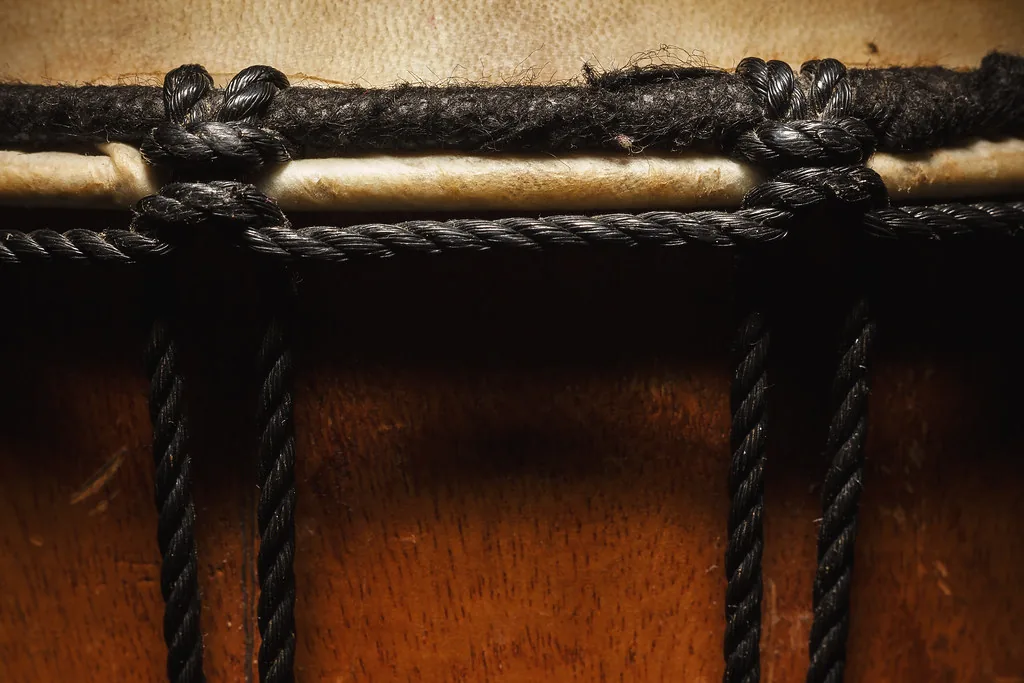
An excellent shell does not compensate for a tired skin or mediocre ropework. Look for even tension and regular lacing.
“Checking the whole shell-skin-rope system reduces 80% of bad surprises.”
Mini test protocol
- Strike the bass in the center, the tone in the middle area, and the slap at the edge.
- Listen to the resonance: it should last without choking.
- Check register separation and how well the slap holds.
| Check | What to see | Why |
|---|---|---|
| Exact species | Name and photos of the shell | Traceability and price consistency |
| Construction | Solid shell, no cracks | Durability and stable sound |
| Mounting | Rope >=4 mm, regular tension | Holding the skin and keeping the slap clean |
Finally, compare the requested price with the level of finish, manufacturing, and construction. If you want to dig deeper into traceability, see a study of wooded areas to better understand possible origins.
Conclusion
The right selection comes from a simple trio: clarify the use, choose the right format, then validate the species and the skin. This process reduces errors when facing the wide variety of available instruments.
Remember the profiles: robustness for outdoors, presence for the stage, balance for lessons. Test the resonance across the three registers (bass, tone, slap) before any commitment.
Before paying, apply the checklist (exact species, construction, skin, tension/ropework). Favor one reliable instrument over repeated purchases. To go further with wood choice, see our guide to choosing wood.
Recommended action: identify 2 to 3 models, ask makers for photos and information, test in a workshop if possible, then choose with full awareness of the compromises.