
Brief introduction: This emblematic drum is an instrument of Manding origin, more than 700 years old. It lives in villages and on stages around the world. Its appeal in France comes from curiosity about world music and the search for authenticity.
In this article, I offer a clear journey: Manding origins, myths and oral tradition, construction (goblet-shaped shell, goat skin, ropes), striking techniques and ritual functions. You will also discover transmission through masters, griots/jeli and the role of the djembefola.
Reading promise: an accessible account explaining why Fodéba Keïta and Les Ballets Africains brought the instrument to wider attention in the 20th century, how artisans work with wood and skin, and how this drum crossed borders without losing its roots. To go deeper, follow this detailed guide: origins and story.
The Djembe: History, Origins and Role in West Africa
An immediately recognizable membrane instrument, the djembe plays a dual role: musical and social. It accompanies weddings, baptisms, funerals and festivals. Its place goes far beyond a simple stage performance.
This instrument also serves as a rhythmic language. The rhythms speak, call the dance and guide the songs. Percussion connects with the body and the spoken word to strengthen group cohesion.
Locally, it was born for the village. Today, it travels around the world: schools, performances, studios. Its sonic power, range of timbres and expressiveness explain why so many musicians adopt it.
- Traditional use: social life and rituals.
- Qualities: dynamic, varied, accessible yet demanding.
- Evolution: from the village circle to stages around the world.
To go further into its roots and transmission, see this guide to the musical instrument and its story. Understanding the origin sheds light on how it is played and the moments when it is played.
Djembe Origins and Manding Roots in West Africa
This instrument appeared in the 13th century, at the heart of the Manding kingdoms. Its emergence therefore dates back more than 700 years, within the space of the empire founded by Sundiata Keïta.
The central areas are Mali and Guinea, then its spread reaches Senegal, Côte d’Ivoire and Burkina Faso. Modern borders do not match these older cultural realities.
Several peoples adopted this instrument: Malinke, Bambara, Soninke, Khassonke and Wassoulounke. It is not the work of a single inventor, but a collective evolution within connected communities.

One common hypothesis explains the passage from domestic mortar to musical tool: a grinding vessel covered with a skin becomes a resonating body. This reuse relies on available materials and practical logic.
Finally, the etymology suggests two complementary paths: the Bambara phrase meaning “everyone gathers together” and a Soninke term close to “drum.” These meanings show how the social function is already reflected in the name.
To explore these paths further, see this dedicated guide to the origins of the djembe, which brings together research and oral accounts.
Myths, Legends and Oral Tradition Around the Origins of the Djembe
The legends surrounding the instrument have traveled by word of mouth for generations. Memory is kept by storytellers, musicians and elders. Few written archives exist; transmission remains living and rooted in place.
Local variants: every village, every master offers a version. One story does not erase another. These accounts explain why the stories change according to family or local territory.
A popular account describes a transformed mortar: a goat skin stretched over a vessel becomes a sound box. This “accidental” scene shows how an everyday gesture can become a founding myth.
Legends and Creatures
Local mythology sometimes evokes the “gebraffe,” a hybrid creature that gives the drum a sacred meaning. Other accounts reported in ethnomusicology speak of the “chimpanzees’ drum.”
“A trapper named So Dyeu is said to have offered a captured instrument to the chiefs; the community then attributed a power of gathering to the drum.”
| Type of story | Region | Symbolic message |
|---|---|---|
| Mortar + goat skin | Manding areas | Creation through an everyday gesture |
| Gebraffe (myth) | Popular accounts | Sacralization of the instrument |
| Chimpanzees’ drum (So Dyeu) | Reported accounts | Link between humans, nature and social power |
These legends help us understand the drum’s place in the collective imagination. They prepare the transition toward the workshop: skin, tree, artisan — concrete elements also found in its construction.
To go further, see this guide, which brings together accounts and research.
Traditional Construction: Wood, Goat Skin, Ropes and Spiritual Dimension
Construction begins with the careful choice of the trunk, which determines the soul of the instrument.
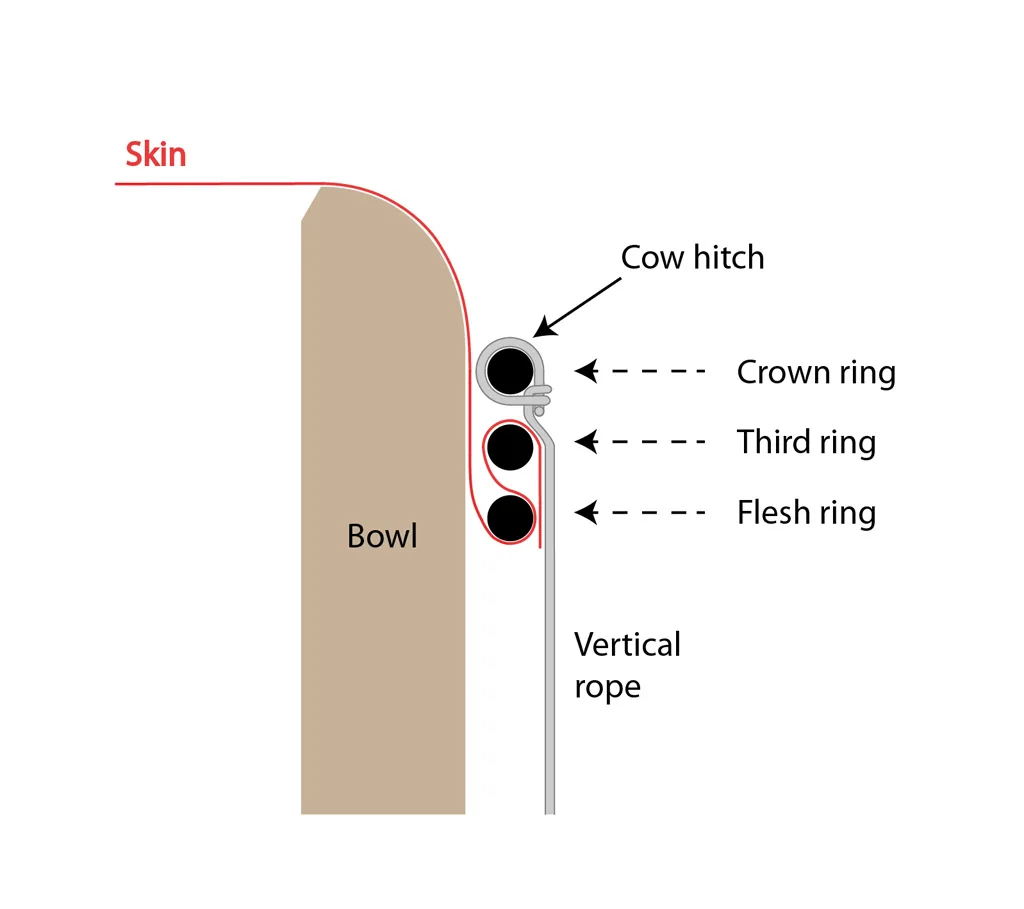
Selection and carving: a dense, dried trunk is chosen, then carved into a goblet shape. The hollowing of the interior balances power and tonal subtlety. The shell’s shape influences projection and response to strikes.
Skin used: the goat skin, when properly tightened, shapes the highs and lows. Even tension offers clear harmonics and better sensitivity for percussionists.
Technique and reinforcements: the introduction of braided ropes and iron hoops strengthened durability and tuning stability. These developments preserve the traditional character while improving longevity.
Rituals and blacksmiths: blacksmiths and artisans play a central role. Before felling, the lengue ritual and offerings respect the spirit of the tree. These gestures connect construction and belief.
“Three presences inhabit the instrument: the tree, the animal and the artisan.”
Transmission: griots and jeli preserve memory and ceremonial use. Understanding construction helps explain why certain striking techniques succeed depending on the skin, the tension and the shape of the shell.
To learn more, see this detailed article.
The Social and Musical Role of the Djembe: Ceremonies, Communication and Striking Techniques
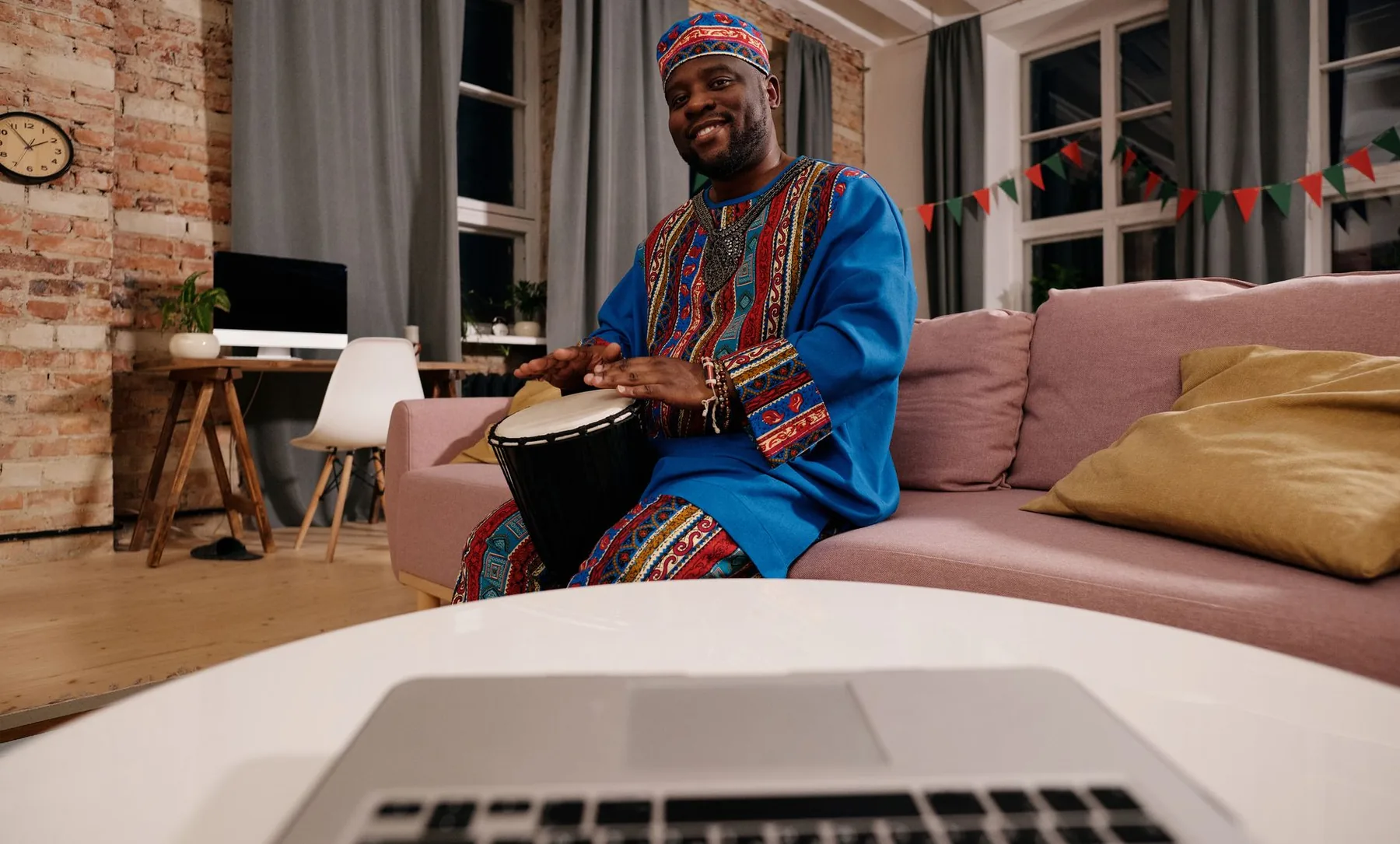
At the heart of village ceremonies, this instrument organizes time and emotion. It marks calls, accompanies dance and emphasizes solemn moments during ceremonies such as weddings, baptisms, funerals and gatherings.
A Pillar of Gatherings
During ceremonies, the strikes signal transitions: a call to gather, a rhythm for dancing, silence to honor. Percussionists converse with singers and dancers without words.
Materials and Symbolism
Wood symbolizes the vegetal world, living strength. The skin embodies the organic and the voice. Iron points to the mineral world and durability. This reading reinforces the sacred character of the instrument and the respect given to it.
Striking Techniques and Sound Palette
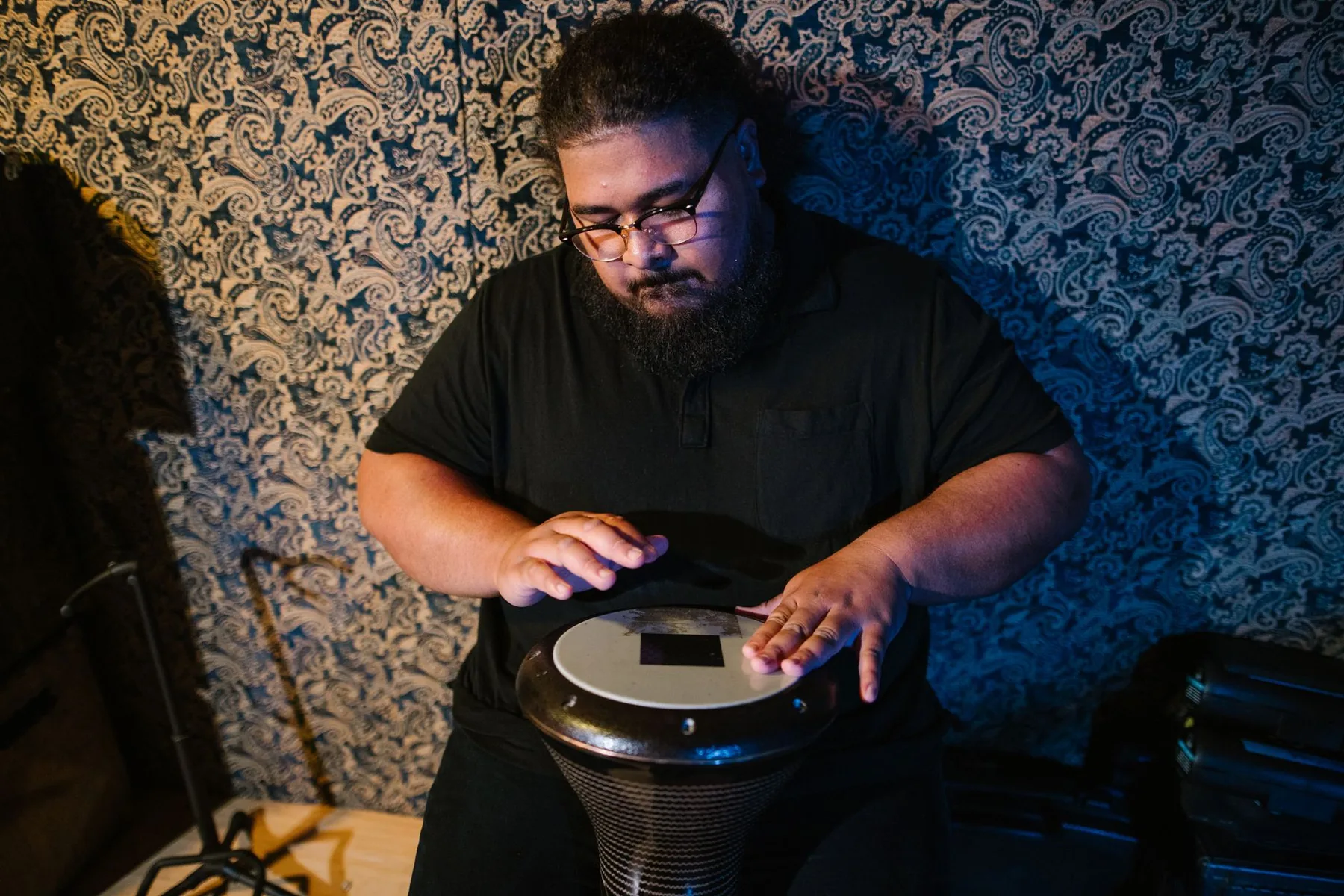
Djembefolas master the tone (flat hand, edge), the slap (dry finger strike, edge) and the bass (palm at the center). The pop combines accents and rhythmic lift. These gestures produce a range of sounds that creates energy, contemplation or celebration.
“The drum speaks: it calls, answers and gathers.”
| Technique | Position | Sound effect |
|---|---|---|
| Tone | Flat hand, edge | Clean, high and clear |
| Slap | Fingers striking the edge | Dry, percussive, expressive |
| Bass | Palm at the center | Deep, resonant |
| Pop | Combined accent | Lively rhythmic lift |
Its power and clarity on stage helped it spread around the world. Ballet companies touring since the 1950s, then masters from the 1980s onward, consolidated this presence. To go further, see African percussion techniques.
Conclusion
In summary, this instrument remains a bridge between 13th-century Manding roots and today’s stages. It unites artisanal skill, ritual force and collective practice.
Its origins combine historical clues, oral accounts, areas such as Mali and Guinea, and the legend of the transformed mortar. Its construction rests on wood, skin, ropes and sacred gestures.
This drum occupies ceremonial life, calls the dance and serves as a language. The techniques — tone, slap, bass, pop — explain the richness of its sounds and its appeal for percussionists.
Its spread was made possible by tours and ballets of the 1950s, with Fodéba Keïta, then by masters from the troupes in the 1980s, such as Famoudou Konaté. To go further, read about the origins of the drum.