Since Antiquity, this mysterious instrument has captivated creators. Its history reaches back to Greek legends, where Hermes and Apollo played it. Later, it became a sacred symbol, associated with angels and the heavens.
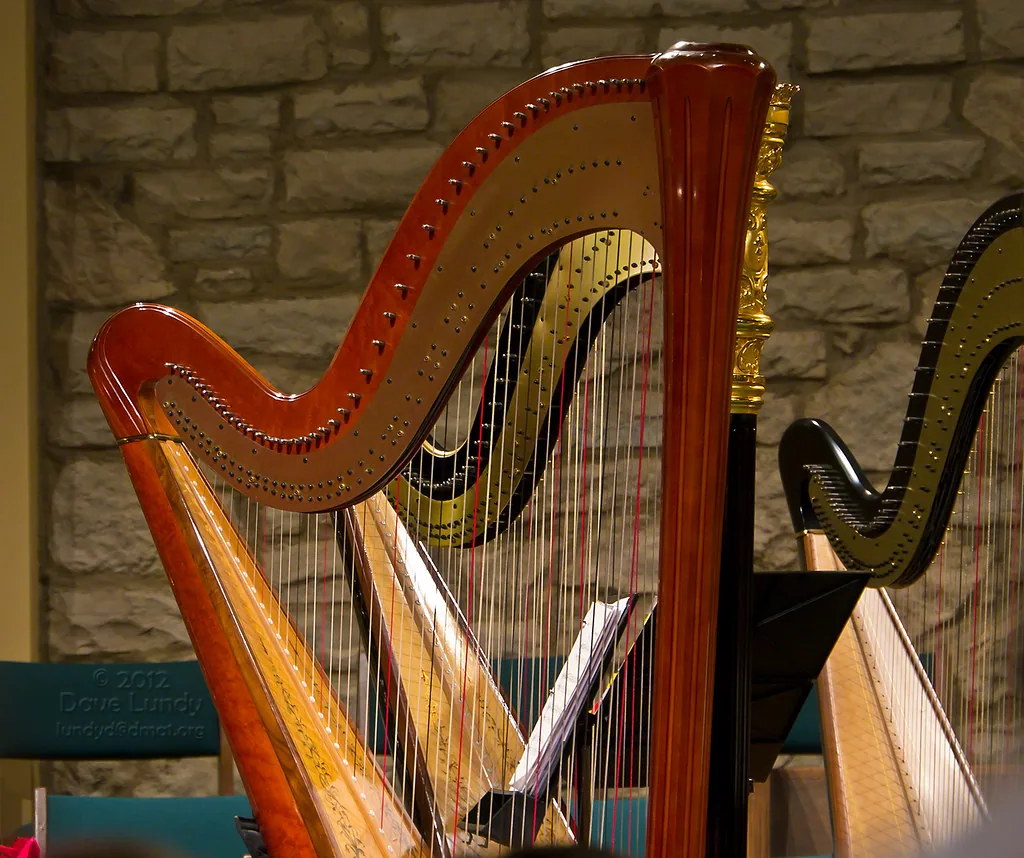
Its triangular shape and upward-facing strings give it a distinctive aura. Technical innovations, such as the addition of pedals in the eighteenth century, transformed its musical possibilities.
Music for harp offers unique sonorities, at once gentle and powerful. Composers such as Debussy and Ravel used it to create magical atmospheres. Its crystalline timbre often evokes dreams and spirituality.
Discover how this instrument has passed through the centuries in our article on the history of the harp. We will explore its technical evolution and its unique expressive power.
The mythical and historical origins of the harp
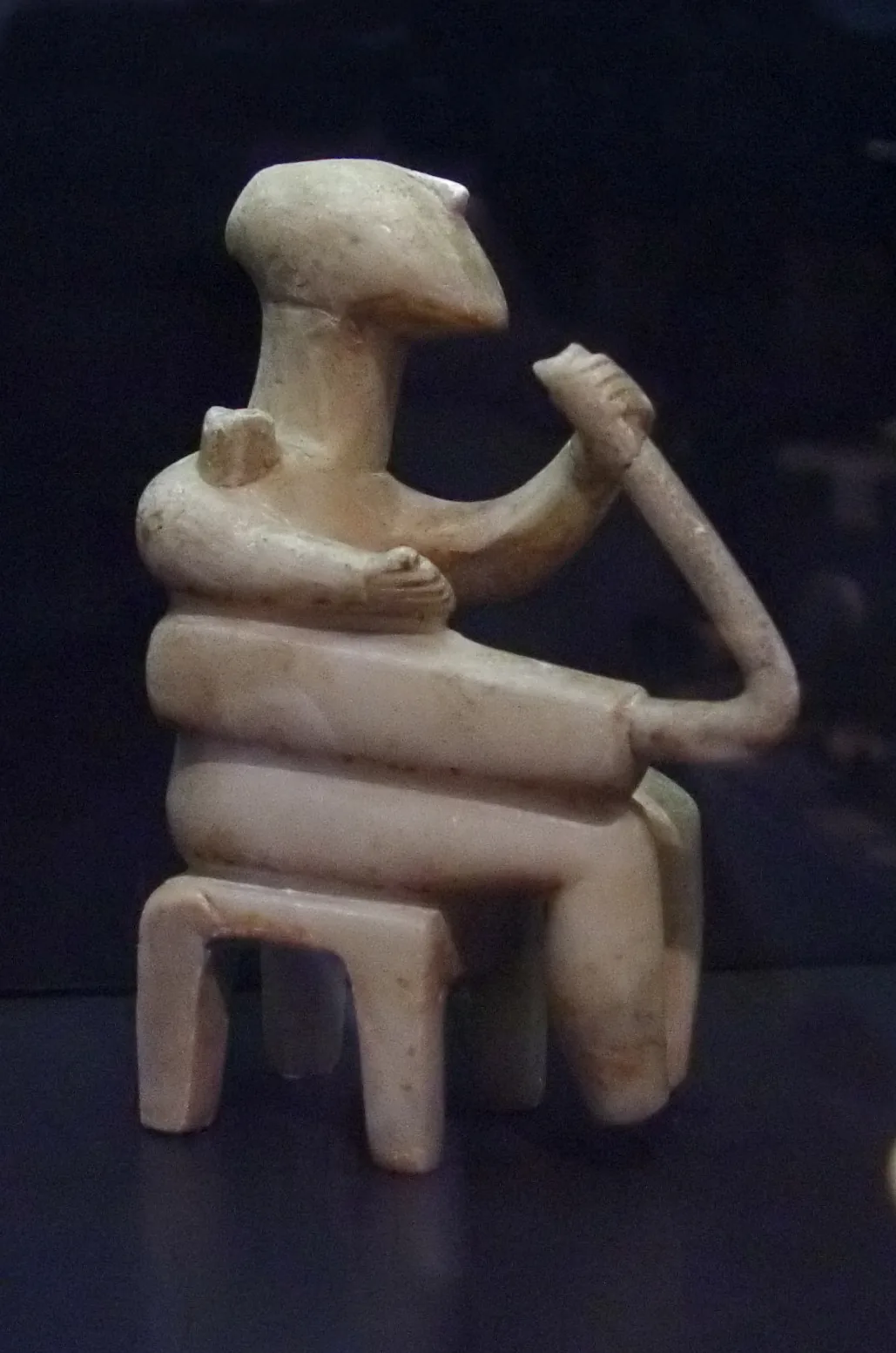
The earliest evidence of the harp dates back to the dawn of civilization. In Mesopotamia, 6,000 years ago, archaeologists discovered remains of this instrument. Its strings, then made of gut, were already accompanying epic tales.
From the musical bow to the first harps
The evolution begins with a simple stretched bow. Gradually, craftspeople added resonating chambers. Around 3000 BC, angular harps appeared, such as the harp of Ur.
In the Middle Ages, monoxylous harps were carved from a single block of wood. The seal of Guilhem VIII bears witness to this. Their construction followed the golden number, a sacred proportion.
Sacred symbolism through the ages
In Celtic mythology, the Dagda owns a magical harp. It controls the seasons and emotions. Among the Greeks, Apollo’s lyre foreshadows this instrument.
| Feature | Ancient lyre | Medieval harp |
|---|---|---|
| Number of strings | 4 to 7 | 12 to 24 |
| Use | Epic poetry | Sacred music |
The Bible also associates the lyre with King David. This symbolic continuity crosses the world. To go further, see this study on the history of the harp.
The harp through the centuries: an instrument in constant evolution
Over the centuries, this instrument underwent major transformations. Its design and mechanisms evolved to meet musicians’ demands. From troubadours to concert halls, it has constantly adapted.
Medieval harps and their sacred symbolism
In the Middle Ages, Gothic harps had 32 to 38 strings. Carved from a single block of wood, they were assembled without glue. Their sound accompanied religious chants and chivalric tales.
Cathedral stained-glass windows often show harp-playing angels. This representation underlines its connection with the divine. Marie Antoinette, passionate about music, popularized its use among women.
The technical innovation of pedal harps
In 1810, Sebastien Erard revolutionized the instrument with double-action pedals. This system made it possible to play every chromatic scale. It was a key advance for Romantic composers.
| Feature | Medieval harp | Modern harp (Erard) |
|---|---|---|
| Materials | Monoxylous wood | Wood + metal |
| Mechanism | Fixed strings | Chromatic pedals |
| Range | 2 octaves | 6 octaves |
Drift alder wood gave way to boxwood for the tuning pins. Pleyel harps, rivals to Erard’s, offered a chromatic model. But it was the pedal system that prevailed in the nineteenth century.
Why does the harp fascinate composers so much?
The musical universe of the harp reveals unmatched sonorities. This instrument offers an expressive richness that inspired the greatest creators, from Debussy to Wagner.
Unique sonorities and expressive capabilities
With its 47 notes spread across 7 octaves, the modern harp enables striking effects. The glissando, popularized by Ravel, creates cascades of crystalline sounds.
Harmonics, produced by lightly touching the strings, create ethereal notes. Berlioz spoke of “chords thrown like precious stones”. Unlike the piano, its prolonged resonance surrounds the listener.
A sound palette between earth and sky
The low register evokes telluric vibrations, while the high register seems to come from the heavens. This duality allows dramatic contrasts, exploited in the Wagnerian orchestra.
| Register | Feature | Famous example |
|---|---|---|
| Low | Mysterious depth | Dream scenes in Wagner |
| High | Angelic clarity | Ravel’s Introduction and Allegro |
Hindemith pushed this polyphony further, blending the registers. The harp then becomes an orchestra in itself, capable of inner dialogues.
Monteverdi and Berlioz: pioneers of the orchestral harp
In the seventeenth century, a pair of geniuses revolutionized the orchestral use of this instrument. Their works revealed unsuspected possibilities, forever transforming its role in art music.
The arpa doppia in L’Orfeo (1607)
Monteverdi innovated with a harp with a double row of strings. The Underworld scene uses its deep basses to evoke darkness. This technique, rare at the time, creates a striking contrast with the voices.
The arpa doppia measures nearly 1.80 meters. Its 24 low bronze strings reinforce the dramatic quality. An analysis of the original score shows pizzicato chords imitating the steps of shadows.
The two harps of the Symphonie fantastique (1830)
Berlioz pushed the limits in his famous concert work. He gives the harps a virtuosic dialogue in the movement Un bal. Measures 15-24 exploit pedals in E-flat, a technical challenge.
“A mass of harps would produce a magical effect in great modern orchestras.”
The 1830 premiere was complicated. The composer struggled to find two harpists who had mastered his system. Yet the scenic effect left a lasting mark on Romantic audiences.
| Element | Monteverdi (Baroque) | Berlioz (Romantic) |
|---|---|---|
| Number of harps | 1 (arpa doppia) | 2 (Erard model) |
| Role | Dramatic effect | Orchestral texture |
| Innovation | Double strings | Chromatic pedals |
These experiments opened the way to the masterpieces of the twentieth century. Music for harp would never be perceived in the same way again.
The harp as a solo instrument in the nineteenth century
The nineteenth century marked a turning point for the harp as a solo instrument. Technical advances made more daring works possible. Composers then explored its full potential.
Saint-Saens and his compositions for harp
Camille Saint-Saens revolutionized the repertoire with his Morceau de concert (1918). The work includes an improvised cadenza, freeing the creativity of musicians. Its technique alternates between a melodic left hand and an arpeggiated right hand.
Dedicated to the Eissler sisters, the Fantaisie op. 124 combines violin and harp. The fingers must master skipping harmonic figures. A technical challenge for performers.
The Fantaisie for violin and harp, op. 124
This piece adopts a modified sonata form. The octave pedals of opus 95 create unprecedented effects. Compared with Naderman’s Aeolian Harp, it offers greater dynamism.
| Feature | Morceau de concert (1918) | Fantaisie op. 124 |
|---|---|---|
| Form | Theme and variations | Modified sonata |
| Technique | Free cadenza | Violin harmonics |
| Forces | Solo harp | Violin-harp duo |
Parisian salons played a key role in the circulation of these works. The strings of the harp revealed all their nuances there. A legacy that still influences modern instrumentalists.
Ravel and Hindemith: reinventing the harp in the twentieth century
The twentieth century saw major innovations blossom for this instrument. Composers explored new techniques, pushing the limits of music for harp. Two figures marked this revolution.
Ravel’s Introduction and Allegro (1905)
Commissioned by the Pleyel firm, this celebrated piece exploits crystalline sonorities. Ravel sets two systems against each other: the chromatic harp (Pleyel) and the pedal harp (Erard).
The central cadenza reveals unprecedented virtuosity. The hands glide over the strings as if over a keyboard. “It is a cascade of sounding pearls,” the composer said.
Hindemith’s Sonata for Harp (1939)
Hindemith adopts a radical approach. Its four movements incorporate clusters and micro-intervals. The third movement uses percussion on the soundbox.
| Element | Ravel | Hindemith |
|---|---|---|
| Style | Impressionist | Neoclassical |
| Technique | Glissandi | Muting |
| Duration | 9 minutes | 15 minutes |
These works inspired Britten and Berio. They show how the harp transcended its traditional role. A legacy still alive today.
Symbolism and emotional power of the harp
Through the ages, this instrument transcended its simple musical role to embody spiritual values. Its symbolism permeates cultures, from medieval royalty to sacred rituals.
The instrument of angels and kings
The seal of Guilhem VIII (1192) shows a harp as an emblem of power. In the thirteenth century, its 12 strings represented the apostles. A direct link with musica mundana, the medieval theory of universal harmony.
- Chartres: its twelfth-century stained-glass window depicts harp-playing angels, associating the instrument with divinity.
- Therapy: monks used it to soothe the soul, according to manuscripts from Mont-Saint-Michel.
From the lyre to the harp: a sacred continuity
Druids celebrated the solstices with harp melodies. This tradition meets that of the Manding kora, another African stringed instrument.
“The harp unites heaven and earth, like a bridge between worlds.”
| Culture | Symbol | Use |
|---|---|---|
| Celtic | Immortality | Seasonal rituals |
| Christian | Angelic | Liturgy |
Today, it remains the national emblem of Ireland. Proof of its lasting importance in the collective imagination.
Conclusion: the harp, a timeless instrument
Its technical and symbolic evolution makes it a unique musical jewel. From Erard’s pedals to electric harps, this instrument has pushed boundaries. Debussy, Jolivet and others exploited its nuances between dream and power.
Xavier de Maistre confides: “Its strings speak as much to the soul as to the ear”. Today, digital extensions are expanding its repertoire even further. Yet lesser-known gems by Caplet and Tournier are still waiting to be rediscovered.
Sacred symbol or modern tool, the harp unites worlds. Its rich history and lasting importance prove that it remains a pillar of music. Now it is yours to explore.