
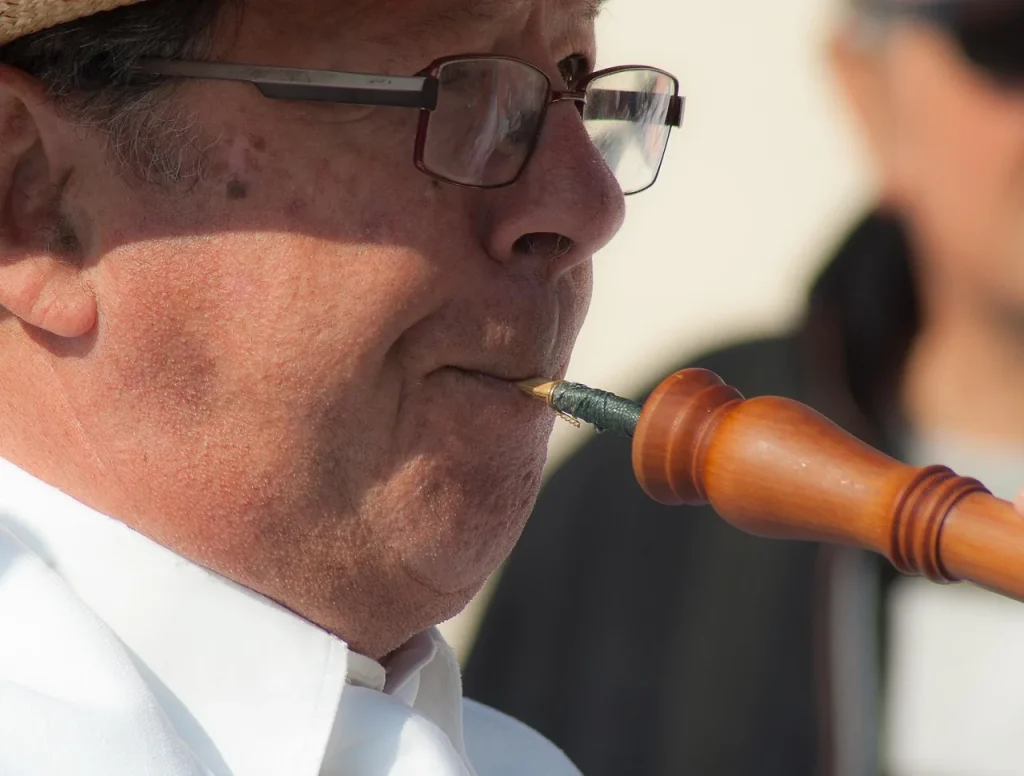
Medieval music is a fascinating period in the history of music, and two instruments stand out in particular: the flute and the bagpipes. These traditional instruments played an essential role in creating medieval music, and they became emblematic of this historical period.
The bagpipes are a musical instrument with wind and reeds that exists in more than a hundred types around the world. Their exact origins are difficult to determine, but they are thought to possibly have roots in ancient Egypt. The bagpipes accompanied medieval music in various social and cultural contexts, becoming a symbol of medieval culture.
The flute, for its part, is a wind instrument used since Antiquity, which also played an important role in medieval music. The transverse flute, in particular, was one of the most common types of flutes used during this period. It added a gentle, melodious tone to medieval compositions, contributing to the evocative atmosphere of this music.
In short, the flute and the bagpipes are emblematic instruments of medieval music. Their use in medieval music was very widespread, and they helped create a unique, evocative atmosphere. These traditional instruments testify not only to the history of music, but also to medieval culture as a whole.
The bagpipes: an instrument found across the world
The bagpipes are a musical instrument with wind and reeds that exists in more than a hundred different types around the world. Their geographical distribution is very broad, covering all of Europe, the Caucasus, the Maghreb, the Persian Gulf and extending even as far as northern India.
This shows the popularity and importance of this instrument in different cultures and musical traditions. The bagpipes have undergone remarkable evolution and adaptation in different regions, resulting in variations in design and sound.
Bagpipe players are known by different names depending on the region: sonneur in France, biniaouer in Brittany, piper in Ireland, píobaire in Irish Gaelic, gaitero in Spain, and gaiteiro in Portugal. Each culture gives this instrument a unique identity and role in its traditional music.
Bagpipes are built around a double-reed oboe and are equipped with a reservoir (bag) that allows continuous, powerful playing. They may include different elements, such as melodic pipes with single or double reeds, drones for sustained notes, and semi-melodic pipes to accompany the main melody.
The number of drones on a bagpipe can vary from one to four, generally tuned an octave or two octaves below the tonic of the melodic pipe. Some types of bagpipes also have an additional melodic pipe that accompanies and ornaments the main melody with accompanying chords.
Bagpipes include elements such as the melodic pipe, the air reservoir, tenor and bass drones, as well as retaining cords, specific to certain variants such as the Great Highland bagpipe. They may also be fitted with bellows or non-return valves to ensure air is blown efficiently into the reservoir.
| Types of bagpipes | Geographical distribution |
|---|---|
| Great Highland bagpipe | Europe |
| Zurna | Caucasus |
| Ghaïta | Maghreb |
| Ney-anban | Persian Gulf |
| Shehnai | Northern India |
The bagpipes have a musical repertoire developed over the centuries, culminating in court music and military music. They played an important role in the artistic expression of different cultures over time, captivating listeners with their distinctive and moving sound.
The mysterious origins of the bagpipes
The origins of the bagpipes remain mysterious even today, because there is little archaeological evidence to support their history. However, the bagpipes are thought to possibly have roots in ancient Egypt, given the many representations of double shawms, similar to those used in the bagpipes, in the art of the period. The Greeks and Romans also mentioned this instrument in their writings, giving an indication of its importance at that time. Some theories suggest that the bagpipes were introduced to Europe by the Greeks, then by the Romans, but there is no solid evidence to confirm this idea.
| Countries / Periods | Archaeological evidence | Representations | Theories |
|---|---|---|---|
| Ancient Egypt | Representations of double shawms similar to those used in the bagpipes | Works of art from the period showing musicians playing bagpipes | Antiquity of the instrument, possible Egyptian origin |
| Ancient Greece | Texts mentioning the bagpipes and their use | Representations of musicians playing bagpipes | Introduction of the bagpipes to Europe by the Greeks |
| Ancient Rome | Texts mentioning the bagpipes and their use | Representations of musicians playing bagpipes | Spread of the bagpipes in Europe by the Romans |

The precise origins of the bagpipes therefore remain uncertain, but it is undeniable that this instrument played an important role in the history of music. Whether in ancient Egypt, in Greece or in Rome, the Greeks and Romans recognized the importance of the bagpipes and integrated them into their musical practices. Thus, the bagpipes gradually won over Europe and became a musical symbol of different cultures over time.
Different types of bagpipes throughout history
There are more than a hundred types of bagpipes in the world, each with its own characteristics and particular features. These instruments evolved over time and developed in different regions and periods, giving rise to a great diversity of forms and sounds.
The geographical distribution of bagpipes covers all of Europe, from north to south, as well as other regions such as the Caucasus, the Maghreb, the Persian Gulf and even northern India. This shows the importance and influence of this instrument across different cultures and musical traditions.
The origins of the bagpipes go back to the Greco-Roman period, although their exact roots remain mysterious. The Greeks and Romans described this instrument in their writings, suggesting that it was already widespread at that time.
Over the centuries, the bagpipes developed a repertoire of their own, culminating in court music and military music. These musical genres highlighted the expressive and powerful capacities of the bagpipes, making them an essential instrument.
Bagpipes consist of several elements, including an oboe with complex fingering, fitted with a double reed. They also include one or more drones, which are complementary pipes that add depth and richness to the bagpipe sound.
The number of drones on a bagpipe varies from one to four, generally tuned an octave or two octaves below the tonic of the melodic pipe. All bagpipes have at least one melodic pipe to play the main melody.
A popular example of a bagpipe is the Scottish Great Highland Bagpipe, which includes specific parts such as the melodic pipe, air reservoir, tenor and bass drones, and tuning slide. This type of bagpipe is often associated with military music and is emblematic of Scottish culture.
The bagpipe player can play two oboes simultaneously, creating a powerful harmony, or a drone and an oboe, adding sonic depth. Some types of bagpipes are even fitted with regulators, which make it possible to play accompanying chords.
Finally, some bagpipes are equipped with semi-melodic pipes that serve to accompany and ornament the main melody, adding musical nuance and variation.
Over the centuries, the bagpipes have undergone many developments, becoming a versatile instrument appreciated in different cultures around the world. Their rich repertoire and ability to create powerful harmonies make them an emblematic instrument of traditional and folk music.
If you would like to learn more about the different types of bagpipes throughout history, you can consult the article on bagpipes on Wikipedia.
The flute: an ancient and versatile instrument
The flute is a wind musical instrument with a long history, used in various cultures and periods. Its uses are varied and versatile, making it a highly valued instrument among musicians around the world.
The transverse flute is one of the most common types of flutes. It consists of an elongated metal or wooden tube with holes that produce different notes. The transverse flute was undoubtedly used in musical compositions of the medieval period, bringing a gentle, enchanting melody to the music of that time.
The ancient history of the flute goes back thousands of years. Evidence of its use can be found in China as early as 9000 BCE, as well as in ancient Egypt and ancient Greece. In each culture, the flute was adapted and developed to meet specific musical and artistic needs.
Among the many uses of the flute were its presence in religious rituals, ceremonies, festivities, as well as in court music and popular music. This instrument was highly valued for its ability to produce gentle, captivating melodies capable of touching the audience’s deepest emotions.
The flute is also used in many contemporary musical genres, such as classical music, jazz, folk music and even electronic music. It offers great versatility and can produce soft, melancholy tones as well as bright, rapid sounds.
The flute is an instrument that has crossed ages and cultures, retaining its place as a versatile and captivating musical instrument. Its ability to evoke a wide range of emotions makes it a preferred choice for many musicians and composers around the world.
To illustrate the varied use of the flute throughout history, here is a table showing a few examples of musical genres in which the flute has played an important role:
| Musical genre | Example of a musical piece |
|---|---|
| Classical music | Claude Debussy’s Sonata for Flute and Piano |
| Jazz | Flute Juice by Hubert Laws |
| Traditional music | La belle et la flûte by Les Musiques à Ouïr |
| Electronic music | Popcorn by Hot Butter |
The flute is an ancient and versatile instrument that continues to captivate listeners around the world with the beauty of its sound and its ability to tell emotionally rich musical stories. Whether in medieval or contemporary music, the flute remains a favored choice for musicians seeking expressiveness and creativity.
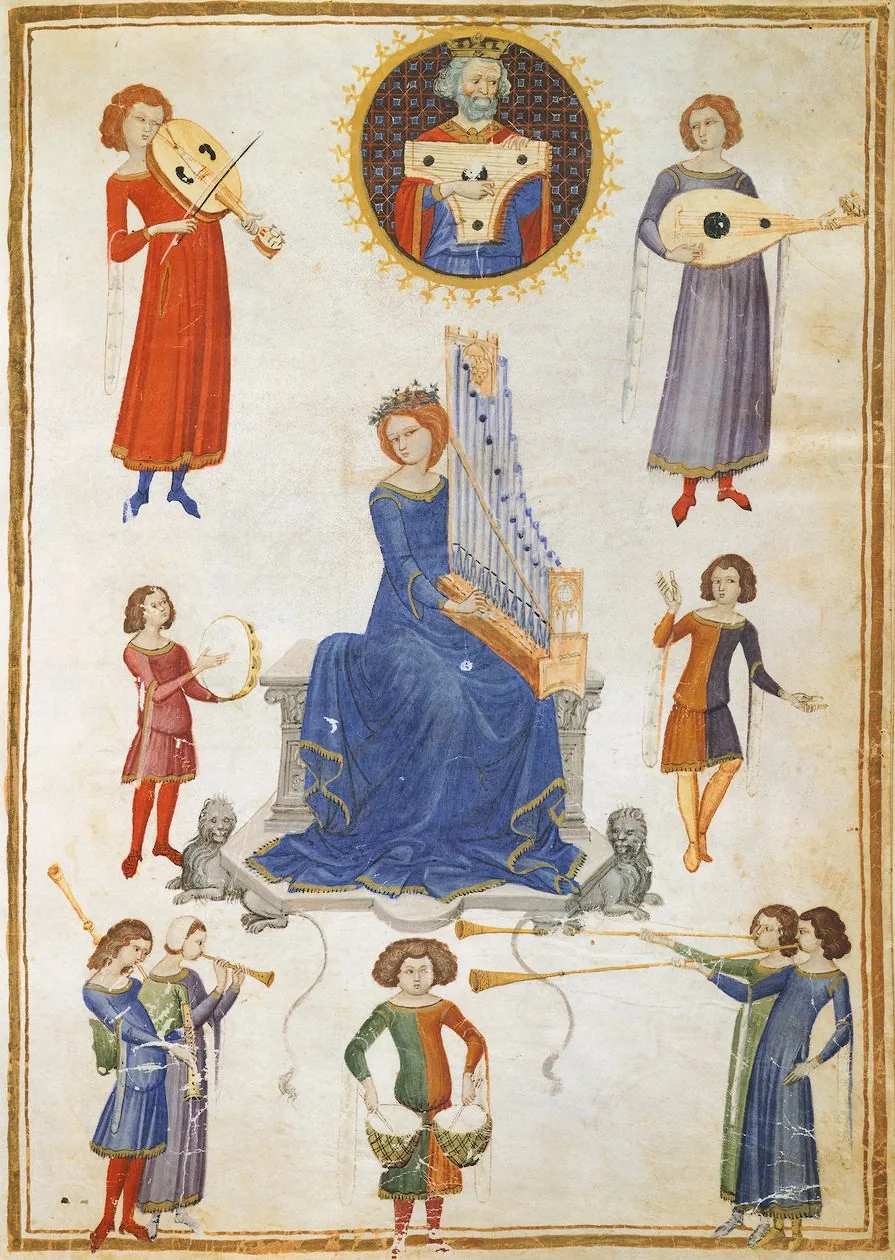
The different forms of string instruments in medieval music
In medieval music, different types of string instruments were used to create unique and captivating sonorities. Some of these instruments were plucked, such as the harp, the rote, the psaltery, the lute and the mandore. Their sound was produced by plucking or striking the strings with the fingers or with plectrums. These instruments offered a wide variety of timbres and were used in different musical contexts, whether at the courts of lords or during popular festivities.
Other string instruments were bowed with a bow, creating deep, melodious sounds. These instruments included the vielle, the rebec, the hurdy-gurdy and the tympanon. The use of the bow made the strings vibrate and produced rich, complex harmonies. These instruments were often used to play solo melodies or to accompany other instruments and voices in musical ensembles.
The harp was one of the most emblematic string instruments of medieval music. Medieval harps were often fitted with gut or metal strings and produced gentle, enchanting sounds. They were used in both secular and sacred music.
The lute, for its part, was a very popular instrument in the Middle Ages. It had a shape similar to that of a guitar and was played by plucking the strings with the fingers. The lute was used in a wide variety of musical genres, from popular songs to sophisticated compositions played at the courts of lords.
The vielle and the rebec were bowed string instruments, similar to violins. They were often used to play dance-like, lively melodies, adding a vibrant rhythm to medieval compositions.
Finally, the hurdy-gurdy and the tympanon were very distinctive bowed string instruments. The hurdy-gurdy produced a unique sound thanks to a wheel turned by a crank that rubbed the strings. The tympanon, meanwhile, was a struck-string instrument resembling a small upright piano. These instruments were notably used in popular music and medieval festivities.

The plucked and bowed string instruments of medieval music added a rich and varied sonic dimension to the compositions of this period. Their diversity and expressiveness allowed medieval musicians to create unique and unforgettable works. Their importance in medieval music is undeniable, and these instruments continue to be played and appreciated today.
The wind instruments of medieval music
In addition to string instruments and percussion, wind instruments played an essential role in medieval music. Among the most common wind instruments were flutes, pipes, horns, cornetts and trumpets. These instruments produced melodious sounds and added unique melodies and harmonies to medieval compositions.
Flutes were one of the most widespread types of wind instruments. They were made of wood and had several holes that allowed different notes to be produced. Medieval flutes were mainly used in musical contexts such as popular songs, dances, religious ceremonies and festivities.
Pipes were another popular type of wind instrument during the Middle Ages. They were made of wood or bone and were played by blowing into them to produce a melody. Pipes were often used in popular contexts, such as processions, festivals and social gatherings.
Horns and cornetts were larger and more powerful wind instruments. They were made of metal, usually copper, and produced loud, striking sounds. Horns and cornetts were often used in military bands, solemn processions and royal ceremonies.
Trumpets were also popular wind instruments during the Middle Ages. They were made of copper and used to produce powerful, clear sounds. Medieval trumpets were mainly used in military contexts, but they could also appear during ceremonies and festivities.
In addition to these reed instruments, the organ was also used in medieval music. The organ had existed since Antiquity and was used in churches and cathedrals to accompany religious chants. It consisted of pipes and was played by pressing keys to release air through the pipes, producing notes. The medieval organ, although it had a limited number of pipes compared with later organs, was a powerful and versatile instrument.
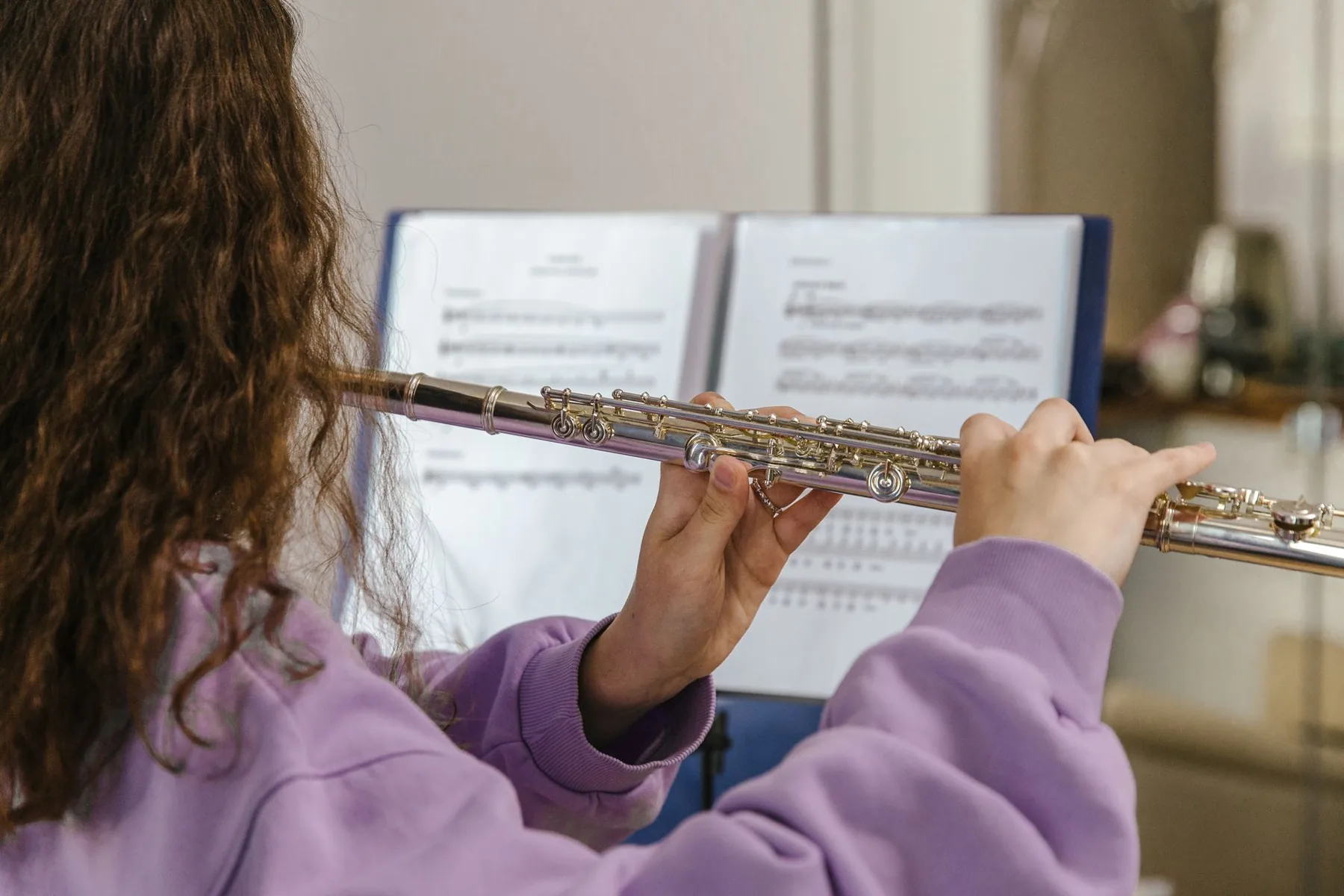
In conclusion, wind instruments, such as flutes, pipes, horns, cornetts, trumpets and the organ, brought unique melodies, harmonies and sonorities to medieval music. Their diversity and versatility enriched the compositions of this period and added a distinctive dimension to them.
Conclusion
In summary, the flute and bagpipes are emblematic instruments of medieval music, and their historical importance in this period is undeniable. They contributed to the creation of a unique music, transporting the listener into an atmosphere evocative of that distant age. The flute, with its airy sonorities, and the bagpipes, with their powerful timbre, brought unique nuances and colors to medieval music.
These instruments were used in various musical contexts, whether in court, military, religious or popular compositions. Their presence in medieval music testifies to their cultural importance and their ability to captivate the listeners of that period. Even today, the flute and bagpipes continue to be played and appreciated, recalling their historical legacy and their privileged place in music.
In conclusion, the flute and bagpipes are essential instruments of medieval music, symbolizing the historical importance of this period. Their distinctive sound and their unique roles in musical creation left an indelible mark on the history of medieval music.