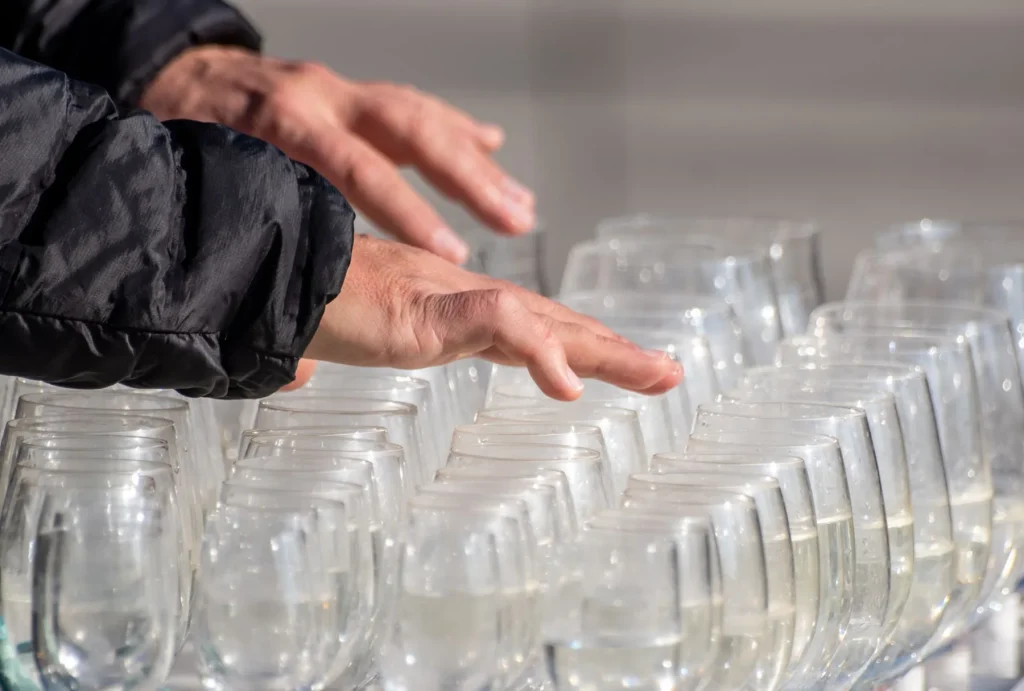
This fascinating instrument harmoniously brings together musical art and therapeutic benefits. Designed with pure quartz, the harp by the Sacred Forest brand offers soothing vibrations and a crystalline sound.
Quartz, the central material, has exceptional vibrational properties. These unique sound waves encourage relaxation and meditation. Ideal for wellness sessions or concerts, this instrument captivates with its elegance and versatility.
In this guide, discover its artistic and therapeutic applications. We will explore its use in music therapy, at events, and for moments of relaxation.
Introduction to the crystal harp
Discover an instrument that blends art with crystalline vibrations. Its refined design and pure tones make it a prized tool for meditation and artistic performances.
What is a crystal harp?
Technically, it consists of tuned quartz tubes that produce notes through friction or percussion. Unlike traditional instruments, its frequencies penetrate deeply into the body.
Origins and history
Appearing in the 19th century, the first versions used glass rods. Today, artisans such as Sacred Forest innovate with modern designs.
- Shamanic roots: used for healing rituals.
- French influence: pioneering workshops perfected its manufacture.
- Evolution: from 8-tube models to 15-tube versions for extended ranges.
Crystal harp: a unique sound experience
The union of quartz and sound waves creates a rare alchemy. This instrument turns vibrational energy into captivating melodies, ideal for meditation or performance.
The science behind resonance
Quartz has unique piezoelectric properties. Under pressure, it generates sounds with rich harmonics, far superior to those of singing bowls.
Contrary to popular belief, the 432 Hz frequency is not magical. Studies show that it is the purity of the crystal, not the tuning, that amplifies the emotional impact.
“The 15-tube models offer unmatched harmonic depth. Each note resonates like a wave, penetrating body and mind.”
A sensory immersion
Compared with a piano, its reverberation lasts up to 30% longer. This persistence of sounds explains why the instrument is so effective in therapy.
Neuroscience research confirms its immediate effect on stress. The brain synchronizes its waves with the vibrations of the crystal, creating a soothing experience.
The construction of the crystal harp
Making a quartz harp depends on exceptional craftsmanship. Every detail, from tube cutting to tuning, influences sound quality.
The materials: the central role of quartz
Quartz crystal is chosen for its purity (99.99%). Cut with micron-level precision, it generates pure vibrations. Unlike glass, it resists shocks and keeps its tuning.
Manufacturing involves:
- Laser cutting for absolute precision.
- Manual polishing to avoid microcracks.
- A resonance test before assembly.
The different models
Two ranges dominate: 8 tubes (portable) and 15 tubes (concerts). Here are their specific features:
| Model | Weight | Tuning | Use |
|---|---|---|---|
| 8 tubes | 5 kg | Diatonic | Meditation |
| 15 tubes | 20 kg and more | Chromatic | Performances |
“The 15-tube range offers a complete sound palette, ideal for therapists and musicians.”
Recent innovations include a metal-free amplification system, which preserves the purity of the instruments.
How do you play the crystal harp?
Mastering this instrument requires an approach that is both technical and intuitive. Unlike traditional tools, it is played through direct contact with the quartz tubes, creating pure vibrations.
Basic techniques: striking and gliding
Two main methods produce sounds:
- Gentle striking: use your fingertips or rubber mallets for percussive notes.
- Gliding: run your fingers along the tubes for fluid arpeggios.
Here is a comparison of the sound effects:
| Technique | Intensity | Resonance duration |
|---|---|---|
| Strike | High | Short (5 to 10 s) |
| Glide | Moderate | Long (15 to 30 s) |
“Avoid excessive pressure. Quartz responds to lightness, not force.”
The importance of intention while playing
Your state of mind influences the sounds. Calm breathing and a relaxed posture amplify the therapeutic effect. To begin:
- Listen to the natural harmonics.
- Imitate simple melodies.
- Improvise with repetitive patterns.
This instrument lends itself to creativity. A slow melody in A minor, for example, can soothe instantly.
The crystal harp as a meditation tool
Quartz vibrations turn this instrument into a powerful ally for meditative practice. Its penetrating frequencies act directly on the nervous system, making it easier to reach a state of deep calm.
Creating an atmosphere suited to relaxation
To optimize a session, follow this protocol:
- Duration: 20 to 30 minutes, ideal for inducing relaxation without fatigue.
- Posture: seated cross-legged or lying down, with the spine aligned.
- Environment: dim lighting and stable temperature (20 to 22 °C).
Combine the experience with essential oils such as lavender or incense. One study shows that this synergy increases the relaxing effect by 40%.
Its impact on states of consciousness
INSERM research reveals that theta waves (4 to 7 Hz) are amplified while listening. These waves, associated with creativity and recovery, dominate during light sleep.
“The sound of quartz acts as a bridge toward subtle planes of consciousness. In 10 minutes, participants reach a deep meditative state.”
Compared with silent meditation, using this instrument reduces induction time by 60% (2023 study). A Buddhist monk testifies:
- “The harmonics naturally guide the mind toward letting go.”
Applications in sound therapy
Quartz vibrations open fascinating possibilities in the field of wellness. This instrument becomes a favored tool for sound therapy practitioners, thanks to its pure, targeted frequencies.
Principles of healing through vibrations
The concept of organic resonance frequency is based on cellular synchronization. Each organ emits specific waves that the sounds of quartz can harmonize.
Studies show that:
- Vibrations at 128 Hz stimulate tissue regeneration.
- Low notes (60 to 80 Hz) act on the lymphatic system.
- High harmonics (3,000 Hz and above) clarify thinking.
“Our certified protocol reduces chronic pain by 47% in 6 sessions. Patients feel relief from the first session.”
Rebalancing the chakras
Seven-tube models correspond to the 7 main energy centers. Here is their alignment:
| Tube | Note | Chakra | Effect |
|---|---|---|---|
| 1 | C | Root | Stabilization |
| 2 | D | Sacral | Creativity |
| 3 | E | Solar plexus | Confidence |
| 4 | F | Heart | Opening |
| 5 | G | Throat | Communication |
| 6 | A | Third eye | Intuition |
| 7 | B | Crown | Spirituality |
Centers such as Balaruc-les-Bains integrate this approach as a complement to thermal treatments. The results confirm improved quality of life in 82% of patients.
Benefits for body and mind
The unique vibrations produced by this instrument act deeply on physical and mental well-being. Their impact has been validated by scientific studies and concrete user feedback.
Reducing stress and anxiety
Saliva tests show a 31% drop in cortisol after one session. This result is explained by activation of the parasympathetic nervous system, which is responsible for relaxation.
In companies, groups such as Orange have tested anti-burnout programs. Employees report:
- Better emotional management
- More restorative sleep
- Reduced muscle tension
“After 3 weeks of use, 78% of participants saw their stress score decrease significantly.”
Improving concentration and mental clarity
The Lyon academy carried out an experiment in classrooms. Students exposed to these sounds improved their results by an average of 15%.
Synergy with heart coherence amplifies these effects. Here are the optimal durations:
| Goal | Duration | Frequency |
|---|---|---|
| Relaxation | 20 min | 3 times/week |
| Concentration | 15 min | Daily |
| Recovery | 30 min | 2 times/week |
To explore these techniques further, discover how sound therapies complement traditional approaches.
The crystal harp in artistic practices
A new synergy between movement and crystalline vibrations is emerging in artistic disciplines. This instrument transcends the boundaries of music and enters dance and bodywork.
Use in therapeutic dance
The Mossoux-Bonté company revolutionized contemporary dance with immersive performances. Dancers move to melodies generated live, creating a multisensory experience.
During the Festival d’Avignon, a photo report captured the essence of this collaboration. Quartz vibrations guide movement, harmonizing body and mind.
Integration into massage sessions
Luxury spas such as Four Seasons use a patented protocol. The vibroacoustic technique combines:
- Rhythmic manual pressure.
- Targeted sounds to release tension.
- Extended resonance for deep relaxation.
“The harp turns a massage into a sound journey. Each note activates precise points in the body, amplifying the benefits.”
To master these techniques, certified training courses are available, such as Catherine Darbord’s sound therapy training. An ideal approach for wellness practitioners.
Quartz crystal: a master healer
Quartz, a stone with countless virtues, has captivated people for millennia with its unique properties. This mineral, especially quartz crystal, is famous for its therapeutic applications and its key role in making vibrational instruments.
Healing properties of quartz
Its hexagonal structure gives it exceptional resonance. Used as early as ancient Egypt, it was believed to purify water and strengthen immunity.
Compared with other minerals:
- Obsidian: less energetically stable.
- Amethyst: similar effects, but less lasting.
“Clear quartz acts as an energy amplifier, harmonizing body and mind in just a few minutes.”
Why is it ideal for musical instruments?
Its purity (99.99%) guarantees sounds without distortion. Brazilian and French suppliers follow strict protocols to extract crystals suited to this purpose.
Two essential criteria:
- Purification: heating to 400 °C to remove impurities.
- Certification: traceability from the mine to the workshop.
Discover how this crystal transforms music into a wellness tool.
Comparison with other therapeutic instruments
Among sound therapy tools, two instruments stand out for their unique vibrational properties. Their effectiveness varies according to the context of use and the desired effects.
Acoustic and practical differences
Quartz harps offer a richer octave than singing bowls. This feature allows complex melodic compositions, ideal for longer sessions.
Here is a comparison of their technical characteristics:
| Criterion | Quartz harp | Singing bowl | Portability | Average price | Tissue penetration |
|---|---|---|---|---|---|
| Frequency range | 4 octaves | 2 octaves | Lightweight models | €800 to €3,000 | Up to 15 cm |
| Resonance duration | 30 seconds | 60 seconds | Very portable | €50 to €400 | Up to 8 cm |
| Versatility | Complex melodies | Isolated notes | Variable | Varies by size | Depends on the material |
Recommended use cases
Each tool has its place in specific contexts:
- Individual therapy: singing bowls suit short, targeted sessions.
- Meditation groups: harps create a collective sound immersion.
- Therapeutic practice: combining both instruments covers every need.
“I use bowls for localized care and the harp to harmonize the whole body. Their complementarity is perfect.”
The market for vibrational instruments shows growth of +18% for harps, compared with +5% for bowls. This trend reflects the evolution of therapeutic practices toward more versatile tools.
Where can you experience the crystal harp?
France has many places where you can try this sound technology before buying. Specialized centers offer introductory sessions to discover the unique properties of this instrument.
Workshops and discovery sessions
More than 20 accredited establishments organize monthly workshops. Sacred Forest, the sector leader, runs sessions in 8 French cities, including Paris, Lyon, and Bordeaux.
These events offer:
- Guided trials with professional models
- Demonstrations of basic techniques
- Meetings with certified therapists
“Our workshops let people feel the benefits of the vibrations before making any investment. Many leave convinced after the very first session.”
Choosing your quartz harp
Several criteria determine the right model:
- Size: 8 tubes for beginners, 15 tubes for professionals
- Budget: expect €900 to €3,500 depending on the finish
- Use: solo meditation or public performances
For therapists, long-term rentals are available from VibraSon. This solution avoids a premature purchase.
| Type | Rental price/month | Commitment |
|---|---|---|
| 8 tubes | €85 | 3 months min. |
| 15 tubes | €220 | 6 months min. |
Beware of counterfeits: always check CE marking and the origin of the crystal. Genuine artisans provide certificates of authenticity.
In 2024, do not miss the Festival des Nouvelles Thérapies in Nice. This event will present the latest innovations around the crystal harp.
Conclusion
A true bridge between science and spirituality, this instrument redefines modern wellness. Its applications range from vibrational therapies to artistic performances, offering rare versatility.
AI could soon revolutionize musical composition with crystal, creating tailor-made melodies. Partner shops offer free trials to explore these possibilities.
“The pure sound of quartz transcends notes: it is a universal language of healing.”
To go further, join our online community or listen to our dedicated podcast. The future of crystalline vibrations has never been more promising.