For centuries, this instrument has embodied the soul of a nation. Seen on coins and flags, it tells a rich and fascinating history. Its influence even extends to global brands such as Guinness and Ryanair.
At the heart of Irish culture, it evokes both medieval legends and modern issues. The famous Brian Boru harp, displayed at Trinity College, is an emblematic witness to that legacy.
In this article, we will explore its origins, its place in mythology and its role today. A symbol that continues to resonate far beyond Ireland’s borders.
Introduction: the harp, an ever-present emblem in Ireland
A historical paradox: a brewery adopted it before the State itself. On April 5, 1862, Guinness officially registered its logo, which appeared on beer labels from August of that same year. Yet only later would it become a State symbol.
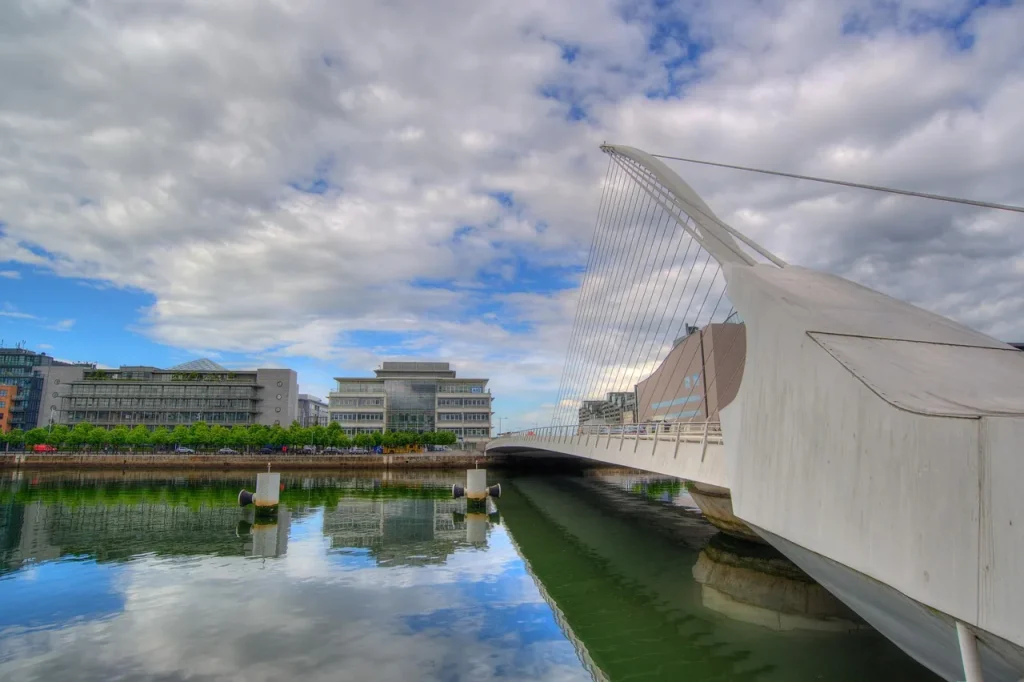
Today, its image adorns euro coins and the Samuel Beckett Bridge, whose cables trace its silhouette. Proof of its integration into modern architecture.
Three medieval harps still survive, witnesses to a precious heritage. The Brian Boru harp, displayed in Dublin, remains the most famous.
| Commercial use | State use |
|---|---|
| Guinness logo (1862) | Official flags (20th century) |
| Ryanair advertising | Coins |
| Private brands | Adopted by the Republic of Ireland |
Between culture and politics, this emblematic figure embodies a shared identity. It is found in pubs as much as on flags, uniting tradition and modernity.
The ancient history of the Celtic harp
The history of medieval music conceals a treasure: the cláirseach. This instrument, born in 11th-century Scotland, quickly became the emblem of royal courts. Its bronze strings still resonate today.
The medieval origins of the harp
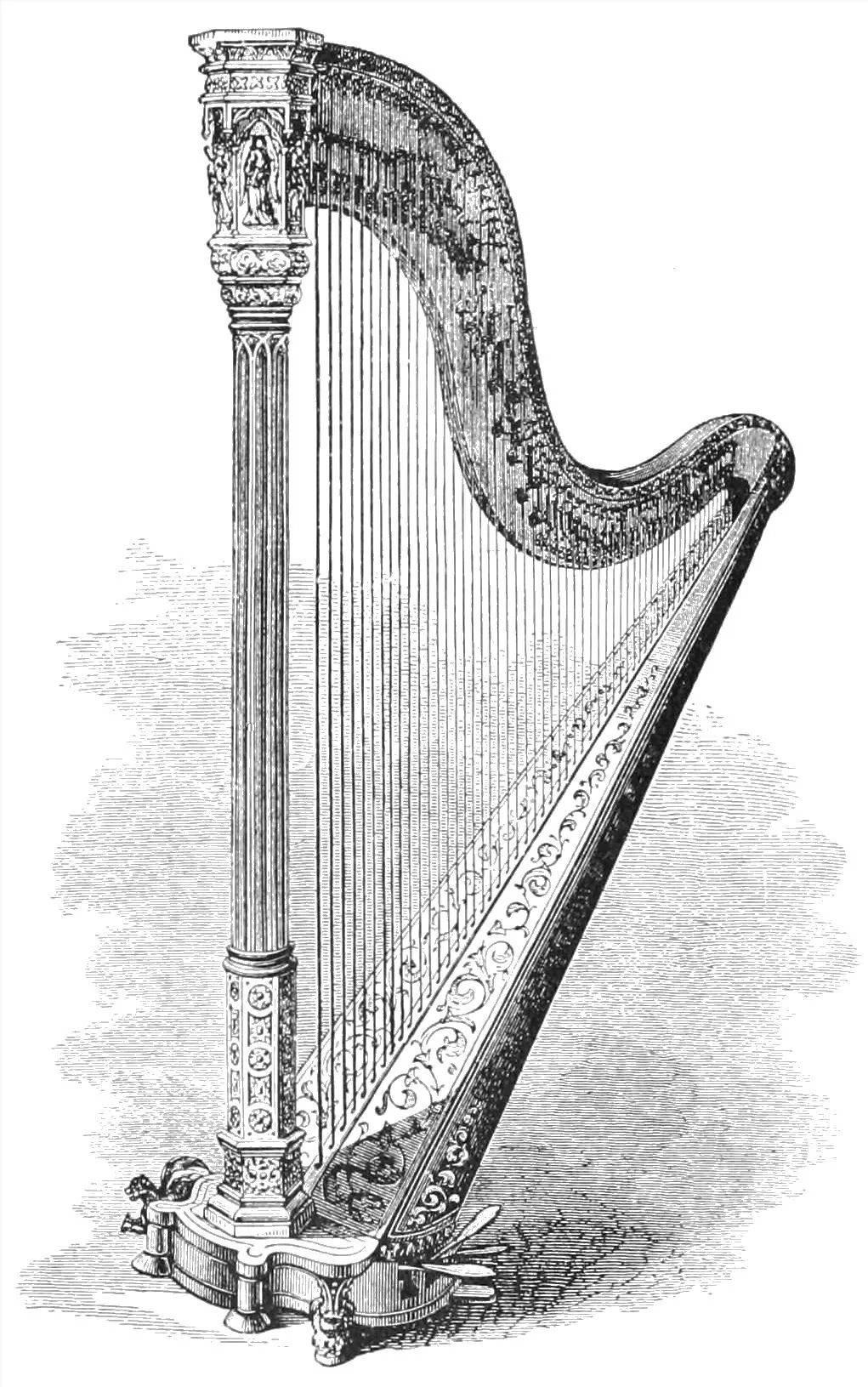
In the Middle Ages, the Celtic harp captivated the nobility. Weighing up to 30 kg, it was made of oak and decorated with intricate interlacing. In 1792, Edward Bunting saved musical scores that were in danger of being forgotten.
- A prestige instrument from the 12th to the 15th century.
- The Downhill Harp (1702) is displayed in Dublin.
- Ancient models had 71 bronze strings.
The Brian Boru harp: a national treasure
Preserved at Trinity College, this mythical piece embodies the legacy of Brian Boru, the legendary king. Its imposing dimensions contrast with those of modern harps (34 to 38 strings). A masterpiece of the Middle Ages.
“Its sound evokes the tales of Irish bards.”
The harp in Irish mythology
In ancient tales, an instrument resonates with the power of the deities. Far more than a musical object, it embodies supernatural forces and epic legends.
Dagda’s magic harp
Chief of the Tuatha Dé Danann, Dagda owned an instrument with unique powers. Stolen by the Fomorians during a war, it was recovered through a heroic stratagem.
Its three melodies influenced emotions:
- A lament that triggered mourning.
- A joyful rhythm that caused laughter.
- A lullaby that put enemies to sleep.
The harp as an instrument of the gods
The Celtic gods used it to control spirits and the seasons. Made from sacred wood and adorned with precious metals, it symbolized cosmic harmony.
“Its music linked the world of mortals to the realm of spirits.”
This myth later inspired folk tales, blending magic with Irish mythology. Its influence can even be seen in Breton stories, such as those of the Korrigans.
The harp becomes the official emblem of Ireland
A political turning point marked the history of this instrument in 1534. Moving from music to heraldry, it now embodied authority. A transition that sealed its role as an official emblem.
Adoption by Henry VIII
King Henry VIII imposed it on coins to assert his power. This decision made it a tool of royal legitimation. The newly minted coins now bore its silhouette, associated with the crown.
The 19th-century revival
The nationalist movement brought this symbol of Ireland back to life in the 19th century. The insurgents of Easter 1916 used it to unify their cause. In 1922, the Irish Free State adopted it definitively.
- 1922: adoption by the government.
- A unique agreement with Guinness on the orientation of the strings.
- Presence on passports and presidential seals.
Today, it unites tradition and modernity, from pubs to institutions. A heritage that endures.
The harp in modern Irish culture
From beer to buildings, its influence takes surprisingly concrete forms. This medieval emblem appears in everyday objects and urban space, proving its versatility.
The harp and Guinness beer
The Guinness logo, created in 1862, is almost as famous as the drink itself. In 2005, it was simplified to modernize its appearance, reducing the number of visible strings.
One intriguing detail: the State and the brewery use almost identical versions. To distinguish them, the official harp faces right, while the Guinness harp faces left.
The harp on coins and flags
On Irish euro coins, it measures exactly 22.25 mm in diameter. A monetary symbol that recalls Celtic heritage with every transaction.
Official flags have proudly displayed it since the 20th century. Even visitors often miss it: 90% unknowingly photograph the Trinity College harp.
The harp in architecture
The Samuel Beckett Bridge, designed by Santiago Calatrava, imitates its curves with its cables. A bold tribute to this national symbol.
In Dublin, the headquarters of the Central Bank of Ireland also incorporates discreet references. Local architecture plays with this motif like a recurring thread.
Conclusion: the harp, a timeless symbol of Ireland
Its legacy spans the ages, linking past and present. From coins to concert stages, it embodies a living heritage. Recognized by UNESCO, its music resonates around the whole world.
Educational programs are training a new generation of harpists. As Máire Ní Chathasaigh says: “Its music tells our identity.” A tradition that evolves without losing its soul.
To experience this magic, attend a Celtic harp concert. Let yourself be carried away by melodies that cross the centuries.