
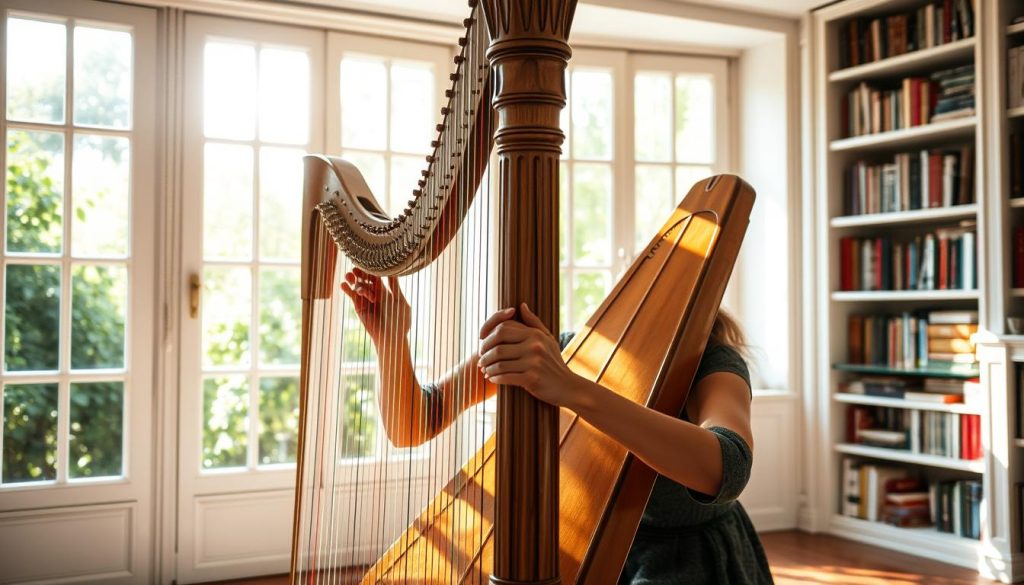
Mastering an instrument like the harp takes patience and a suitable method. Online lessons offer valuable freedom: progressing at your own pace, wherever you are.
To avoid mistakes, a structured approach is essential. Tiffany Shaefer, a renowned harpist, emphasizes the importance of free resources for getting started well.
Watch out for poor posture! Without a teacher physically present, the risk of tendinitis increases. This guide will help you combine independence with best practices.
Introduction to learning the harp online
Evelina Simon, a professional harpist, says: “The web offers resources that were unimaginable just ten years ago.” Digital platforms have opened a new chapter for this ancient instrument.
Online lessons do not replace a teacher, but they are an ideal complement to their guidance. From interactive videos to annotated sheet music, every detail matters when making progress.
In 2023, 40% of harp beginners chose self-directed learning. Even so, validating your progress with an expert remains crucial to avoid bad habits.
Whether you are aiming for classical or contemporary music, digital tools adapt to your goals. The key? Regular, methodical practice.
Choosing the right harp for your level
A Celtic harp or a pedal harp? The answer depends on your ambitions. The first model, light and affordable, suits beginners. The pedal harp, more complex, is aimed at advanced musicians.
Celtic harp vs pedal harp: comparison
The Celtic harp (€1,000-€3,000) stands out for its portability and nylon strings. Ideal for folk music or children, it requires less maintenance. The pedal harp (€8,000 and up) offers instant semitone changes, which are essential for the classical repertoire.
Selection criteria for getting started
Prioritize budget and size. A 26- to 34-string harp is enough to begin. Nylon strings are gentler on the fingers, while gut strings produce a warmer sound.
Try several models in a shop. Avoid common mistakes, such as unsuitable height or excessive weight.
Where to buy or rent your first harp
Brands such as Salvi and Camac offer reliable rentals. For purchases, choose secure platforms such as Harp Column or Leboncoin, with an in-person inspection.
Choose flexible methods: rent-to-own or guaranteed second-hand resale.
Setting up your ideal practice space
A well-organized space transforms every music session. Ergonomics and quiet are your allies for progressing without fatigue.
Ergonomic setup
Sit on a stool 45 to 50 cm high, with your back straight. The harp should rest against your right shoulder, tilted at 30 degrees.
Your hands should glide naturally over the strings. Avoid tension in your shoulders for a sustainable posture.
Essential accessories
Here are the tools needed for effective practice:
| Accessory | Purpose | Average budget |
|---|---|---|
| Electronic tuner | Maintaining accurate tuning | €20-€50 |
| Metronome | Working on rhythm | €15-€30 |
| Adjustable stool | Avoiding back pain | €80-€150 |
Creating a supportive environment
Block noise with acoustic panels or a thick rug. Lighting at 500 lux protects your eyes.
10 minutes of exercises each day is better than an hour of disorganized practice. Choose a quiet place without distractions.
Fundamental techniques to master
To play the harp with ease, certain techniques are essential. They ensure good tone and protect your body.
Body and hand position
An upright posture helps prevent pain. Your hands should form a rounded shape, as if you were holding a tennis ball.
Warm up your fingers for 15 minutes before playing. Slow rotations and preparatory movements are essential.
Plucking the strings: methods and exercises
Contact with the strings should be firm but light. Here are three approaches compared:
| Method | Benefits | Related exercise |
|---|---|---|
| Thumb-index finger | Precision | Slow scales |
| Arpeggio plucking | Fluidity | Repeated chords |
| Glissando | Dramatic effect | Ascending/descending runs |
Left-hand/right-hand coordination
Start with simple exercises. Play one note on the left, then on the right. Gradually increase the complexity.
A mirror helps correct asymmetries. Synchronization comes with regular practice.
Using levers or pedals
On a lever harp, adjust the tension without forcing it. Test each setting with scales.
For pedals, work on transitions note by note. An 8-week program produces visible results.
Online resources for learning the harp
Digital tools have revolutionized the way people approach this ancient instrument. From specialized platforms to active communities, there is no shortage of tools for making effective progress.
Complete lesson platforms
Choose structured lessons, available in French and English. The Learn the Harp – Beginner platform offers more than 100 videos spread across 8 chapters.
For personalized guidance, sites such as Silent Arena offer programs adapted to each level. Compare prices and methods before signing up.
Specialized YouTube channels
Renowned harpists share their tutorials for free. Tiffany Shaefer and Josh Layne are essential references for basic techniques.
Tip: use YouTube’s slow-motion feature to analyze each movement. François Pernel offers clear demonstrations for complex scales.
Useful mobile apps
Combining interactive sheet music and music theory exercises, apps such as Harp Master guide your fingers on the screen.
The built-in metronome and digital tuner make them perfect allies for practice sessions.
Online support communities
Connect with other enthusiasts on Harp Spectrum or Harp Column. These forums are full of advice and public-domain sheet music.
Join dedicated Facebook groups to share your progress and ask questions.
Organizing your daily practice
Regularity matters more than duration for lasting results. Tiffany Shaefer confirms: “20 minutes a day is better than 2 irregular hours.” A well-planned routine speeds up mastery of the techniques.
Ideal session length according to your level
Adapt your schedule to your experience:
| Level | Duration/day | Frequency |
|---|---|---|
| Beginner | 20-30 minutes a day | 5 times/week |
| Intermediate | 45-60 minutes | 4 times/week |
| Advanced | 90 minutes | 3 times/week + rest |
Typical structure of a practice session
Divide your time into key segments:
- 5 min: warm-up (slow scales)
- 15 min: technical exercises
- 10 min: current piece
This balanced rhythm prevents fatigue while stimulating progress.
Tracking your progress
Each week, note in a practice journal:
- Total duration
- Difficulties encountered
- Points mastered
After 3 months, reread your notes to adjust your goals.
Maintaining long-term motivation
Apply the SMART method:
Specific, Measurable, Achievable, Realistic, Time-bound
Reward yourself after each milestone. Always include a piece you enjoy at the end of the session.
Mistakes to avoid when starting out
Starting the harp comes with specific pitfalls that are best understood early. Beginners often underestimate the impact of small harmful habits on their progress.
Poor posture and its consequences
An improper position causes pain and limits fluidity. Here are the warning signs to watch for:
- Tension in the shoulders after 10 minutes of playing
- Tingling in the fingers
- A rounded back despite visual reminders
Using a mirror during practice helps correct these flaws. Consult a teacher if symptoms persist.
Traps when choosing sheet music
Avoid pieces that are too complex in the first year. Give priority to:
- Simple scales (C major, G major)
- Compositions with 2-3 repetitive chords
- Annotated sheet music for beginners
The blacklist includes Hasselmans’s “La Source” and Fauré’s “Impromptu”.
Unrealistic pace of progress
Comparing your learning speed with other people’s is counterproductive. Adopt this ideal ratio:
| Activity | Recommended time |
|---|---|
| Technical exercises | 60% of the session |
| Free pieces | 30% |
| Improvisation | 10% |
Constant self-correction undermines confidence. Note your progress each month to adjust your goals.
Deepening your practice after the basics
Moving from beginner to intermediate level opens up new musical possibilities. This crucial phase allows you to develop your own style while consolidating what you have learned.
Exploring different musical styles
The harp adapts to various worlds. Start by comparing three accessible styles:
- Celtic: fluid, repetitive melodies
- Baroque: precise, ornate structures
- Contemporary: innovative percussive techniques
Alternating between these repertoires refines your musicality. Plan for 2 pieces per style over 6 months.
Advanced techniques to work on
Prioritize these essential harp techniques:
- Natural harmonics
- Simultaneous pedals (for pedal models)
- Precise glissandos
Devote 15 minutes per session to these exercises. A mirror helps correct your movements.
Preparing your first complete piece
Choose a piece suited to your level. The ideal checklist:
| Criterion | Example |
|---|---|
| Duration | 2-3 minutes maximum |
| Chords | 3-4 main positions |
| Tempo | 60-80 BPM to begin |
Organize a small recital after 10-12 months of regular practice.
When should you consider lessons with a teacher?
Some signs are unmistakable:
- A technical plateau lasting more than 3 months
- Persistent pain despite corrections
- A desire to prepare for an exam or competition
Choose hybrid methods: 1 monthly lesson + independent work. Check the teacher’s qualifications and performance experience.
Conclusion: successful first steps with the harp
Your journey with the harp begins here. Regularity and passion are your best allies. Remember these five pillars: posture, daily practice, active listening, patience, and enjoyment.
Share your progress with other enthusiasts. Community-based learning boosts motivation. In three years, you will be able to master complex pieces and explore various styles.
Join masterclasses to refine your technique. Music grows richer day by day. One final piece of advice: record your sessions to measure your progress.