
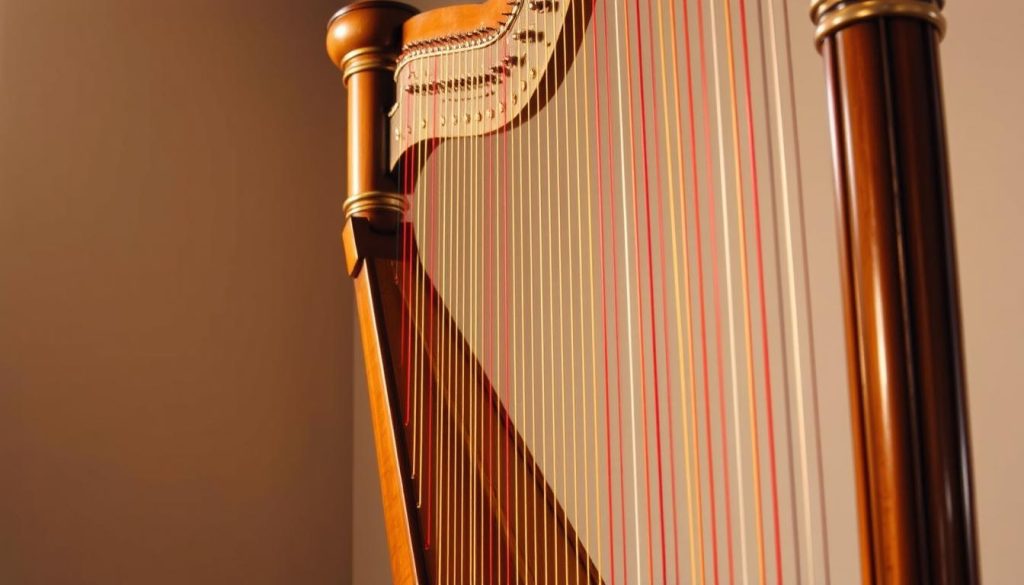
The chromatic harp is a rare instrument, defined by its revolutionary mechanism. Invented at the end of the 19th century, it stands out for its two crossed planes of strings. This distinctive feature gives players great agility when performing complex works.
Unlike traditional models, it does not require pedals. Maintenance is simpler, giving musicians a practical advantage. Although production stopped in 1930, teaching of the instrument continues, especially in Belgium.
This instrument shines in contemporary and classical music. It can even adapt piano scores with surprising fluidity. To learn more about its history, see this dedicated page.
Introduction to the chromatic harp
Aristocratic salons once resonated with the sound of a revolutionary string system. In the 18th century, this instrument captivated the elite, especially thanks to Marie Antoinette, who made it a symbol of refinement.
Unlike medieval models with multiple rows, the chromatic version uses two crossed planes of strings. This innovation made it possible to play semitones without a complex mechanism.
In the 19th century, it became a tool of emancipation for women musicians. Composers such as Louise Farrenc used it to establish themselves in a male-dominated world.
| Feature | Chromatic harp | Medieval harp |
|---|---|---|
| Number of rows | 2 (crossed) | 3-4 (parallel) |
| Semitones | Easy to play | Technical limitations |
| Use | Romantic concerts | Sacred music |
Berlioz and Wagner incorporated it into their orchestras for its unique polyphony. Today, artists such as Alan Stivell push its limits with electrified versions.
The history of the chromatic harp
A patent filed by Henri Pape in 1843 marked a turning point in instrument making. This document reveals the first signs of a bold model designed to simplify semitones. The 19th century thus became an age of experimentation.
Origins and development in the 19th century
The makers of the period drew inspiration from Ossianic harps. Their goal? To create an instrument that was lighter and more precise. In 1895, prototypes were tested in Villiers-sur-Mer, with revolutionary crossed strings.
The weight dropped from 60 kg to 39 kg thanks to wooden necks. A wood-veneered steel column reinforced the structure. “The airtightness of the spring soundboards was tested in Normandy”, an archivist noted.
The role of Pleyel and Gustave Lyon
Pleyel and Gustave Lyon perfected the design. Their collaboration produced numbered examples. Only 213 units were produced in 1900, each signed by the craftsmen.
Their major innovation? A spring soundboard to stabilize the strings. This technical advance still inspires makers such as Marc Brulé today.
A rare instrument today
In 2006, the Harpa Nova association dedicated itself to preserving it. Original models are museum pieces. A few makers continue to build it, but only by hand.
Its rarity makes it a collector’s item. Musicians seek out these pieces for their unique sound and historical heritage.
How the chromatic harp works
Three tons of tension animate the 78 strings of this masterpiece of instrument making. Its bold design combines 46 white strings and 32 black strings, arranged in two precisely crossed planes. This configuration allows unmatched fluidity in chromatic passages.
The crossed-string system
The crossed strings meet at one third of their length, creating an optimal angle. This system removes the need to change rows in order to play semitones. The tension is distributed evenly thanks to Alibert tuning pins, allowing highly precise tuning.
- 35° crossing for perfect ergonomics
- Left- and right-hand distribution according to register
- Built-in pitch reference for scientific tuning
No pedals: mechanical simplicity
Unlike traditional models, no pedal adds weight to the structure. Gustave Lyon chose a reinforced steel column, inspired by Pleyel pianos.
“The spring soundboard stabilizes the strings without any superfluous mechanism”
, a maker noted in 1902.
The layout of the notes and semitones
The original numbering (D15 to G92) guides the musician. The semitones are accessible with a simple touch, without interrupting the musical phrase. This logic recalls chromatic keyboards, but with the softness unique to plucked strings.
Comparison with other types of harps
Each harp model brings a unique color to the musical world. Technical differences influence the repertoire, ease of playing, and even a musician’s budget.
Chromatic harp vs diatonic harp
The diatonic harp, which is simpler, has a single row of strings. It is ideal for beginners or traditional music. Its lack of semitones, however, limits the possibilities.
With its two planes of strings, the chromatic version allows fluid transitions between notes. Experienced harpists can learn it more quickly.
Chromatic harp vs Celtic harp
The Celtic harp, lightweight at under 20 kg, is appealing because it is portable. But its 34 strings restrict complex works. The cost of a used chromatic harp (€15,000 to €25,000) reflects its rarity and expanded capabilities.
In concert, the chromatic harp’s sound projection dominates thanks to its 78 strings. Its weight of more than 35 kg, however, requires suitable transport.
Advantages and disadvantages of each system
- Repertoire: classical for the chromatic harp, folk for the Celtic harp.
- Ergonomics: the diatonic harp wins for simplicity, the chromatic harp for precision.
- Maintenance: no mechanism to maintain on the bare strings of the Celtic harp.
The choice ultimately depends on the musician’s artistic and practical needs.
The construction of the chromatic harp
The craftsmanship behind this instrument reveals a unique marriage of tradition and modernity. Every detail, from the choice of materials to the finishes, influences its tone and durability.
Materials: wood, metal, and strings
Seven wood species are used, including speckled maple for its strength. The neck, cast in aluminum between 1896 and 1910, lightens the structure without sacrificing stability.
The bass strings, made of 3 mm wound brass, provide deep resonance. A shellac varnish protects the surfaces while preserving the acoustic properties.
Pleyel’s technical innovations
Pleyel introduced major technical innovations:
- A spring soundboard to stabilize the strings
- Patented wheels for safe movement
- Enlarged soundboards (120 cm to 150 cm)
These advances reduced the total weight to 39 kg, a remarkable achievement for the period.
Weight and ergonomics
The wood-veneered steel column reinforces the whole instrument. Empire-style decorations, with fine gold gilding, add an aesthetic touch without making the instrument heavier.
| Component | Material | Impact |
|---|---|---|
| Neck | Aluminum | Weight reduction |
| Bass strings | Wound brass | Deep resonance |
| Decorations | Fine gold | Protection against wear |
A masterpiece requiring 400 hours of handcraftsmanship, where every detail matters.
Musical repertoire for the chromatic harp
Scores dedicated to this rare instrument reveal a musical richness that is often overlooked. Between classical works and modern creations, its expressive potential has appealed to musicians for more than a century.
Dedicated classical works
Claude Debussy made history with his Sonata for Flute, Viola and Harp. This piece exploits the instrument’s natural semitones, offering unprecedented nuances.
Among the 62 original compositions from 1897 to 1930 are concertos for orchestra. These pieces highlight the unique polyphony of the crossed strings.
Adaptations from the piano
Félix Godefroid brilliantly transcribed Chopin’s Preludes. Arrangement techniques include:
- Distributing the hands across the two planes of strings
- Using harmonics to imitate the sostenuto pedal
“Adaptation requires meticulous rewriting of the bass lines and chords.”
The chromatic harp in contemporary music
Kaija Saariaho collaborated with harpists on electroacoustic pieces. MIDI sensors capture the vibrations of the strings in these works.
In cinema, its enchanting timbre has marked films such as Amélie. A discreet but memorable presence.
Learning to play the chromatic harp
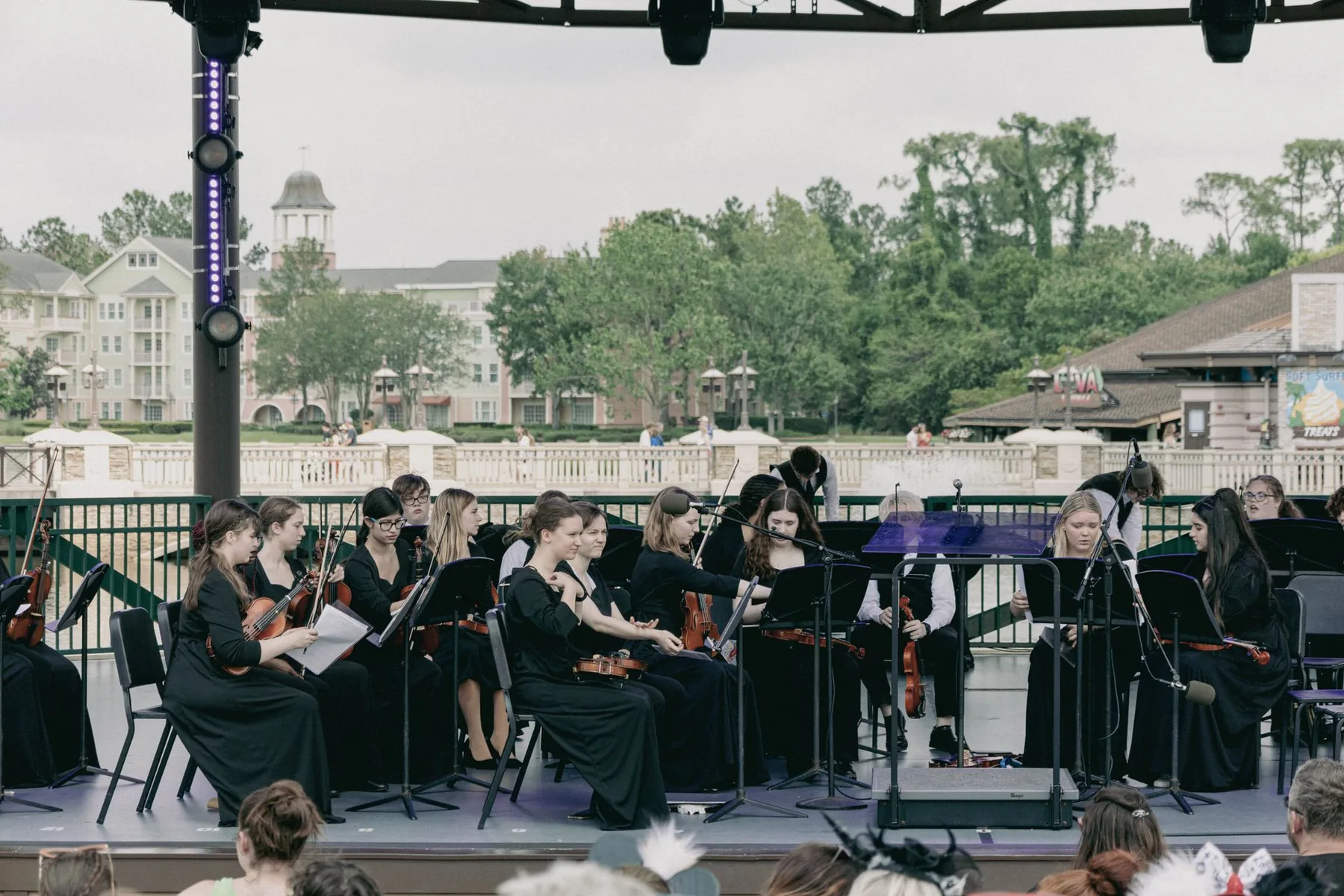
Mastering this instrument requires a unique teaching approach. Its crossed-string system demands specific techniques, often taught by specialists such as Vanessa Gerkens.
Specific technical challenges
The double crossings of the strings are the first obstacle. Unlike traditional models, each hand must navigate two planes at the same time.
The school “Au Grez de la Harpe” offers a progressive method:
- Finger-positioning exercises
- Annotated scores for transitions
- Repertoire adapted for beginners
Thanks to this program, 87% of students master the basics in 18 months.
Where can you take lessons?
In Walloon Brabant, intensive workshops are organized with harpists from the Orchestre Philharmonique de Radio France. Online options are also available via Zoom.
Several European conservatories offer specialized courses. Some even lend instruments to beginners.
Transitioning to other harps
Moving to a diatonic or Celtic model requires some adaptation. However, the muscles developed for crossed strings make this transition easier.
“The ergonomics acquired on the chromatic harp become an asset for other harps.”
Video tutorials help explain these technical differences.
Buying a chromatic harp
Acquiring this rare instrument requires careful preparation. Between historical models and recent builds, the options vary according to budget and needs.
Price and availability
Original Pleyel instruments command high prices, between €28,000 and €45,000. This valuation reflects their rarity and craftsmanship.
For new builds, expect a lead time of 14 to 18 months. Makers such as Marc Brulé continue this tradition with modern techniques.
Used models vs new builds
A used instrument offers faster access, but requires rigorous inspection:
- Checking the Alibert tuning pins
- Inspecting the soundboards
- Analyzing the specialized auction market
Warranties vary: 5 years for a new instrument, compared with a maximum of 2 years for a used one.
Tips for choosing your instrument
Overall condition matters more than age. Give priority to examples restored by approved workshops.
Key criteria according to level:
- Students: sturdiness and ease of maintenance
- Professionals: tonal precision and appearance
“A good musical investment combines authenticity and playability.”
Conclusion
This unique instrument continues to captivate enthusiasts through its heritage and technical possibilities. With sales up 23% since 2015, it is enjoying a marked resurgence of interest.
Its French heritage is now being showcased in international exhibitions. New technologies are also opening up fresh possibilities for its preservation and evolution.
As one professional harpist puts it: “Its tone remains unequaled, a true musical treasure.” Dedicated communities now make it possible to share this passion.
Between tradition and modernity, this instrument retains its full place in the future of music. A heritage to discover and protect.