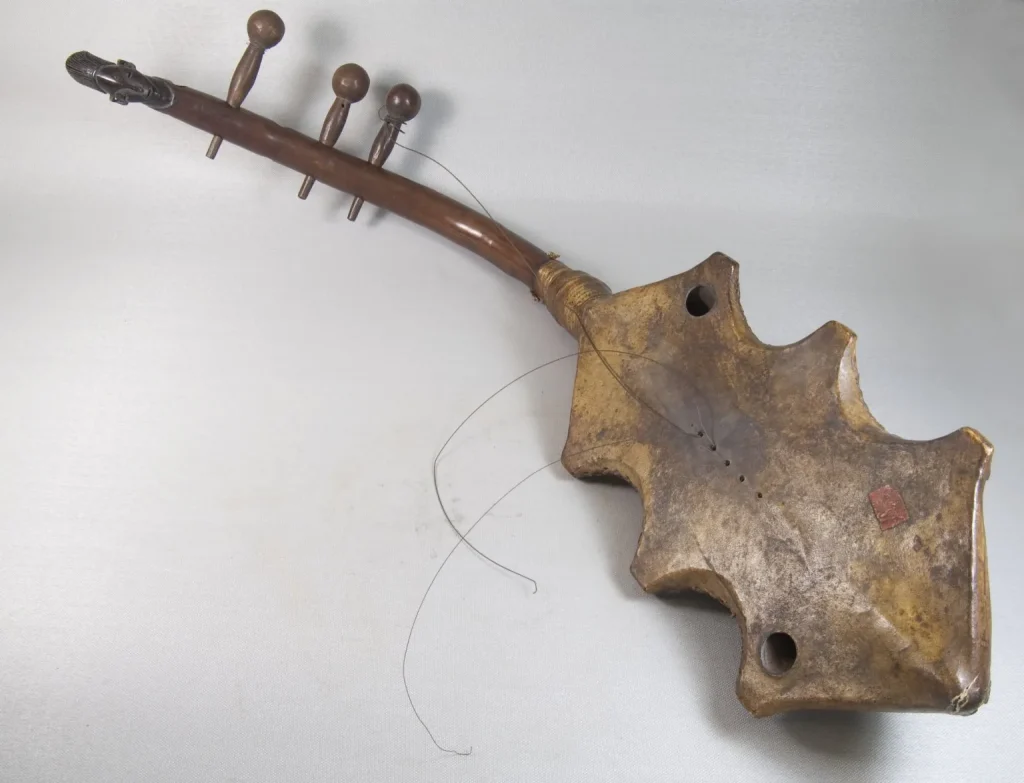
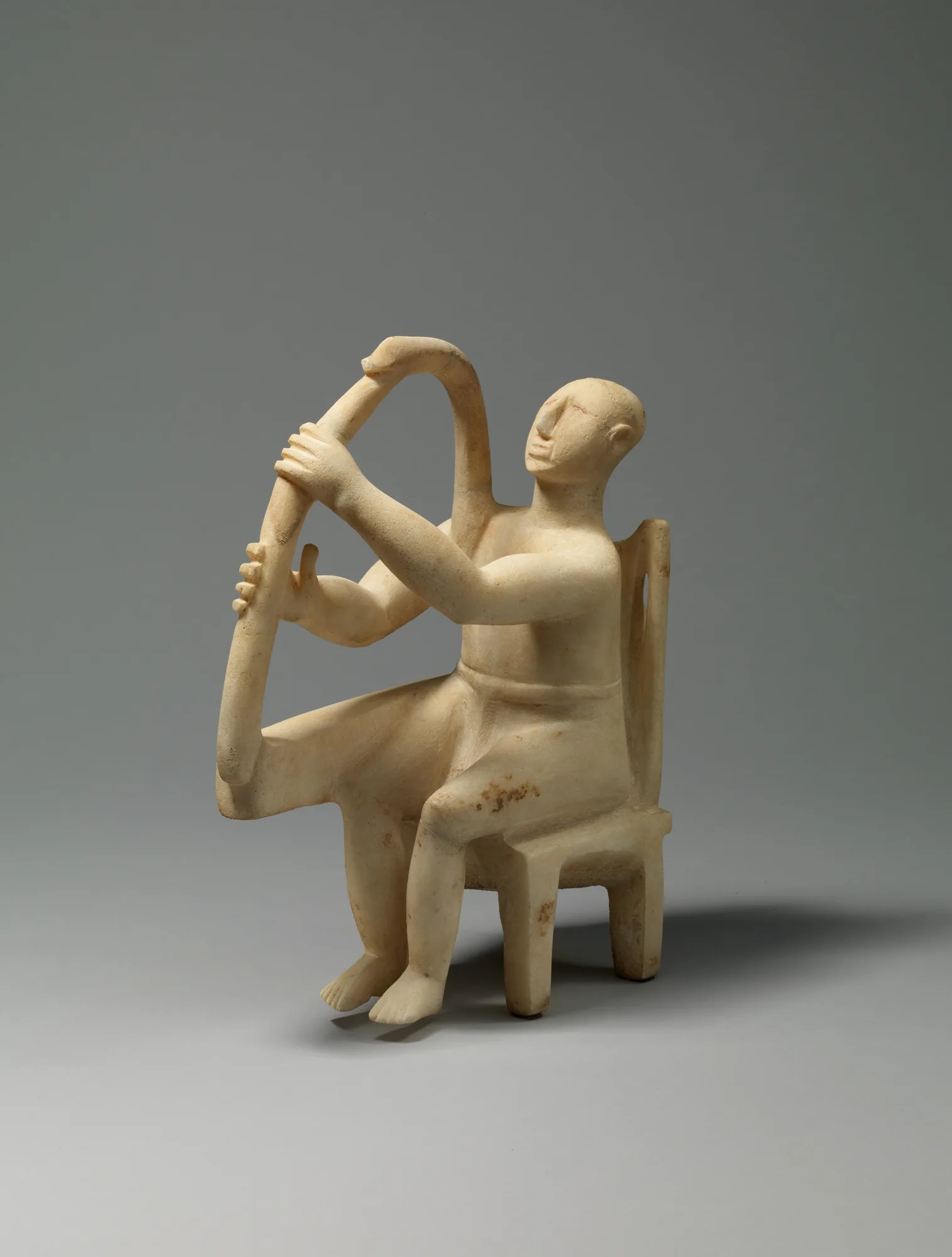
For more than 6,000 years, the harp has enchanted music lovers across the centuries. This ancestral instrument, with its celestial sonorities, holds a unique place in the history of music.
We invite you on a journey through four centuries of repertoire. From Renaissance pieces to modern compositions, each era has shaped the technical evolution of this fascinating instrument.
Some works, such as those by Monteverdi or Berlioz, show the artistic challenges composers took on. The harp demands exceptional mastery, both technically and expressively.
Its unique timbre continues to inspire musicians today. Discover how this timeless musical content has travelled through the ages to reach us.
Introduction: the harp, an enchanted instrument
Between legends and history, this instrument has crossed the ages with rare elegance. Its evolution, from ancient myths to symphony orchestras, reveals a fascinating cultural richness.
Mythological and historical origins
In ancient Greece, Hermes fashioned a lyre for Apollo, the symbolic ancestor of the harp. Christian angels, often depicted with this instrument, made it a celestial emblem.
Archaeologists have discovered traces dating back 6,000 years. The legend of Orpheus, whose music charmed even Hades, illustrates its spellbinding power.
“The harp is a voice that speaks without words.”
The harp in the classical orchestra
Moving from a pastoral instrument to an orchestral centerpiece, its integration was a challenge. Monteverdi, with his arpa doppia in L’Orfeo, marked a turning point.
Today, videos that require the acceptance of cookies show its dialogue with winds and strings. Valuable content for music lovers.
Monteverdi: L’Orfeo and the birth of the Baroque harp
The Underworld scene in L’Orfeo reveals the hypnotic power of harps. Monteverdi, a visionary, introduces the arpa doppia, a double harp with crossed strings. This instrument, rare at the time, becomes Orpheus’s musical weapon against death.
The “arpa doppia” and its role in opera
In sixteenth-century Italy, the playing technique required extreme precision. The fingers brushed the strings diagonally, creating spellbinding arpeggios. In L’Orfeo (59:09), these notes symbolize the boundary between life and death.
To analyze this scene, some videos require the acceptance of cookies. A technical detail that opens up a whole area of modern navigation functionality.
A musical enchantment for Hades
The comparison between lyre and harp in Baroque opera is striking. Monteverdi chooses the latter for its deep timbre, capable of moving even Hades. The cascading arpeggios heighten the drama.
This approach still resonates today with the profiles and centers of interest of early-opera enthusiasts. The Baroque harp remains a bridge between myth and pure emotion.
Berlioz and the Romantic harp: Symphonie fantastique
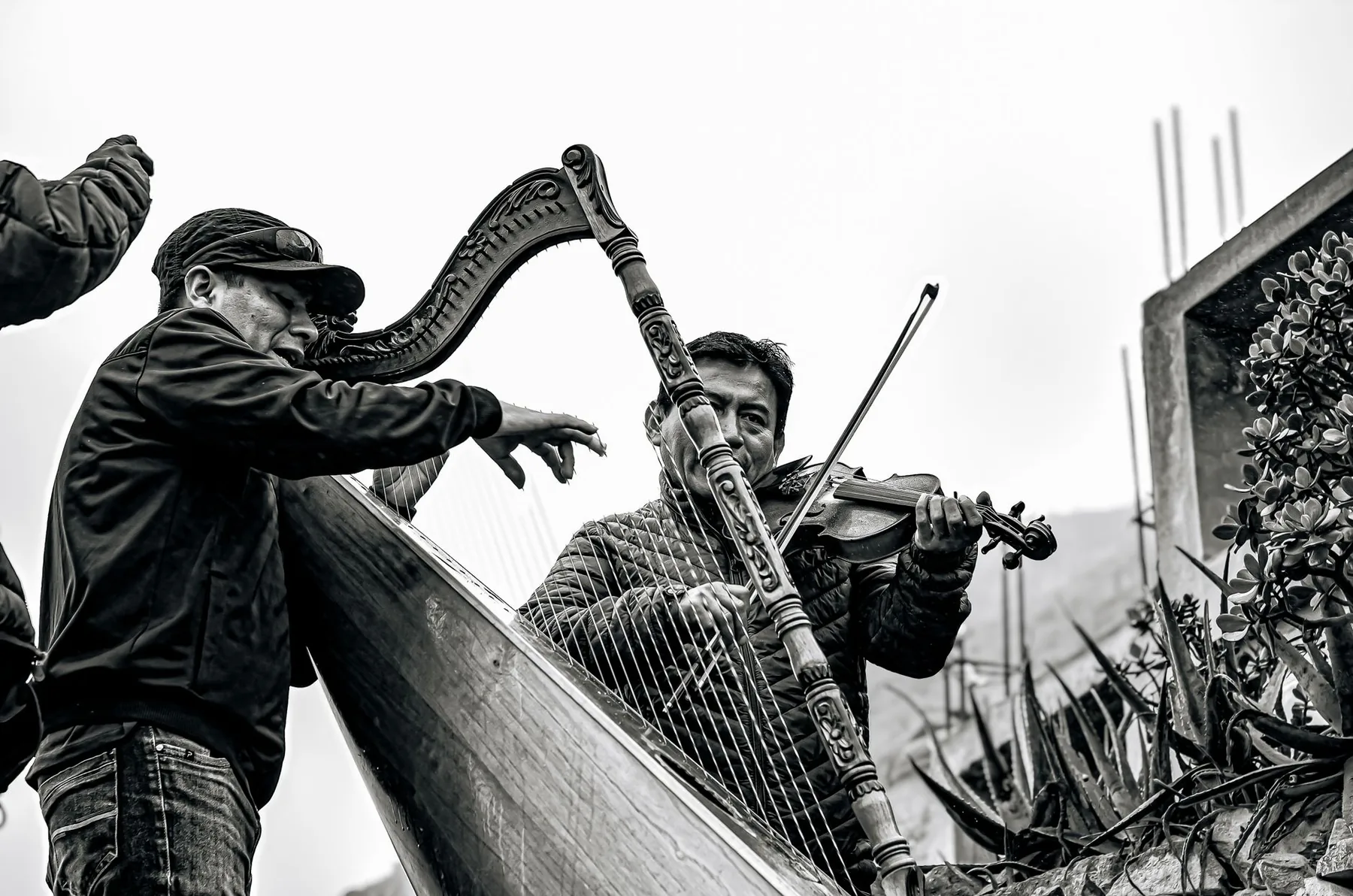
In 1830, Berlioz revolutionized orchestration with his Symphonie fantastique. The use of two harps in the movement “A Ball” creates an enchanting atmosphere, blending grace and virtuosity.
An elegant ball carried by the harps
The second movement, often analyzed at 15:09 in videos requiring cookies, is an aristocratic waltz. The harps converse with the strings, symbolizing the murmurs of a Parisian salon.
Berlioz himself wrote in his Treatise on Instrumentation:
“The harp must sparkle like light in the orchestra.”
The challenges of the 1830 premiere
Finding two qualified harpists was a challenge. The cultural advertisements of the period reveal how rare these musicians were. Yet this innovation would inspire Ravel and Debussy.
Despite the material limitations of the nineteenth century, Berlioz opened the way for a modern harp, fully integrated into the symphony orchestra.
Saint-Saëns: Fantaisie for violin and harp
In 1907, Saint-Saëns composed a piece in which two instruments converse with grace. Premiered in Italy, this fantasy marked a turning point in the repertoire for harp.
A virtuoso dialogue between two instruments
Its contrapuntal technique is revolutionary. The violin and the harp intertwine like two complementary voices, without either ever dominating the other.
Some videos requiring cookies show this interaction. At 3:22, one passage even recalls Stevie Wonder’s album Songs in the Key of Life.
The Eissler sisters and their influence
Dedicated to these passionate patrons, the work testifies to the crucial role of musical commissions. Saint-Saëns would write three scores for them.
“Their support allowed the harp to cross into new horizons.”
This collaboration already foreshadows Ravel’s experiments. A bridge between Romanticism and modernity.
Ravel: Introduction and Allegro, a technical revolution
In 1905, Ravel upended convention with his Introduction and Allegro. This piece, commissioned by Pleyel, was meant to showcase its chromatic harp. Paradoxically, the composer ultimately preferred Érard’s pedal model.
The harp war: Pleyel vs Érard
Pleyel invented a harp without pedals, with chromatic strings. Érard perfected the pedal system, which was more flexible. Ravel tested both, but chose tradition.
Videos requiring cookies show this technical difference. At 2:15, the fluidity of the pedals can clearly be heard.
The modern harp takes shape
The flute and string quartet accompany the harp in the work. This dialogue creates an unprecedented orchestral texture. Ravel explores every nuance of the instrument.
Although absent from his official catalogue, this piece influenced Debussy. Music for harp would never be the same again.
Hindemith: the Sonata for harp and the New Objectivity
In 1939, Hindemith redefined the possibilities of the harp with his Sonata. Composed under the influence of the Neue Sachlichkeit movement, this work embodies a radically new approach.
Breaking with Romanticism
Hindemith rejects excessive emotion. His Sonata favors clarity and structure. Clusters and percussive effects transform the instrument into a rhythmic tool.
This approach suits the profile of modern listeners. It recalls the innovations of jazz, as this table shows:
| Element | Romantic harp | Modern harp (Hindemith) |
|---|---|---|
| Technique | Fluid arpeggios | Percussive clusters |
| Role | Lyrical melody | Rhythmic texture |
| Influence | Berlioz, Saint-Saëns | Jazz, contemporary music |
A bold exploration of sound
Despite the troubled political context, Hindemith dared to experiment. His Sonata explores complex harmonics and micro-intervals.
This work opened the way to popular uses of the harp. It even influences genres such as film music today.
Hindemith proves that classical music can evolve without losing its soul. A legacy that is still alive.
The most beautiful classical harp pieces in popular culture
The harp transcends genres, from classical to pop. Its unique timbre appeals to varied interests, from film lovers to soul fans.
From Scheherazade to Hogwarts
Rimsky-Korsakov uses the harp in Scheherazade (1888) to evoke the East. This musical language inspired John Williams in Harry Potter.
Hedwig’s leitmotif rests on crystalline arpeggios. Music becomes a character in its own right, linking eras together.
Unexpected resonances
Stevie Wonder incorporates the harp into his cult album Songs in the Key of Life (1976). If It’s Magic shows its spellbinding potential in soul.
The Beatles also use it in She’s Leaving Home. Dorothy Ashby, a jazz harpist, proves its versatility.
| Work | Genre | Cultural impact |
|---|---|---|
| Scheherazade | Classical | Influence on cinema |
| If It’s Magic | Soul | Sampling in pop |
| Harry Potter | Film score | Generations Y/Z |
These works reach diverse interests, proving the instrument’s universality. A second Wonder album, Conversation Peace, confirms this tendency.
Bonus: breaking the clichés about the harp
Contrary to popular belief, the harp shines far beyond classical concert halls. This instrument has conquered jazz, cinema and even comedy. Two pioneers opened the way.
Arthur “Harpo” Marx, the brilliant self-taught player
A member of the Marx Brothers, Harpo taught himself. His eccentric playing popularized this instrument in the 1930s. His wild improvisations broke the harp’s overly serious image.
Archive videos requiring cookies show his comic genius. He sometimes played upside down, proving that no rule is sacred.
Dorothy Ashby’s jazz harp
In the 1960s, Ashby established the harp in jazz. Her album Hip Harp fuses bebop with classical harmonies. A revolution for its time.
“The harp can swing as much as a saxophone.”
Her influence reaches hip-hop today. Samples of her pieces circulate in urban centers. Proof that musical boundaries do not exist.
Conclusion: the harp, a timeless voice
The harp, far more than a simple accessory, is a universal voice. From technical revolutions to jazz experiments, this instrument has proved its versatility.
Explore its repertoire beyond the clichés. From nineteenth-century salons to film scores, it has captivated every era.
To grasp its full richness, listen to the video excerpts, which require cookies. Contemporary creations, such as those by John Williams, carry its legacy forward.
The harp remains a bridge between past and present. An invitation to rediscover music from a new angle.