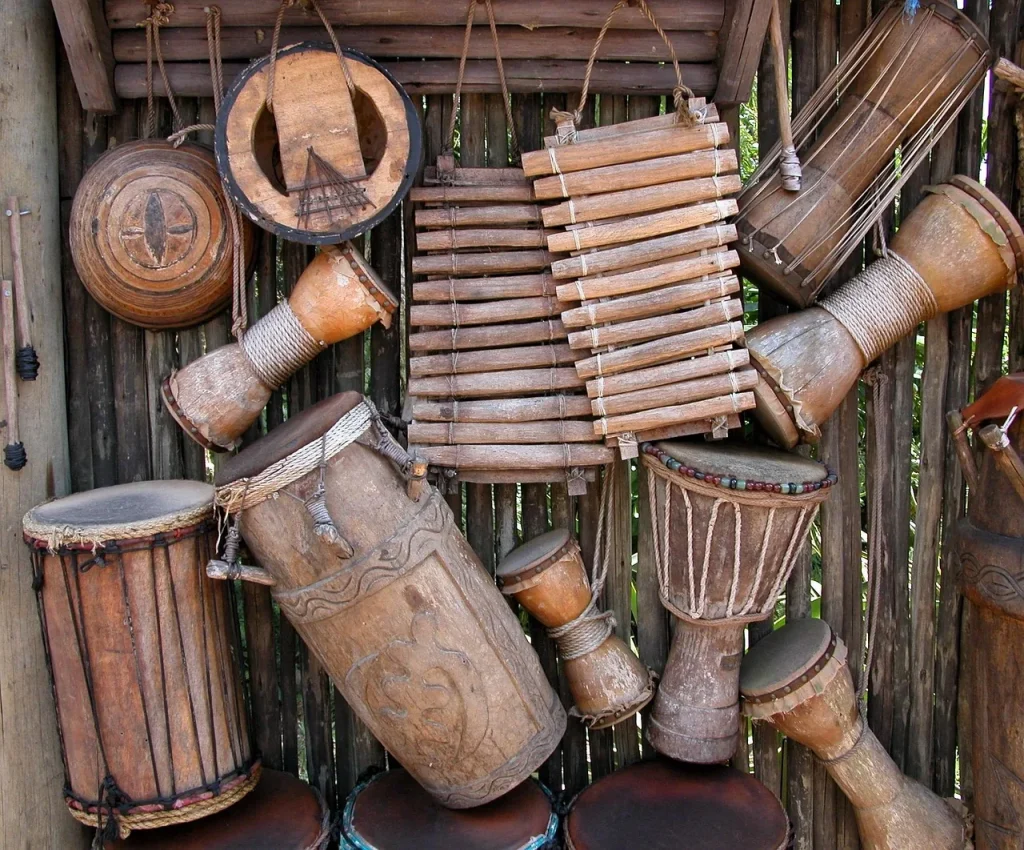
The djembe is a West African drum played with bare hands. It belongs to the percussion family and stands out for its powerful sound and very broad spectrum.
This object consists of a hollowed shell shaped like a chalice, topped with a skin stretched by a system of ropes or hoops. The skin, often goat, may also be antelope or cowhide depending on local practice.
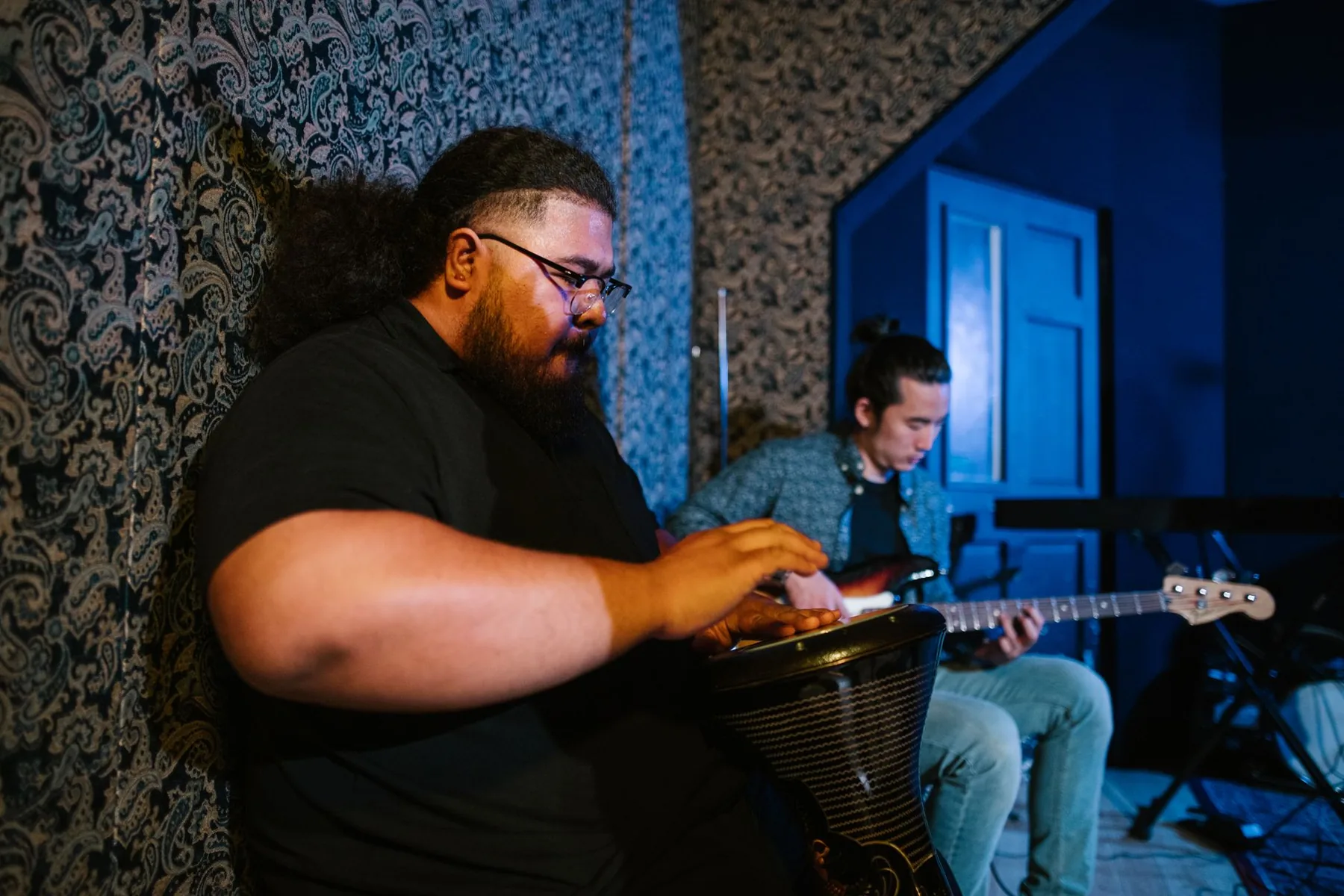
This drum is quickly recognized by its hollow wooden body, hand-playing technique, and the tension that controls its pitch. Its sound ranges from deep bass to warm midrange and piercing highs.
This introduction sets the frame: history, materials, construction, tension, and the sounds produced. To learn more about the full definition and reference points in France, see this guide.
Definition of the djembe: instrument, family, and characteristics
The drum is played with bare hands. Striking with the palms and fingers produces deep bass notes, rich mid tones, and dry high slaps.
The sound spectrum is very wide: it includes a variety of timbres, dynamic range, and strong projection that is useful in polyrhythm.
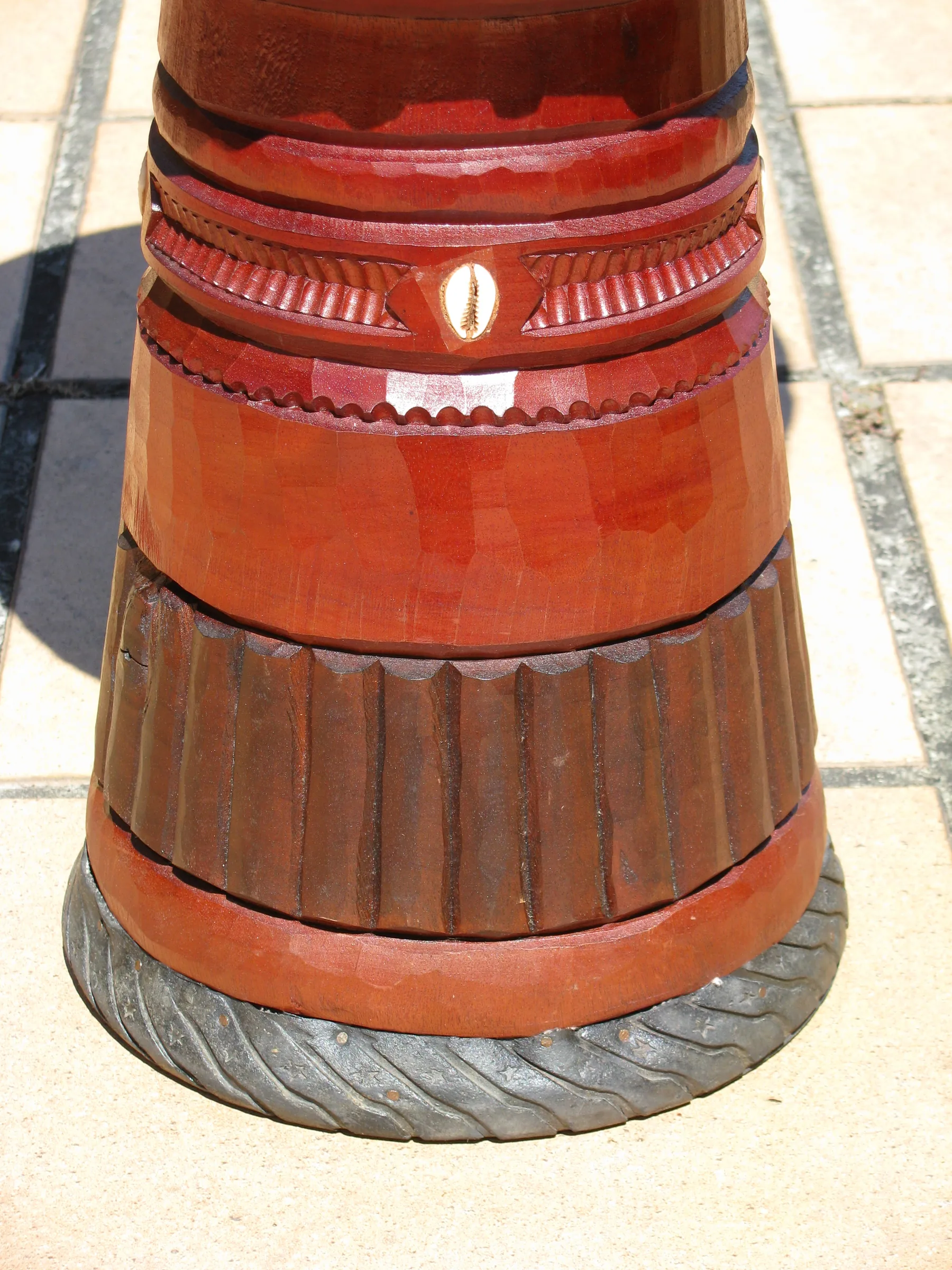
The chalice shape supports amplification. The flared shell lets air circulate and reinforces the bass. This silhouette recalls the mortar used to pound grain, linking the object to everyday gestures.
Functionally, it is a percussion instrument struck directly with the hands. Its main components remain the hollow shell, the stretched skin, and the tensioning system.
Traditional models and modernized versions are distinguished mainly by their materials and rope systems. For a complete overview, see this guide.
| Function | Technique | Sound effect |
|---|---|---|
| Central strike | Palm | Deep bass |
| Middle strike | Fingers | Tone, resonant |
| Edge strike | Side of the fingers | Sharp slap |
Instrument family and place in the percussion ensemble
The main role of this instrument becomes fully clear when several players answer one another in an ensemble. In Manding practices, it belongs to a polyrhythmic ensemble and is rarely played alone.
Rhythmic dialogue: the bass drums — doundounba, sangban, kenkeni — establish the time frame. Accompanying djembes weave repeated patterns while the solo drum improvises.
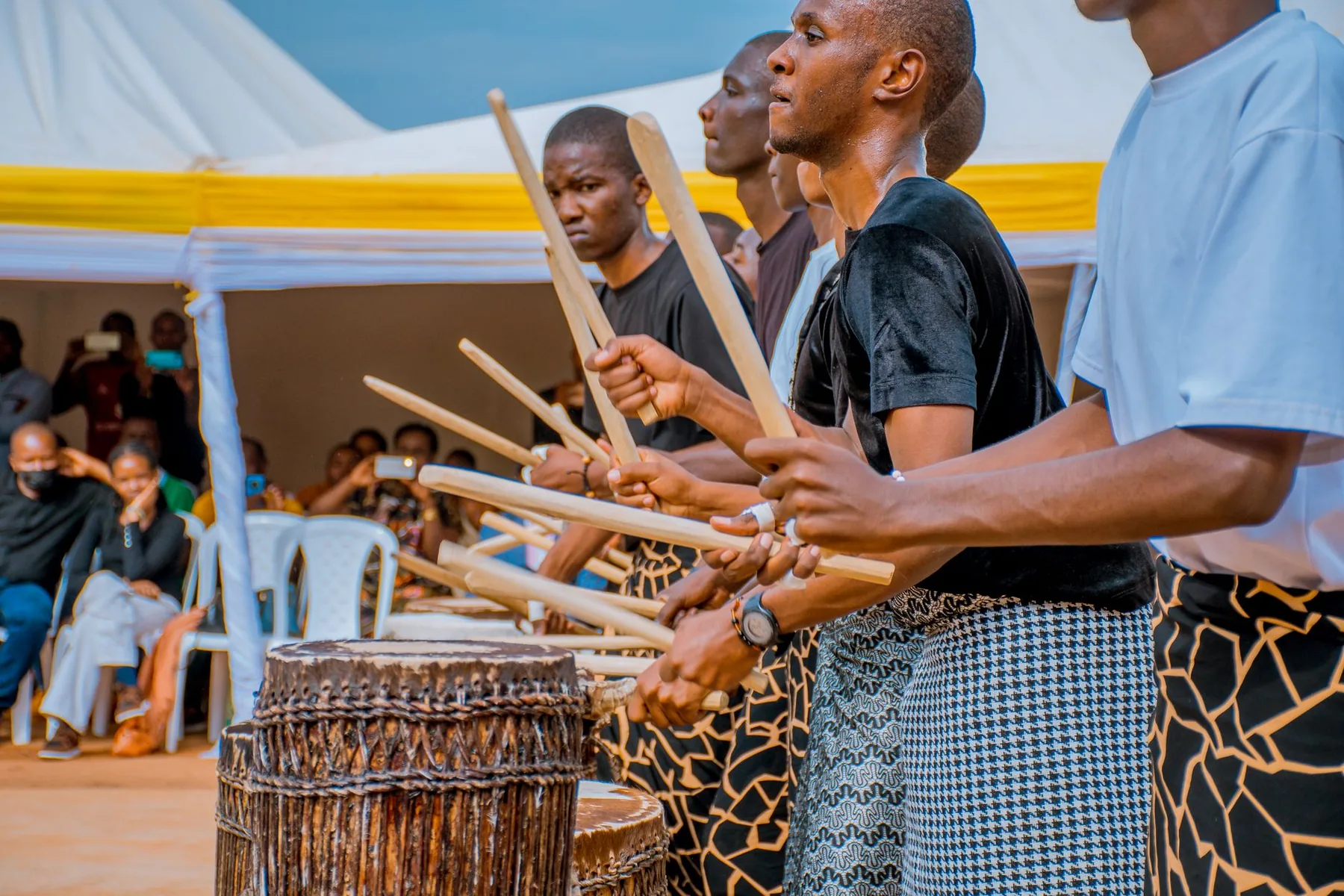
The soloist, often called a djembefola, gives calls, offers variations, and sends signals. Their phrases shape the group’s energy and guide the dance.
Dance influences the music: the soloist marks the steps, comments on movements, and modulates the length of the sequences. This exchange keeps the rhythmic school alive.
Learning and social role
Learning happens through listening to the ensemble. Understanding the bass-drum part helps a percussionist place accents. Players progress by repeating responses and placements.
- The soloist guides the intensity.
- The accompanists lock in the pulse.
- The group supports ballets and African dances during ceremonies.
Physical characteristics of the djembe
Carved from a single piece, the shell is a hollowed trunk that forms a coherent resonating body. This one-piece construction encourages stable vibrations and clear projection with every strike.
Three zones can be identified on the body: the head area (where it meets the skin), the voice (the middle section), and the foot (the amplifying opening). Each contributes to the sound color: the head gives the attack, the voice shapes the harmonics, and the foot reinforces the bass.
Common dimensions range from 45 to 65 cm in height and 25 to 35 cm in diameter. The larger the body, the more it supports powerful bass and broad projection.
In West Africa, makers use woods such as lengue or lenke, iroko, dugura, mahogany, goni, djala, acacia, or kola. The density and grain of the wood influence resonance, attack, and durability.
The skin plays a key role: goatskin is the most common because of its thinness and responsiveness, but antelope or cowhide is also used depending on the desired timbre. Thickness, possible tension, and regularity determine the clarity of the tones.
Finally, the striking surface — edge for slaps, center for bass — combined with skin quality determines harmonic stability and the variety of vibrations produced.
To explore materials and their effect on sound in more depth, see this detailed guide.
Construction and tensioning system: stretched skin, ropes, and hoops
The way the skin is fixed changes the power and brightness of each strike. The main goal of the tensioning system is to obtain an evenly stretched skin. This stabilizes tuning, reinforces projection, and sharpens attacks.
Historically, wooden pegs and rawhide cords were used. Today, synthetic ropes and reinforcing-bar iron rings are common. The modern setup improves strength and adjustment.
The three hoops and the ropework
Three metal hoops hold the skin in place. They distribute pressure and provide the base for lacing. As it passes between these hoops, the rope can increase or reduce tension.
Accessories and precautions
The seke-seke, with its small metal “ears,” resonates with the vibrations and can add presence or a light crackling effect. Used sparingly, it clarifies the tone.
- Tip: tighten gradually to avoid breakage.
- Check that the hoops are even: irregularity alters brightness.
- Choose quality rope for stability in warm weather or outdoors.
| Element | Traditional | Modern |
|---|---|---|
| Attachment | Wooden pegs, rawhide cords | Synthetic ropes, metal rings |
| Advantage | Authenticity, warm sound | Strength, easy adjustment |
| Impact on sound | Slight variations, patina | Stable pitch, controlled brightness |
How the sound is produced and what the djembe sounds are
When the skin is struck, it sets an air column in motion that sings inside the shell. The chalice-shaped resonating body amplifies these vibrations and projects the sound. The foot opening helps diffusion and colors the harmonics.
The three main sounds taught
Masters distinguish three sounds: bass, tone, and slap. Position — center or edge — and hand use change everything.
Bass
Struck in the center, the bass produces a deep low note. Use an open palm with the thumb raised. The hand must lift away quickly so it does not choke the skin.
Tone
The tone is played near the edge with the fingers held together. The palm and thumb do not touch the skin. The sound is short and controlled.
Slap
The slap produces the high sound. There are two schools: Malian — fingertips projected forward for a very dry sound; Guinean — a position close to the tone, with fingers slightly spread for a larger surface.
Complementary techniques
The matté mutes the skin by placing one hand on it. The fla combines two strikes very close together in time to enrich the phrasing.
“If the tone rings for too long, check the skin tension and the evenness of the hoops.”
| Sound | Zone | Technique | Effect |
|---|---|---|---|
| Bass | Center | Open palm, thumb raised | Deep low note |
| Tone | Near the edge | Fingers held together, palm off the skin | Short attack, controlled resonance |
| Slap | Edge | Malian: fingertips forward / Guinean: fingers spread | Dry or broader high sound depending on the school |
To go deeper into playing landmarks and tuning, see this practical guide.
Origins in West Africa and spread around the world
Born in the heart of the Manding kingdoms, this rhythmic object traveled far beyond its lands of origin.
Manding roots and historical landmarks
The earliest traces go back to the Mali Empire of the 13th century, founded by Soundiata Keïta.
Rites, festivals, and social gestures ensured local transmission. These practices rooted in West Africa shaped the codes of playing.
Export beyond Africa: ballets and the rise of the 1950s
In the 1950s, staging by Fodéba Keïta launched visibility beyond Africa.
Sékou Touré’s Guinea then promoted a national ballet that served as a cultural showcase outside Africa.
Worldwide popularization in the 1980s
The 1980s saw masters such as Famoudou Konaté and Mamady Keïta begin touring.
They created workshops in Europe, the United States, and Japan, multiplying learning centers.
Modern uses since the 2000s
Since the 2000s, use has diversified: pop-rock, afro-rock, guitar/djembe duos, and international stages.
Concrete collaborations brought percussion and guitar closer together, for example with Noel “Toca” Rivera alongside Jason Mraz or artists such as Christina Goh.
“Global diffusion has transformed practices without erasing the roots.”
| Period | Key place | Main figures | Impact |
|---|---|---|---|
| 13th century | Mali Empire | Soundiata Keïta, Manding communities | Established ritual transmission in West Africa |
| 1950s | Outside Africa (tours) | Fodéba Keïta, national ballets | Stage visibility and cultural diplomacy |
| 1980s | World (Europe, United States, Japan) | Famoudou Konaté, Mamady Keïta | Learning centers, international teaching |
| 2000s+ | Worldwide | Contemporary artists, fusion groups | Integration into pop-rock and afro-rock genres |
To explore the history and tours in more depth, see this guide.
Conclusion
To conclude, this rhythmic object stands out for its power and sound palette.
The djembe remains a West African chalice drum played with bare hands. It combines a carved shell, a skin often made of goat, and a tensioning system that shapes the timbre.
The three sounds — bass, tone, and slap — form the basis of learning. Techniques such as matté or fla enrich the percussionist’s playing.
Placed within a polyrhythmic ensemble, this instrument fully makes sense through the soloist and dance.
Its Manding roots traveled through ballets and masters. To better understand this history, see Manding history.
This article serves as a memory aid for recognizing the object, placing it among percussion instruments, and continuing practice in lessons or guided listening.