Dictionary entry: this page is presented as a glossary entry for the word djembe. It explains the form, value, and uses of the term in French.
Objective: to help readers pronounce and spell the name of the instrument correctly, and to avoid confusion linked to foreign spellings.
Immediate phonetic reference: [dʒɑ̃be]. This IPA notation highlights the “dj-” sound and possible nasalization. Practical tips for producing these sounds will be offered later.
The approach combines definitions taken from the dictionary with real examples drawn from the press, musical practice, and workshops. This connects standard usage with concrete usage in France.
Grammar note: the term is used as a noun; variations exist depending on the source. This point will be covered in a dedicated section.
Definition of the word “djembe” and characteristics of the instrument
Here, in simple terms, is what characterizes this traditional African drum.
African percussion instrument played with the hands
Definition (dictionary style): African percussion instrument consisting of a wooden shell over which a skin is stretched, played with the hands.
Construction: wooden shell and stretched skin
The body is a shell carved from wood. The membrane, often a goat skin, is adjusted with rope. Its tension directly affects the timbre.
It is struck with bare hands, without sticks. This direct contact changes the attack and the range of sounds.
Shape and materials: goblet-shaped drum, goat skin, tension ropes
The goblet-like shape supports projection and resonance. The tension ropes hold the skin in place and make it possible to adjust the pitch.
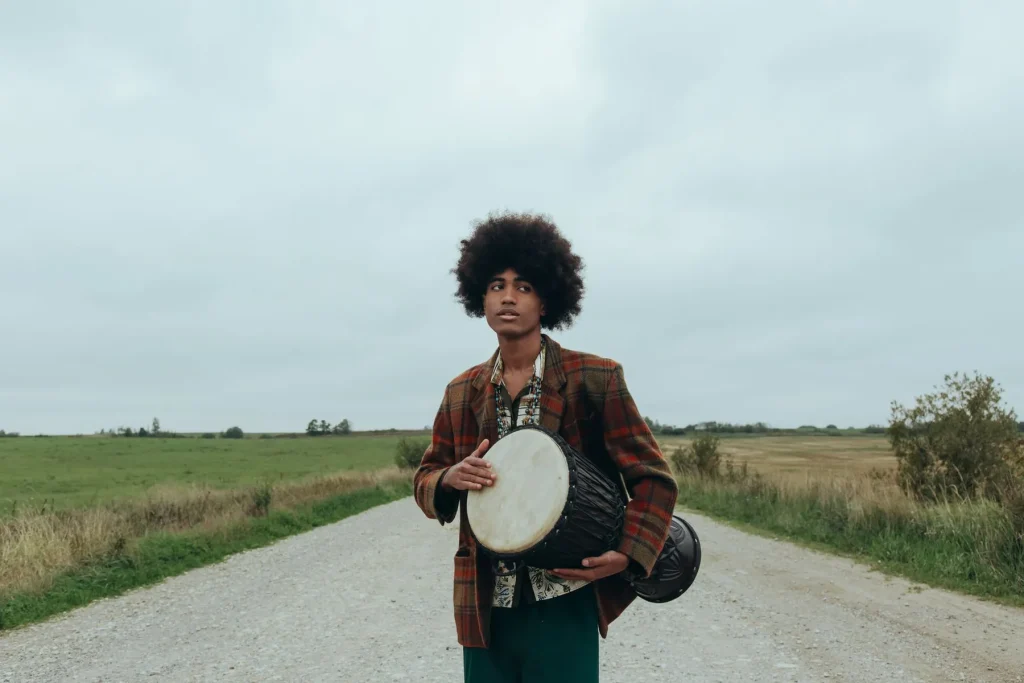
“If you see a wooden, goblet-shaped drum with a stretched skin, played with bare hands, it is very often a djembe.”
| Element | Material | Role |
|---|---|---|
| Shell | Carved wood | Body, main resonator |
| Skin | Goat (common) | Source of the sound, attack, and timbre |
| Ropework | Resistant fibers | Tension and tuning |
| Striking | Hands | Articulation of voices: basses, tones, slaps |
Useful vocabulary: shell, skin, tension, rope, strike. These words often appear in descriptions and guides.
Djembe: pronunciation, spelling, and differences in usage
This section explains the transcription, accepted spelling, and lexical origin of the word.
Sound references
The IPA transcription [dʒɑ̃be] indicates the initial [dʒ] sound produced by the letters “dj.” Think of the English “j” in “jam” to approximate this sound.
The nasal vowel [ɑ̃] is close to the sound in French “enfant.” End with a high “bé.” Together, these reference points help reproduce the form faithfully.
Written form and variations
In French, the recommended form is djembé, with an acute accent on the “é.” This spelling marks its typographic adaptation into French.
The variant without the accent, djembe, appears frequently in international contexts, in product pages, URLs, or catalogs.
Part of speech, origin, and examples
The term is a common noun: dictionaries, including Larousse, indicate “un djembé.” This settles agreement in gender and number.
The etymology goes back to Manding languages (Bambara jenbe), evidence of a lexical borrowing. For practical use, write: un djembé, le djembé, or jouer du djembé.
Use of the word “djembe” in France: contexts and examples
The word often circulates in music schools, amateur groups, and local reports.
In musical practice
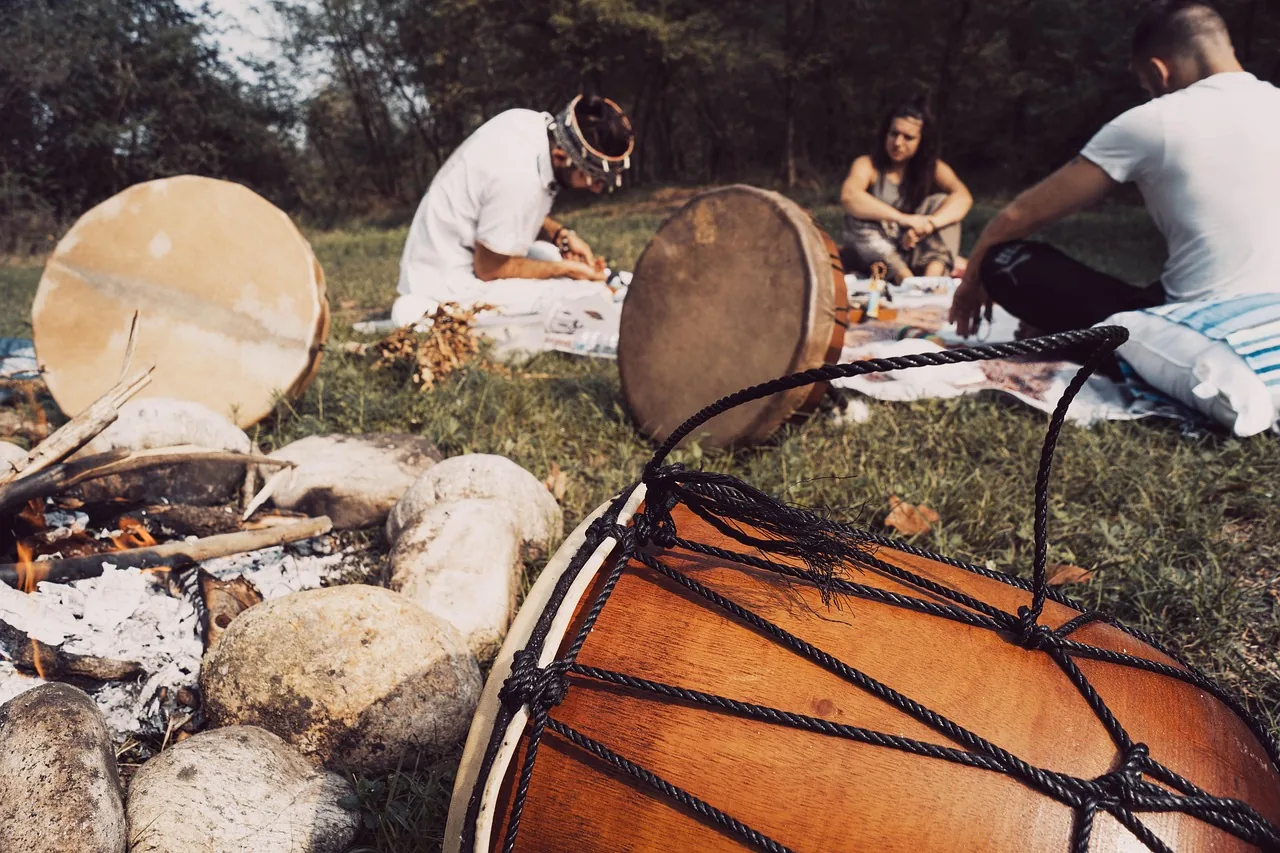
It appears in introductory workshops, percussion ensembles, and schools. The first sounds can be produced quickly with a simple hand strike, which makes the instrument accessible to beginners.
Examples: “djembe rehearsal” or “first musical experience” are common phrases in community settings.
Genres and cultural crossovers
The drum accompanies varied repertoires. It fits the rhythms of reggae, candomblé, and electronic music, bringing them a warm percussive texture.
Press and everyday life
The word also appears beyond the culture pages. In Saint-Junien, the local press reported a neighbor’s complaint about “excessive use of the djembe.” It can therefore appear in local news items.
Reference points and mini-checklist
- Associate the term with drum, hands, and the description “covered with a stretched goat skin.”
- Prefer the accented French form in running text; the unaccented version appears in international contexts.
- Avoid vague wording: mention the shell, skin, tension, or striking technique for precision.
Conclusion
In short, remember a simple and practical word for this drum: an African percussion instrument, played with bare hands, easy to describe in clear writing.
The recommended French form is written with the accent. To check agreement and spellings, consult a dictionary if in doubt.
In material terms, look for the wooden shell, the instrument covered with a skin (often goat skin), and the tension provided by ropes.
To write naturally, favor simple phrases: play the djembe, djembe workshop, wooden drum with a stretched skin. Adapt the spelling to the channel: editorial text or tag/URL.