Throughout history, medieval music has always held a fundamental place in people’s daily and spiritual lives. Studying and researching pieces from this period now lets us appreciate its many facets. In this article, we offer a few techniques for finding a piece of medieval music.
Understanding the Historical and Musical Context
To begin with, it is crucial to understand the historical and musical context of the medieval period. Medieval music generally extends from the 9th century to the 15th century, with two broad categories: religious music and secular music. Each has its own characteristics and styles.
Religious Music
Religious music is mainly made up of liturgical chants intended to accompany religious services. Gregorian chant is the best-known example of this sacred music, with monodic melodies and Latin texts sung by monks. Other forms of religious music include hymns, sequences, tropes and motets.
Secular Music
Secular music, by contrast, brings together musical works not connected with the liturgy and written in vernacular languages. It is mainly represented by troubadours, trouveres and minstrels, who composed songs of courtly love, lais, virelais and ballads. The instruments used included the lute, the vielle and the recorder.
Using Online Resources
Today, several websites are dedicated to medieval music and make it easy to find a piece according to different criteria, such as:
- The historical period (9th-15th century)
- The type of music (religious or secular)
- The composer or the author of the text
- Its geographical or cultural origin
In addition, these sites often provide audio excerpts as well as scores for studying and playing these pieces. Some may even offer translations of the texts into different languages to make them easier to understand.
Exploring Specialized Databases
Databases such as RISM (International Inventory of Musical Sources) or DIAMM (Digital Image Archive of Medieval Music) gather information on medieval musical manuscripts preserved in libraries and archives around the world. Thanks to these resources, it is possible to find a piece of medieval music by searching, for example, by:
- The name of the composer or author
- The title of the piece
- The date or place of creation
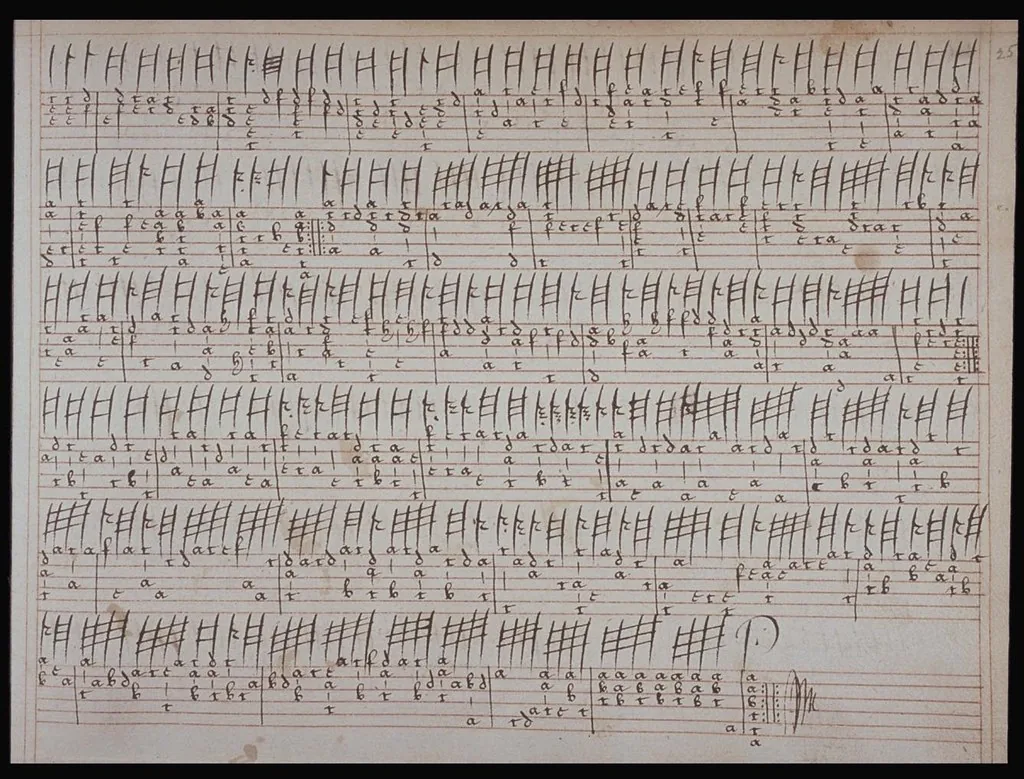
- The type of musical notation (neumes, square notation, etc.)
Consulting Publications and Specialized Books
Although online resources are very useful for finding a piece of medieval music, specialized publications and books should not be overlooked. Researchers and musicologists devote their work to studying this period, offering a wealth of valuable information.
Academic Journals
Academic journals such as “Early Music History” or “Plainsong and Medieval Music” regularly publish articles on medieval music, which can help broaden your knowledge and help you track down a particular piece. You can consult these journals in university libraries or specialized documentation centers.
Reference Works
Reference works such as the “Grove Dictionary of Music and Musicians” or “MGG Online” (Die Musik in Geschichte und Gegenwart) also provide detailed information on the different aspects of medieval music, including composers’ biographies, musical forms, instruments, and more.
Talking with Specialists and Enthusiasts
Finally, it can be rewarding to take part in conferences, symposia or workshops on medieval music in order to meet specialists and enthusiasts who can help you in your search for a piece. Do not hesitate to ask questions, share your discoveries, and exchange advice and recommendations to deepen your knowledge and find the piece you are looking for.
In short, finding a piece of medieval music requires curiosity, patience and a solid knowledge of the historical and musical context. Through online resources, specialized publications and conversations with experts, you can gradually refine your search and discover the hidden treasures of this fascinating period in music history.
Would you like to learn how to recognize medieval music within the first few seconds of listening? You can do so by reading our dedicated article, which explains it all in detail.