
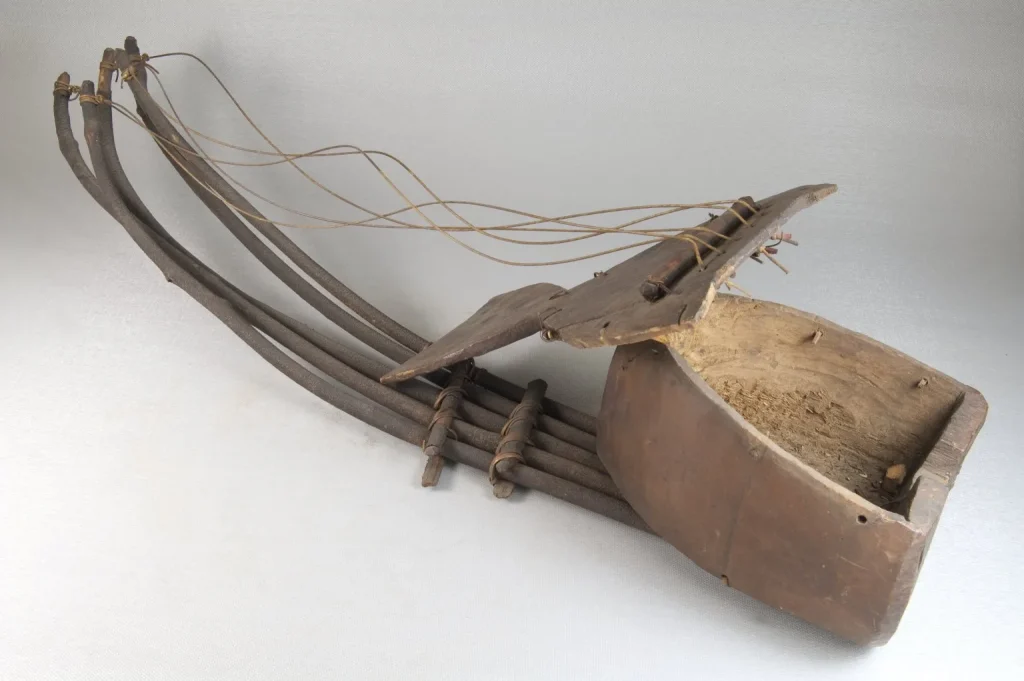
Medieval music is a vast field encompassing a great diversity of styles, genres, and musical traditions. It covers a period from Gregorian chant to the dawn of the Renaissance, roughly from the ninth to the fifteenth century. To fully appreciate this musical richness, it is essential to understand which repertoires the various works belong to and what functions they served within medieval society. This exploration will also help us better grasp how musical practices and techniques evolved over the centuries.
Gregorian Chant, the Cornerstone of Sacred Music
Gregorian chant is without question the most emblematic musical style of the Middle Ages. It takes its name from Pope Gregory I, who is said to have supervised its creation in the sixth century. This monodic chant, meaning it consists of a single unaccompanied melody, was intended to accompany the Catholic liturgy and make sacred texts easier to memorize. The pieces in this repertoire are mainly preserved in manuscripts known as antiphonaries, which gather the chants used for religious offices.
Neumes, the First Musical Notations
To transmit and stabilize this oral tradition, the first forms of musical notation appeared as neumes. These were graphic signs placed above the syllables of the text, indicating melodic movement. Over time, neumes gradually developed into a more precise notation system, making it possible to determine the pitch and duration of notes.
Polyphony, a Major Innovation in the History of Music
One of the great musical revolutions of the Middle Ages was undoubtedly the emergence of polyphony, the art of combining several voices or melodic lines simultaneously to create a harmonious sonic fabric. This technique, probably developed as early as the ninth century, expanded considerably throughout the medieval period and gave rise to many musical genres and styles.
Organa, Ancestors of the Motets
The first known polyphonic repertoire is that of the organa, which appeared around the tenth century. In these pieces, a main voice, called the vox principalis, sings a liturgical text to a Gregorian melody, while another voice, the vox organalis, is added below it to create counterpoint. This genre would later evolve into motets, polyphonic compositions in which each voice sings a different text.
The Development of Secular and Courtly Music
Alongside religious chant, secular music also flourished during the Middle Ages. Inspired by legends, love songs, and epic tales, these works testify to the cultural vitality of aristocratic courts and urban circles.
Trouvères and Troubadours, Poet-Musicians of the Twelfth Century
The trouvères (in the langue d’oïl) and the troubadours (in the langue d’oc) were poet-musicians who composed and performed their own songs. These artists, generally from the nobility, celebrated courtly love and chivalry through refined texts and often highly elaborate melodies. Their works have been preserved in manuscripts known as chansonniers, which are a precious source for the study of medieval secular music.
Musical Instruments as Vehicles of Artistic Expression
The medieval period also saw the development of musical instruments such as the vielle, flute, harp, and lute. These instruments were used either solo or to accompany voices, giving rise to genuine concerts in aristocratic courts. The medieval instrumental repertoire is unfortunately less well documented than the vocal repertoire, but the study of iconography and contemporary treatises helps us better understand the place and role of instruments in medieval society.
Musical Manuscripts, Precious Witnesses to the Past
The medieval musical heritage has come down to us thanks to the many manuscripts preserved over the centuries. These precious documents, often richly illuminated, contain not only the melodies and texts of the works, but also a whole series of indications about the musical practices and techniques of the time. Studying these manuscripts, along with complementary written sources such as theoretical treatises, chronicles, and poems, makes it possible to carefully reconstruct the sonic and cultural world of medieval music.
Modern Editions of Medieval Works, a Scholarly Endeavor
The rediscovery and appreciation of this rich heritage depend on the meticulous work of music editing, which consists of transcribing older notations into modern notation so that the works become accessible to today’s musicians and researchers. This work also involves in-depth research into the historical, literary, and artistic contexts of the works, in order to better understand their meaning and aesthetic significance.
Thus, medieval music offers an extremely rich and diverse panorama, bearing witness to the creativity and inventiveness of the artists of that era. By exploring the different repertoires and studying their specific features, we can grasp the complexity and beauty of this thousand-year-old art, whose works continue to fascinate and inspire our imagination.
Have you recently heard a piece of medieval music and would like to know its title? It will not be easy, but you can get the beginning of an answer by consulting this article, which will give you all the tips you need to succeed in that process.