Medieval music is a fascinating field that encompasses various traditions, genres, and instruments dating from the Middle Ages. It gives us a window onto the lives, beliefs, and practices of the peoples of that era. This article explores the different aspects of medieval music, such as liturgical genres, Gregorian chant, and the instruments used at the time.
Musical Genres in the Middle Ages
The musical styles of medieval music can be grouped into two broad categories: vocal music and instrumental music. Each of these categories is divided into several genres.
Vocal Music
Vocal music was very important during the Middle Ages, especially for religious ceremonies. Among the most representative vocal genres are:
- Gregorian chant: this is a monodic genre (based on a single voice) and primarily religious, characterized by its simple, flowing melody. It was sung during liturgical offices and gave rise to many other musical genres.
- Polyphony: this refers to the art of superimposing several independent voices or melodic lines. Medieval polyphony developed significantly from the 12th century onward, with genres such as organum and composers such as Léonin and Pérotin.
- Secular music: although less well known than sacred music, it also included many genres, such as the songs of troubadours and trouvères, which were sung poems accompanied by instruments.
Instrumental Music
As for instrumental music, several types of instruments were used in the Middle Ages:
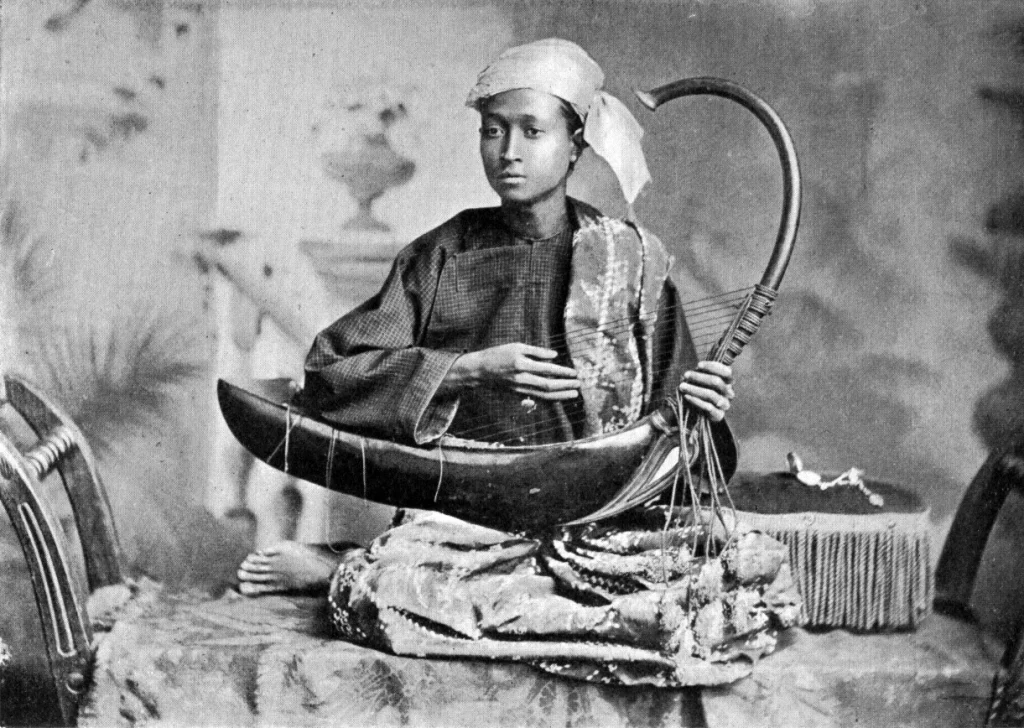
- Plucked string instruments (such as the harp or the lute)
- Wind instruments (such as the transverse flute, the oboe, or the cornett)
- Percussion instruments (drums, cymbals, etc.)
These various instruments were often combined to form musical ensembles for performances, celebrations, or religious ceremonies.
Gregorian Chant, a Pillar of Medieval Music
Gregorian chant is undoubtedly one of the most emblematic aspects of medieval music. This musical genre takes its name from Pope Gregory I, who is said to have overseen its creation toward the end of the 6th century. It is characterized by a monophonic, a cappella melody, meaning without instrumental accompaniment, and is generally sung in Latin.
Gregorian chant grew considerably during the Middle Ages, especially thanks to the adoption of neumatic musical notation, which made it possible to write melodies on parchment. This notation system, along with the use of plainchant (a simple, modal melody), allowed Gregorian chant to spread throughout Europe and establish itself as the main musical genre of religious ceremonies.
Secular Music in the Middle Ages
Although sacred music played a central role in medieval life, the importance of secular music should not be overlooked. It was performed by professional or amateur musicians, such as troubadours, trouvères, and minstrels, who traveled across France and Europe to offer their services to royal, noble, and ecclesiastical courts.
Secular music encompasses a wide variety of musical and poetic styles and genres, ranging from courtly love songs to social and political satires. Its themes were highly diverse, including love, war, politics, religion, and nature. Among the most famous works are chansons de geste, such as the Song of Roland, as well as the lyric poems of Occitan troubadours.
Medieval Instruments
Musicians of the Middle Ages had a wide range of instruments at their disposal, often grouped into musical ensembles called “consorts.” Here are a few examples of instruments typical of the period:
- The vielle: this bowed string instrument was very popular in the Middle Ages and is considered an ancestor of the violin. It is characterized by its oval shape and its four to six strings.
- The psaltery: a close relative of the zither, this is a plucked string instrument whose strings are stretched over a wooden soundbox. Its name comes from the Latin “psalterium,” meaning “instrument for plucking.”
- The recorder: this wind instrument was already present in Antiquity, but became increasingly popular during the Middle Ages. There are several types of recorders, ranging from the small sopranino to the large bass.
- Percussion: drums, nakers (a type of small kettle drum), bells, and sistrums were frequently used to give rhythm to medieval music.
In conclusion, medieval music offers a fascinating panorama of genres, instruments, and musical practices that bear witness to the cultural richness of the Middle Ages. Whether through Gregorian chant, polyphony, or secular music, its melodies and texts transport us into a world imbued with spirituality, love, and poetry.
Do you know the individuals who shaped and invented medieval music? You will see that its creation is attributed to many historical figures.