
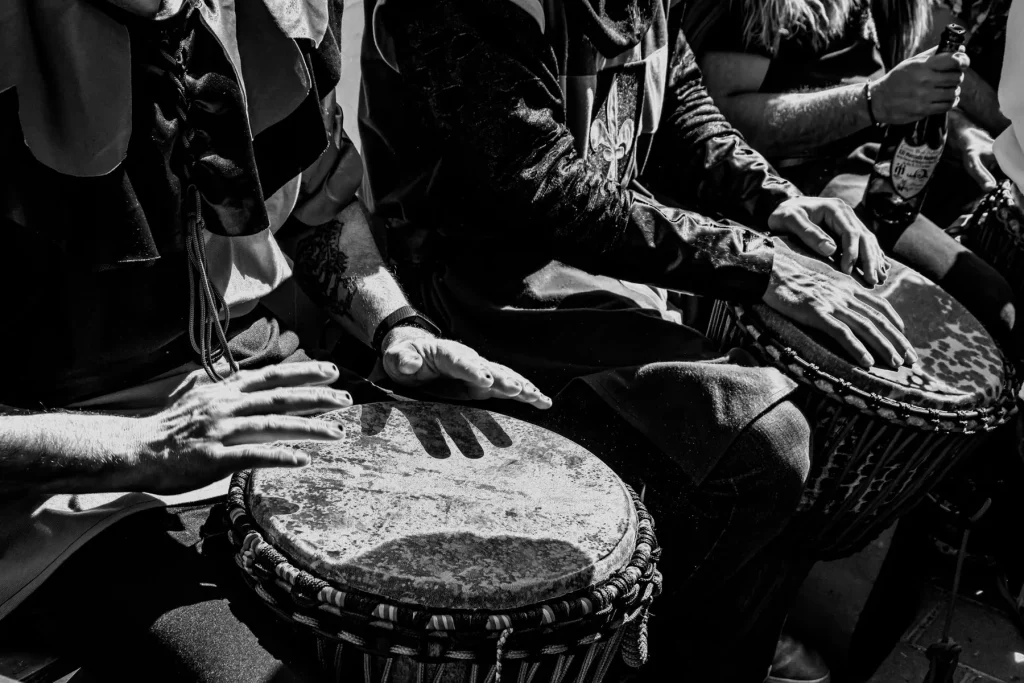
Welcome: this article guides you step by step toward producing clear, repeatable strokes on your djembe.
Before speeding up or adding variations, the goal is simple: master three fundamental timbres through posture, gesture, rebound, and regular practice.
Here you will find a sensation-based method: hand placement, relaxation, and progressive exercises to gain more power and clarity, especially on the slap, which is often frustrating at first.
The plan is clear: define a “beautiful sound,” set up your posture, prepare the hand, execute the strokes, strengthen the slap, then stabilize at tempo and optimize the instrument.
Mindset: patience, listening, and intelligent repetition. Avoid tension, an overly flat hand, lack of rebound, or playing on a poorly tuned instrument.
Understanding the basic djembe sounds and what makes a “beautiful sound”
The real work begins in the ear: defining a sound goal before acting helps you control every stroke.
A beautiful sound can be recognized by its stable resonance and audible harmonics. It should remain identical from one stroke to the next, even at a moderate tempo.
The drumhead works like a small vibration system. Depending on where you strike, the color changes: at the center, the note is rounder and deeper. At the edge, it becomes higher and more precise. Between the two, hybrid zones offer useful timbres.
“You must first think the sound… imagine it… then play it with your hands”
The “imagine, then execute” approach separates intention from gesture. Rather than increasing force, listen, adjust the placement, and feel the rebound under the hand. This practice refines the experience and prepares you to learn the strokes in real playing situations.
| Zone | Characteristic | Recommended use |
|---|---|---|
| Center | Deep, round, resonant | Deep notes, rhythmic support |
| Edge | High, precise, percussive | Accents, detail, and clarity |
| Intermediate zone | Mixed, balanced | Transitions and colors |
Holding your instrument properly and adopting a posture that frees movement
A good setup changes everything: it shapes the gesture and the quality of the sound.
Sitting on a chair: stability and energy economy
Sitting on the edge of an armless chair helps keep the back straight. Place the djembe between your legs, base on the floor, with knees apart to stabilize everything.
Tilt the instrument slightly toward you to reach the edge without raising your shoulders. This position saves energy and speeds up learning.
Sitting on the floor: access to the head and long-term comfort
Cross-legged or kneeling, angle the drum so the head is easy to reach. Change posture if your lower back pulls or if your legs go numb.
Standing with a strap or harness: recommended adjustments and tilt
Use a sturdy strap and adjust it so the head sits at pelvis height. The instrument should be tilted slightly forward for better access.
Back-shoulder-arm alignment: avoiding tension and gaining precision
Keep the back long, the shoulders low, and the elbows free. The arms guide the movement; they should not carry constant tension.

“Posture shapes the sound: a stable base lets you play more accurately, for longer.”
In short, a good position makes center/edge placement easier and improves clarity. To play the djembe consistently, choose the setup that frees your movement and protects your long-term experience.
To learn how to play in good conditions, start by testing these positions and adapting them to your body type.
Preparing the hand: placement, relaxation, and stroke path
Sound quality begins with hand preparation, not force. Precise placement and a supple wrist make practice more effective and less tiring.
Hand, fingers, phalanges, palm: what touches the drumhead, and when
Depending on the register you want, different areas of the hand must touch the drumhead. The palm produces deep notes when it strikes the center. The fingers and phalanges produce higher timbres at the edge.
Wrist and “rebound”: letting the impact do the work
The wrist is not a rigid motor. It transfers energy and should send the hand back upward after the impact.
Look for brief contact, then an immediate rebound so the drumhead can resonate.
Angle of attack and amount of flesh: the micro-adjustments that change everything
A few millimeters of angle, or one finger placed slightly farther forward, changes the timbre. Explore the edge by varying the angle and the amount of flesh involved.
- Relax your hands for 10 seconds.
- Strike slowly at the center, then toward the edge.
- Keep the wrist supple and observe the rebound.
“Precise contact followed by release: that is what lets the drumhead speak.”
A prepared, relaxed hand will make it easier to distinguish between low, mid, and high sounds in the rest of the article.
Djembe technique: bass, tone, slap, mastering the basic sounds
Start by clearly distinguishing each stroke so you can control timbre and repeatability.
Deep bass
Aim for the center with the whole palm. Let the weight of the arm drop rather than striking hard.
Firm contact, then release, allows the drumhead to resonate and produces a round, sustained low sound.
Clear tone
Strike the edge with four fingers held together, without the thumb. Keep the palm lifted so you do not choke the sound.
The stroke should come out immediately and rebound to stay consistent.
High slap
Still at the edge: fingers spread, hand slightly rounded. The contact is extremely brief.
Aim for a cutting high sound, not a flat clap. Rebound and the finger/hand combination make the difference.
Comparisons and common mistakes
- Tone vs. slap: same general zone, but finger position and contact duration differ.
- Mistakes: fingers too tense (loss of rebound), hand too flat (the slap does not happen), contact too long (muted sound).
- Practical cue: if the sound improves when you play more softly, the technique is settling in; then increase the volume.
Prioritize repeatability: same pitch, same dynamics, before speeding up.
To deepen your learning and find reliable reference points, consult a practical guide for playing your instrument.
Developing a powerful, clean slap with a progressive method
Building a precise high sound begins with millimeter-by-millimeter exploration of the edge. Sit in a stable way, position the instrument, and focus on moving the hand from one millimeter to the next.
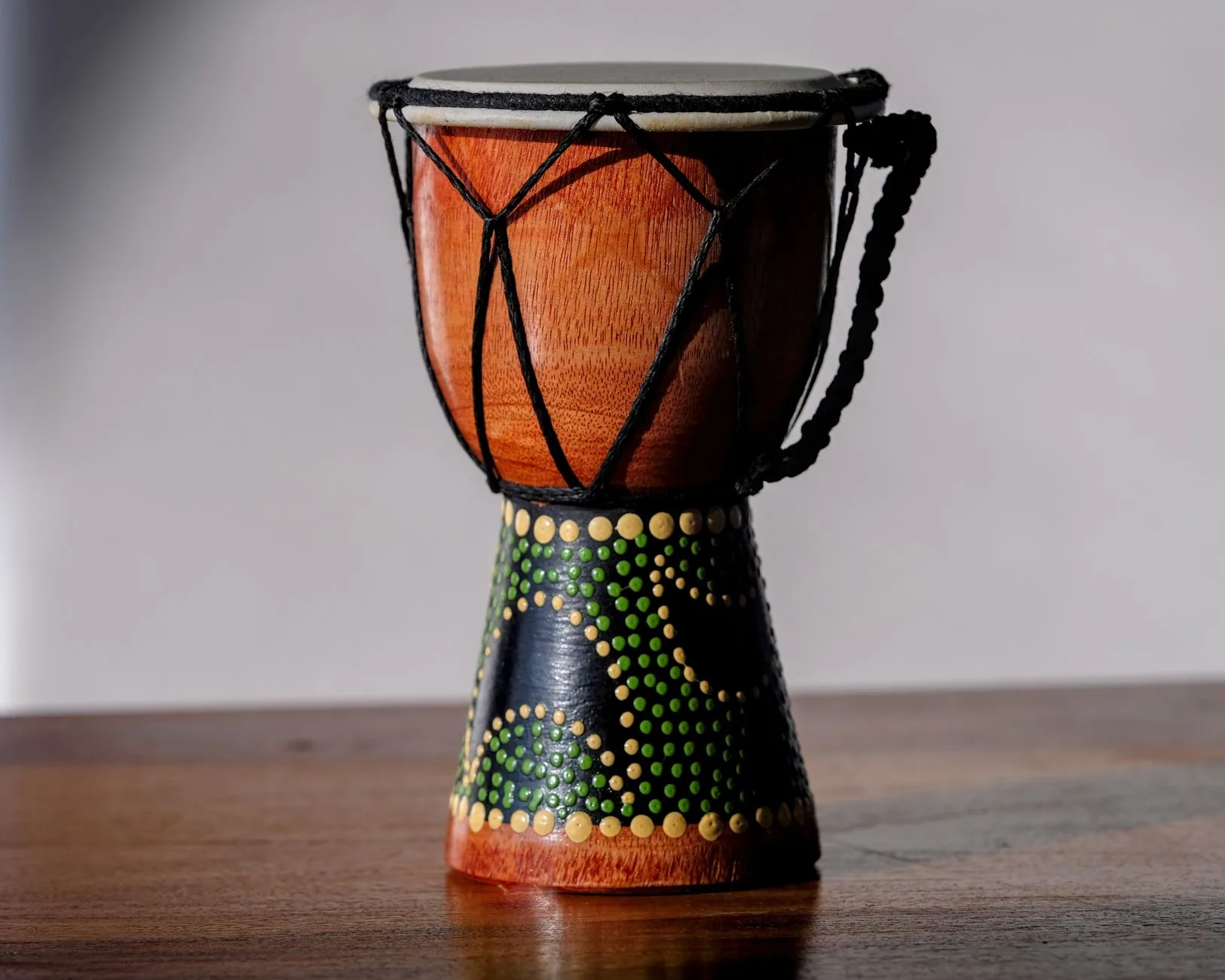
Explore the surface
Strike at the edge while varying the angle and finger position. Move the fingers slightly forward or backward to test the zone that triggers the high sound.
Balance between relaxation and tone
Keep the fingers slightly mobile: neither stiff nor too loose. Rebound comes from release; impact comes from a quick transfer from the arm.
Hand confidence in a musical context
Play simple rhythms with inserted slaps. When a good slap comes out, keep playing to memorize the sensation.
Accept patience: this sound is built more than it appears by chance.
- Method: explore, locate, reproduce.
- Sensation: notice the balance between release and engagement.
- Goal: find the same slap several times during practice.
After finding the sound in context, return to technical work to stabilize the difference between tone and slap and balance the strong hand and weak hand.
Practical exercises to stabilize bass, tone, and slap at tempo
Here is a series of simple exercises to stabilize your strokes and improve your rhythm. Always work with a clear goal: steady pulse, consistent sound color, then gradual tempo increase.

Tone/slap exercise on a pulse
On a pulse, play one bass stroke, then one slap in quarter notes. Repeat slowly 8 times.
Then move to eighth notes with the same sequence. Observe the opening and closing of the fingers on each stroke.
Metronome work and coordination
Start with the strong hand, then spend more time on the weak hand. Use the metronome to check regularity and timing placement.
If one hand sounds less good, slow down until you get the same quality.
Accents, variations, and context
Learn to mark an accent without forcing the arm. The accent comes from clear intention and a clean gesture, not excessive pressure.
Apply these routines to simple rhythms, then test them in a jam to check consistency when your attention shifts.
Tip: record 30 seconds of practice. Listen to the stability of the strokes and correct what moves.
| Goal | Tempo | Duration | Focus |
|---|---|---|---|
| Tone then slap in quarter notes | Slow (60-70 BPM) | 5 min | Opening/closing the fingers |
| Tone/slap in eighth notes | Medium (80-100 BPM) | 5 min | Timing placement |
| Strong/weak hand alternation | Variable | 10 min (weak hand longer) | Sound balance between hands |
| Application in a musical rhythm | Real context (jam) | 10 min | Sound resilience in context |
Optimizing the sound with proper drumhead tension and a suitable instrument
Before working on speed, make sure your equipment helps you hear what you are looking for.
Well-tensioned, high-quality head: a head that is too loose “eats” the high frequencies and makes the slap unrewarding. A quality head offers clear harmonics. It speeds up learning by giving immediate feedback.
Tuning goal
The tension should be even across the whole surface. Look for a lively response and a clear rebound.
You should hear a clear difference between the center (low) and the edge (high).
Regularity and tactile memory
Always playing on the same instrument creates stable reference points. The edge/center distance and the tilt become familiar.
This consistency speeds up progress and protects the hands from fatigue.
Choosing size and materials
- Suitable size = comfortable access to the drumhead.
- Wood and construction influence projection and the balance of the drum’s registers.
- Check stability and the absence of unwanted contact before each session.
“A good instrument does not replace technique, but it reveals it faster.”
Conclusion
To conclude, remember the essentials that guide all progress in sound.
The balance between posture, relaxation, and placement matters more than speed. Each stroke follows a different logic; learn it before speeding up.
Work through the cycle listen → explore → stabilize at tempo, then bring what you have learned back into a musical context. The high slap is built through micro-adjustments and confidence, not pure force.
A few clean minutes each day and recordings of short sessions are enough to notice progress. To go further, follow a class or videos and play in a group.
For practical reference points on the slap, consult a dedicated guide and integrate these tips into your practice.