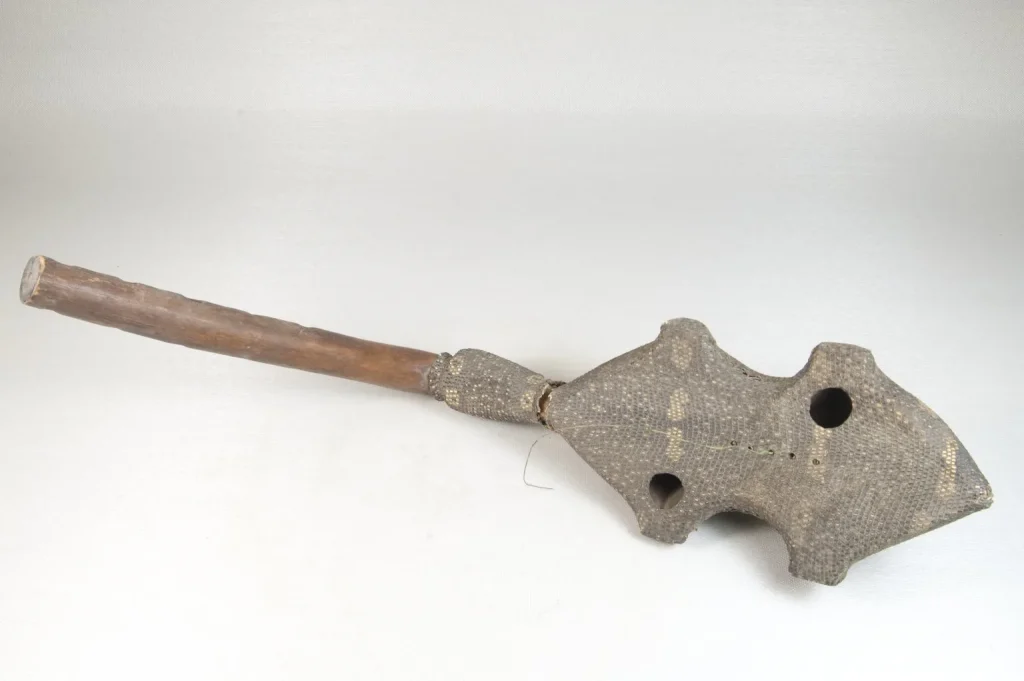
This fascinating instrument, with its vibrating strings, has accompanied humanity for more than 5,000 years. The earliest traces date back to ancient Mesopotamia, around 3500 BC. A legacy that crosses centuries and continents.
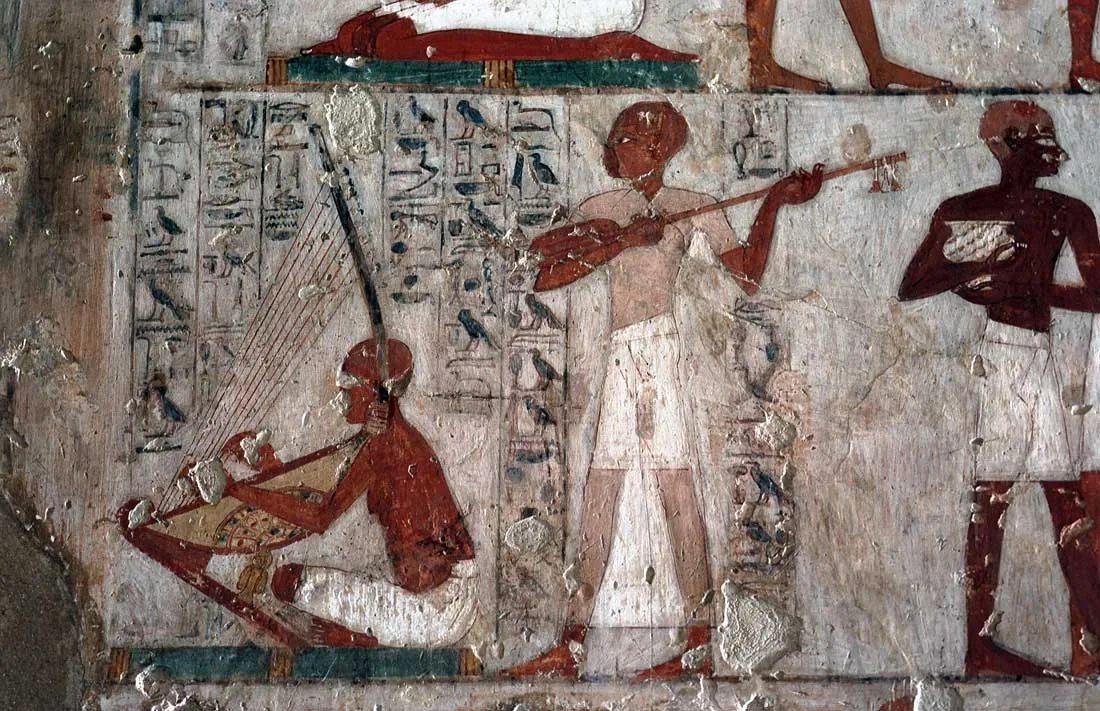
In Egypt, it played a sacred role, serving as a bridge between humans and the gods. Later, it became a symbol of prestige in European courts. Each culture shaped its own version, enriching its history along the way.
Technical innovations, such as pedals, revolutionized its sound. Today, it still captivates listeners, from Celtic melodies to electroacoustic experiments. A musical journey through time.
The Ancient Origins of the Harp
From the dawn of civilizations, this string instrument captivated peoples. Its evolution reflects cultural and technical exchanges across the centuries. Let us explore its most distant roots.
The Harp in Mesopotamian and Egyptian Civilizations
In Mesopotamia, the earliest traces date back to 3000 BC. Excavations in the Royal Tombs of Ur revealed richly decorated examples. These angular models contrast with the arched forms of the Nile.
The Egyptians used gut strings, with 12 to 16 strands. Reliefs show its role in religious ceremonies. Precious wood and gold inlays emphasized its sacred status.
| Civilization | Type of harp | Materials |
|---|---|---|
| Sumerian | Angular | Wood, lapis lazuli ornaments |
| Egyptian | Arched | Gut, acacia, gilded decorations |
The Arrival of the Harp in Europe Through Celtic Cultures
Mediterranean trade routes helped it spread. As early as Egypt’s Sixth Dynasty, Irish tin encouraged exchanges. The Celts adapted the instrument to their warrior culture.
In Ireland, primitive willow models appeared. The metal strings were plucked with the fingernails. Scottish Pictish stones preserve the earliest representations of them, around the ninth century.
This legacy deeply shaped traditional music. Celtic symbolism made it a national emblem, still alive today.
The Harp in the Middle Ages and the Renaissance
Between the twelfth and sixteenth centuries, this instrument underwent a major evolution. Its role in medieval and Renaissance music made it a cultural symbol. Royal courts and artists contributed to its rise.
The Medieval Harp: A Diatonic Instrument
Equipped with 24 gut strings, its structure featured a characteristic curved pillar. Its diatonic system limited modulation, but suited Gregorian chant perfectly.
Illuminated manuscripts, such as the Chronicles of Rudolf von Ems, preserve precise depictions of it. Minstrels used it to accompany chansons de geste.
“The harp teaches as much as Plato, when it is handled well.”
The Influence of Troubadours and Royal Courts
The troubadours popularized its use in courtly romances. Under Francis I, royal commissions encouraged innovation. Court festivities made it a prestigious instrument.
| Period | Type | Characteristics |
|---|---|---|
| Medieval (12th-15th) | Gothic | 21-28 strings, gut, diatonic |
| Renaissance (16th) | Arpa doppia | Double row, 58 strings, chromatic |
The technical evolution toward the Italian arpa doppia marked a turning point. This double-row version finally allowed complex harmonies, paving the way for the Baroque repertoire.
The Technical Revolution: From Pedals to Double Action
The technical advances of the eighteenth century marked a decisive turning point. Luthiers completely rethought the mechanics, moving from fixed strings to adjustable systems. This evolution allowed richer harmonies and unprecedented virtuosity.
Hochbrücker’s Invention and the Single-Action Harp
In 1697, the Bavarian luthier Jacob Hochbrücker patented a system with 5 pedals. Each operated hooks to alter the tension of the strings. A lever under the foot made it possible to obtain flats without retuning.
Jean-Henri Naderman perfected this model in 1776. His creation for Marie Antoinette included gold ornaments and 34 strings. Price: 600 livres, far more than a harpsichord!
Sébastien Érard and the Fork System
In 1810, the Frenchman Sébastien Érard revolutionized the mechanism. His double action used rotating forks. They shortened the string to produce two semitones, expanding the repertoire.
This innovation inspired works such as those by Krumpholtz. Philharmonic orchestras quickly adopted it. Today, these prestigious models can be admired at the Musée de la Musique in Paris.
The Harp at the French Court: An Aristocratic Symbol
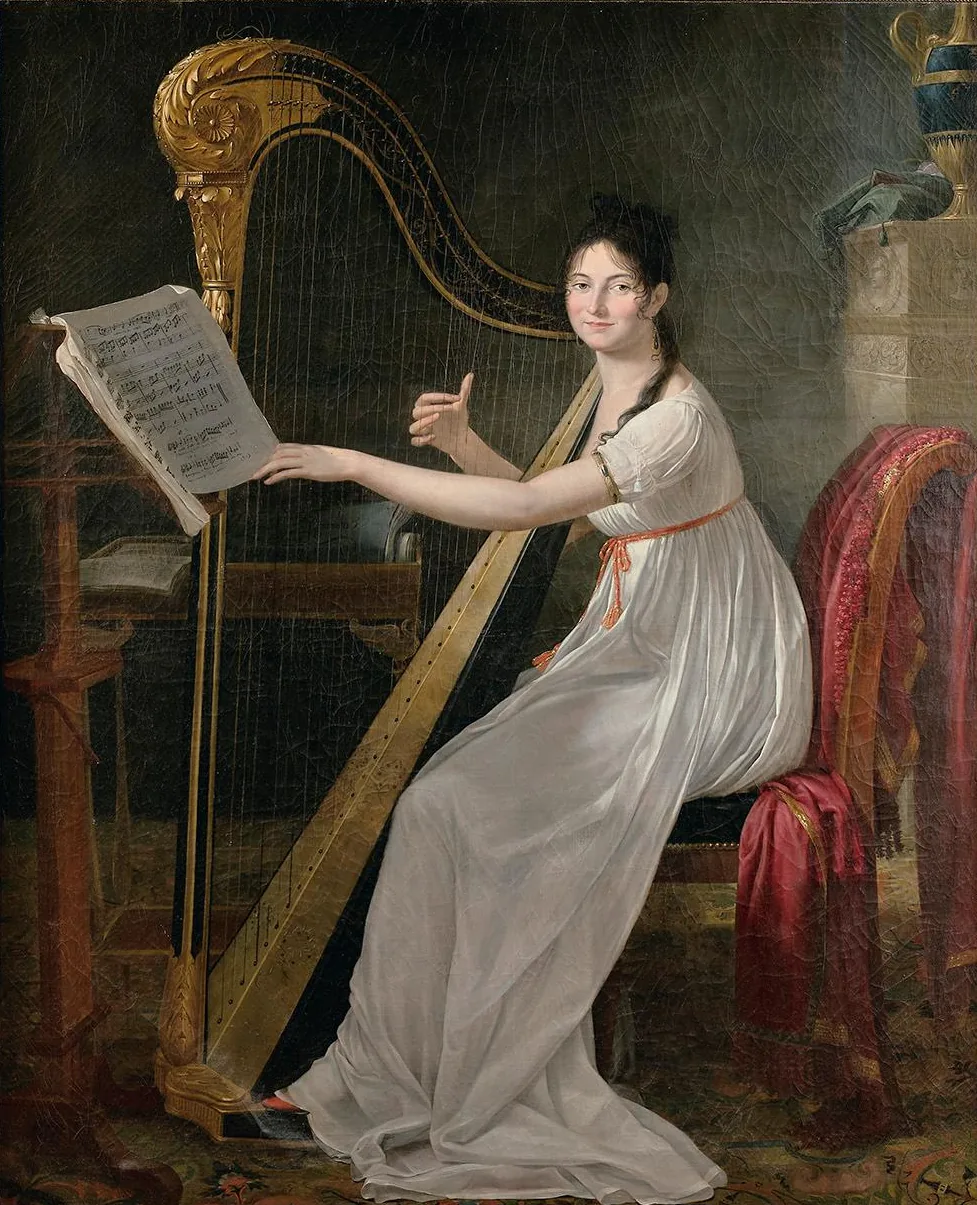
A symbol of refinement, the harp became an aristocratic essential. Under Louis XVI, owning a personalized model signaled high social status. European courts competed to hire the finest luthiers.
Marie Antoinette and the Harp Craze
The queen collected eight instruments, decorated by Riesener. Her lessons with Georges Adam Goepfert popularized the practice. A century later, the Conservatoire incorporated this teaching.
Madame de Genlis transformed pedagogy. Her methods, inspired by Meyer’s treatises, emphasized expressiveness. Fine gold decorations illustrated bucolic scenes.
Parisian Makers and the Golden Age of Craftsmanship
The Cousineau workshops dominated the market. Their precise marquetry and innovative mechanisms appealed to the elite. In 1784, Paris counted 60 master harpists.
The Parisian makers exported their expertise. Their creations reached 1,000 livres, the price of a townhouse. The Revolution scattered these treasures across Europe.
| Workshop | Specialty | Average price (livres) |
|---|---|---|
| Cousineau | Pastoral marquetry | 800 |
| Naderman | Silent mechanisms | 950 |
| Erard | Double-action prototypes | 1,200 |
The Harp in the Orchestra and Classical Repertoire
Debussy and Berlioz opened a new era for orchestral harmonies. The instrument, long confined to salons, conquered major symphonic ensembles. Its crystalline timbre brought a unique palette to nineteenth-century works.
Berlioz, Debussy, and Symphonic Integration
Berlioz revolutionized the use of the harp in his Symphonie fantastique. The second movement, *Un bal*, uses plucked notes to evoke an aristocratic waltz. An innovation for its time.
Debussy pushed experimentation further with the Danse sacrée et danse profane. Commissioned for the Pleyel harp, it explores extended octaves and ancient modes. The score, preserved at the BnF, remains a model of modernity.
Major Works Dedicated to the Harp
Boieldieu’s Concerto in B-flat (1800) marked a milestone. Composed for the Conservatoire, it blends virtuosity and lyricism. Ravel would later collaborate with Micheline Kahn on bold arrangements.
- Strings: copper/steel basses for power, nylon trebles for softness.
- Le Sueur’s Ossian (1804) uses 12 harps, a record for the period.
- Hindemith’s Sonata reinvented playing techniques in the 1930s.
Schott editions played a key role in spreading this repertoire. Today, these works still inspire performers around the world.
Traditional Harps and Their Cultures
From Ireland to the Andes, this instrument has woven unique bonds with each culture. Regional variations reveal ingenious adaptations to local materials and musical repertoires.
The Celtic Harp: Revival and Modernity
In the 1970s, Alan Stivell transformed perceptions of the Celtic harp. His legendary album, Renaissance of the Celtic Harp, fused ancient melodies with contemporary arrangements.
Two schools emerged:
- The Breton branch (Jord Cochevelou) favors chestnut soundboxes
- The Irish approach uses bronze strings for a more metallic sound
The Dinan competition has encouraged innovation since 1994, with creations such as Camac’s MIDI prototypes.
Andean and Paraguayan Harps: A Colonial Legacy
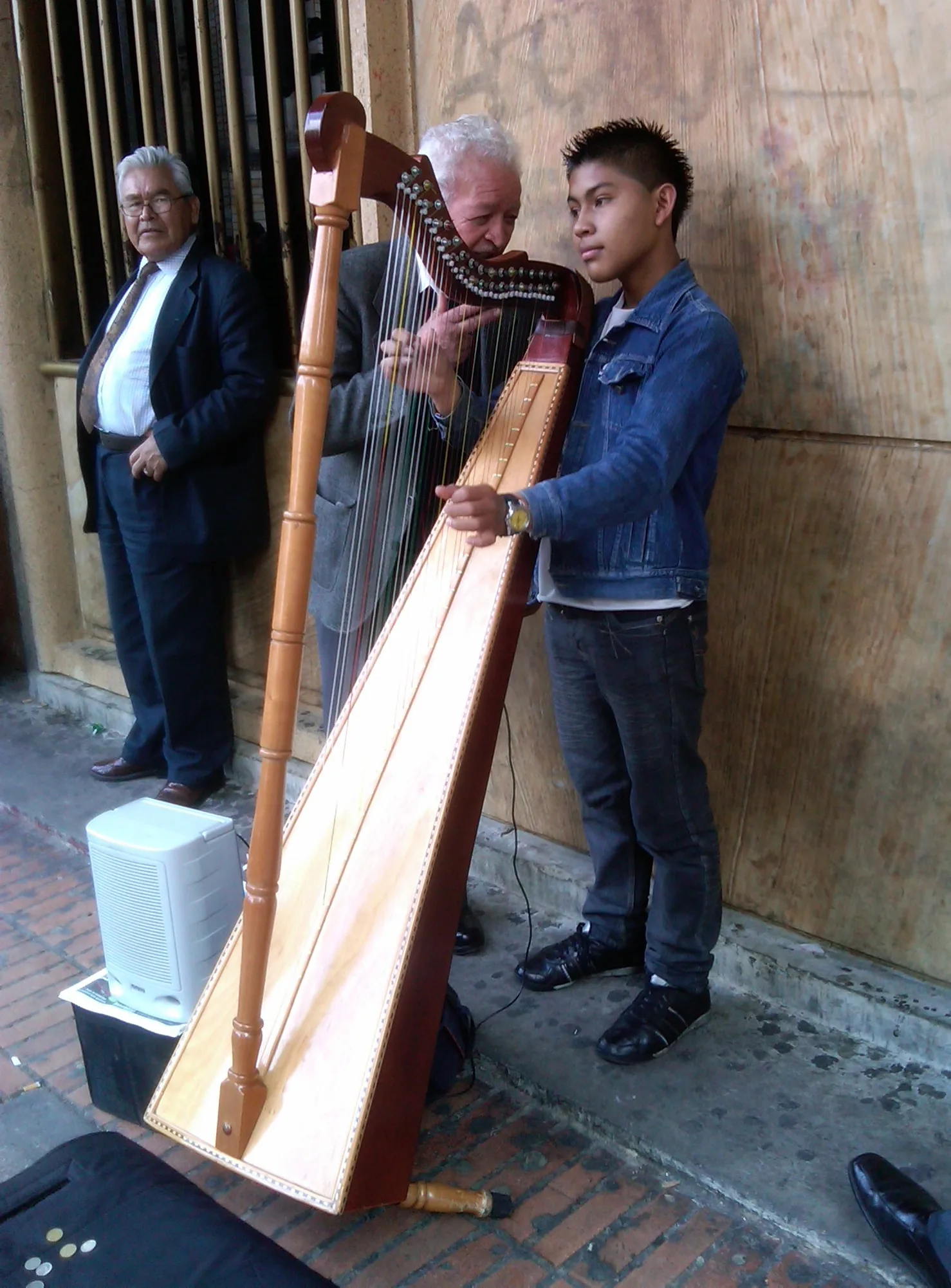
In Colombia and Peru, portable models accompany religious processions. Their 36 nylon strings produce shimmering harmonies.
Artisans preserve unique techniques:
- Copal varnish to protect tropical wood
- Decorations inspired by pre-Columbian motifs
- Percussive playing with the fingernails
| Type | Strings | Distinctive feature |
|---|---|---|
| Celtic | 34-38 (brass) | Curved pillar |
| Paraguayan | 36 (nylon) | Perfect symmetry |
Park Stickney and the IHTP are now exploring jazz fusions, proving the vitality of these traditions. Proof that countries can reinvent their sonic heritage.
Conclusion: The Harp, a Timeless Instrument
Across the centuries, this instrument has crossed eras without losing its magic. From the first Mesopotamian models to today’s digital creations, its evolution shows rare adaptability.
A heraldic and diplomatic symbol, it still embodies artistic excellence. Virtuosos such as Xavier de Maistre prove its modernity, while young luthiers push its limits with bold innovations.
To explore this rich heritage, the Museum of Medieval Music offers a unique journey. An invitation to discover how this musical jewel continues to fascinate, yesterday as much as today.