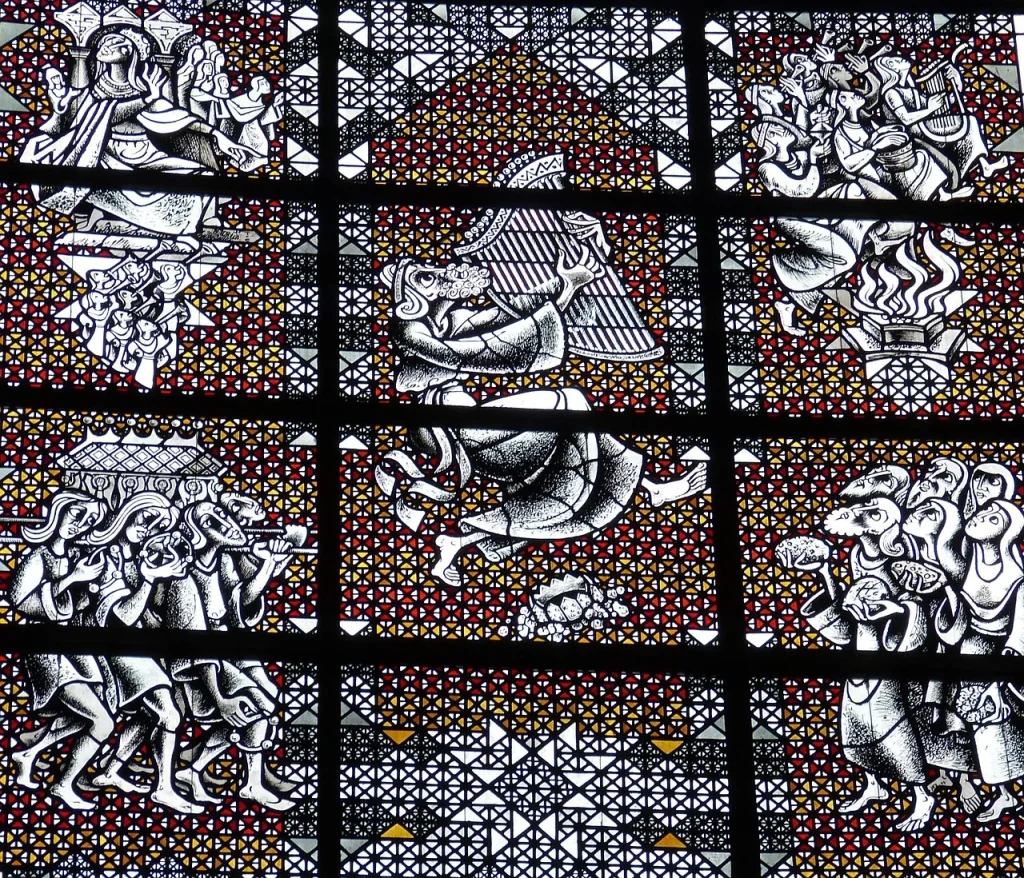
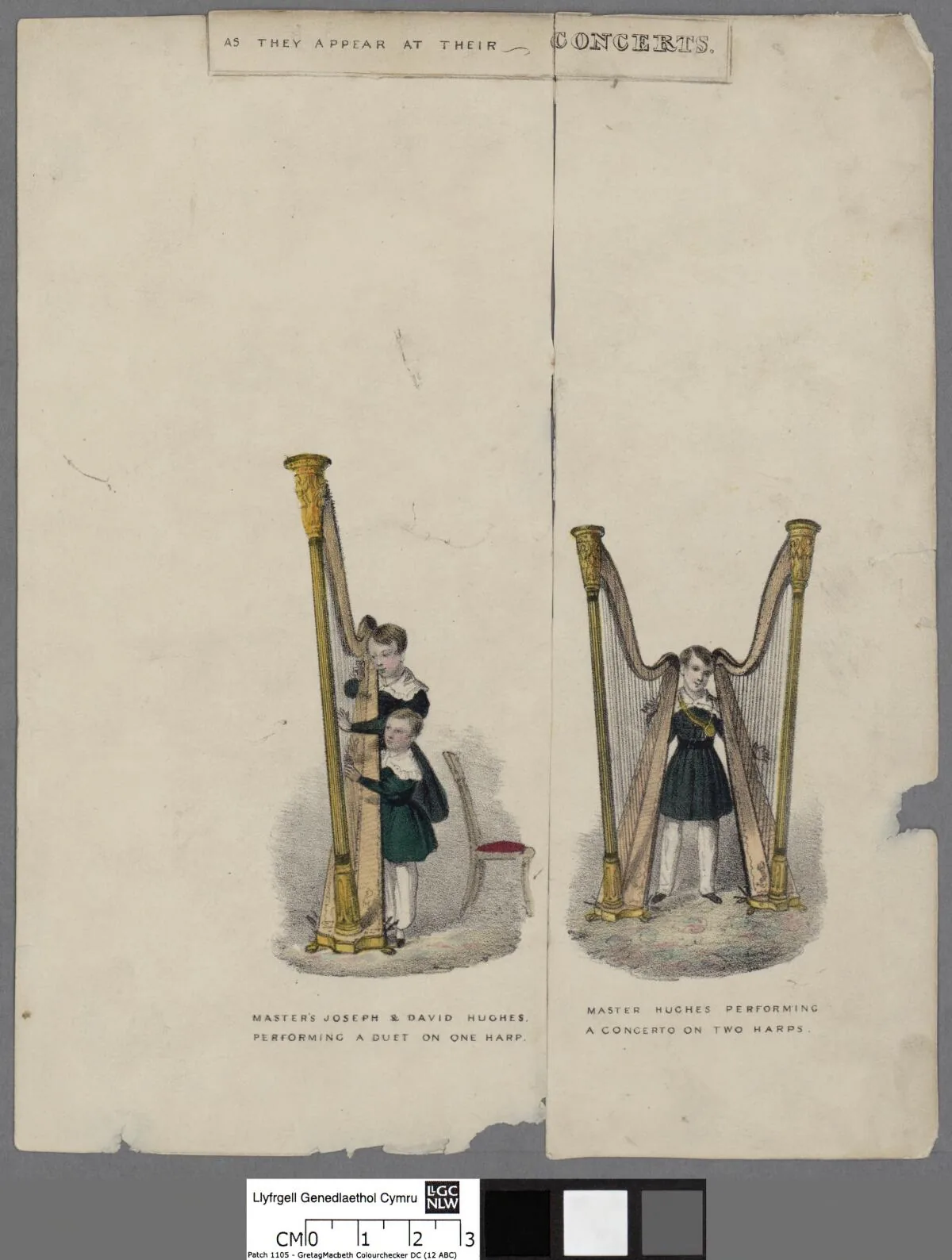
The harp is one of the oldest known instruments, with origins reaching back to Mesopotamia between the 5th and 2nd millennia BCE. The word “harp” comes from the Germanic “harpa,” meaning “claw.” The instrument is thought to have been inspired originally by the hunting motion of a bow. The harp took on different forms and evolved over the centuries, becoming a sacred instrument in religious music and adopting varied shapes according to civilizations and eras. In Western Europe, the harp appeared around the beginning of the Christian era and played an important role in medieval music.
The harp in medieval music captivated listeners with its spellbinding harmonies and evocative melodies. This historic instrument accompanied liturgical chants in churches and added a magical touch to religious celebrations. Medieval melodies played on the harp recalled history and tradition, carrying listeners through time.
The medieval harp evolved over the centuries, adopting new playing techniques and new forms. Historical harps from the medieval period were often smaller than modern harps and had fewer strings. This influenced the instrument’s sound and range, adding a unique softness and intimacy to medieval melodies.
Today, specialized musicians and ensembles devote themselves to preserving and authentically performing medieval music, using historical harps and appropriate playing techniques. In doing so, they offer us a window onto the past, allowing us to appreciate the enchanting melodies of that distant era.
Enter the captivating world of the harp in medieval music and let yourself be carried away by these timeless melodies that have shaped the history of music.
The Characteristics of Medieval Music
Medieval music is distinguished by several key characteristics. It was primarily vocal, with a particular emphasis on liturgical chants performed by monks and members of religious orders. The melodies were often monophonic, without harmonic accompaniment. The music also relied on modes, specific scales that defined the relationships between notes. Among the most commonly used modes were the Dorian mode, the Phrygian mode and the Lydian mode.
Liturgical chants were prayers or biblical texts sung during religious ceremonies. These chants were often characterized by a simple, repetitive melody, which made them easier to memorize and perform as a group. Devoted monks and religious communities spent many hours repeating and perfecting them.
Monophonic melodies were played and sung without any harmonic accompaniment. This means there was no counterpoint or chordal support beneath the main melody. Singers focused on the beauty and expression of the melodic line, using nuance and ornamentation to add richness and emotion to the music.
Musical modes were specific scales used to compose and perform medieval music. Each mode had a distinct pattern of tones and semitones, giving the music a particular atmosphere. For example, the Dorian mode was associated with a serious, solemn mood, while the Lydian mode was brighter and more joyful. Musicians used these modes to compose melodies that reflected the emotions and themes of the period.
Medieval music is therefore characterized by its liturgical chants, its monophonic melodies and its musical modes. These elements help create the unique, evocative atmosphere of medieval music, transporting listeners to another age.
To better understand these characteristics, here is an overview of the different musical modes used in medieval music:
| Mode | Structure | Main characteristics |
|---|---|---|
| Dorian mode | Tones: T-T-1/2-T-T-T-1/2 | Solemn, melancholic |
| Phrygian mode | Tones: 1/2-T-T-T-1/2-T-T | Mysterious, passionate |
| Lydian mode | Tones: T-T-T-1/2-T-T-1/2 | Bright, joyful |
These modes were often used as foundations for composing melodies in medieval music. Musicians experimented with different variations of the modes, creating a rich and diverse range of sounds.
Medieval Music: A Unique Listening Experience
The combination of liturgical chants, monophonic melodies and musical modes gives medieval music its distinctive atmosphere. This music immerses us in another era and allows us to discover the spirituality, emotions and ideals of medieval society.
Today, specialized ensembles and passionate musicians devote themselves to preserving and authentically performing medieval music. Thanks to them, we can still appreciate the unique characteristics of this music and immerse ourselves in this fascinating sound world.
The Cultural and Religious Influence on Medieval Music
Medieval music was deeply influenced by the culture and religion of its time. The Roman Catholic religion occupied a central place, and Gregorian chants were essential in religious ceremonies. These chants, characterized by their beauty and solemnity, were performed in churches and monasteries, carrying the faithful into an atmosphere of contemplation and spirituality.
Outside the religious context, medieval music was also present in secular entertainment. Troubadours and trouvères, itinerant artists, were key figures of this period. They traveled through courts and castles, performing songs composed on themes such as courtly love, chivalry and epic tales. Their lively melodies and captivating words contributed to the tradition of medieval secular music.
Medieval music thus reflected medieval society, shaped both by spirituality and by secular entertainment. These cultural and religious influences formed the sound and themes of the music of this period, creating a rich and varied musical legacy.
Gregorian chants, which represent the religious influence on medieval music, were characterized by their monophonic structure and their use of musical modes. These chants were often performed a cappella, highlighting the beauty of the human voice and the richness of sacred texts.
Troubadours and trouvères, for their part, brought a secular dimension to medieval music. Their varied repertoire included love songs, epic poems and satires, reflecting the values and concerns of medieval society. Their lively performances entertained royal courts and audiences of the time.
Medieval Instruments in Medieval Music
Medieval music, spanning roughly 800 years of religious and secular history, saw the emergence of instrumental forms that helped enrich the melodies and songs of the period. Popular instruments in medieval music included:
- The vielle: an ancestor of the violin, the vielle was a bowed string instrument that produced melancholy, expressive tones.
- The flute: this wind instrument brought lightness and softness to compositions and was often used to accompany vocal melodies.
- Percussion: the tambourine and kettledrum were commonly used to mark the tempo and add rhythm to medieval pieces.
- And of course, the harp: an emblematic instrument of medieval music, the harp added an enchanting dimension through its plucked strings and delicate timbre.
These instruments were used in both religious and secular settings, accompanying medieval songs and dances. They brought sonic richness and interpretive diversity to the music of the period, contributing to its timeless charm.
To learn more about medieval instruments and their role in the music of the period, you can read this article on Wikipedia.
| Instrument | Description |
|---|---|
| Vielle | An ancestor of the violin, a bowed string instrument. |
| Flute | A wind instrument that produces light, gentle sounds. |
| Percussion | Tambourine and kettledrum used to mark rhythm and add dynamics. |
| Harp | A plucked-string instrument with an enchanting, delicate sound. |
The Legacy and Influence of Medieval Music Today
Medieval music left a lasting legacy in Western music. The techniques and forms developed during this period laid the foundations for Western classical music. Today, medieval music continues to inspire many artists and specialized ensembles who strive to recreate the atmosphere and sounds of that era. Appropriate playing techniques and period instruments are used to perform medieval music authentically.
The legacy of medieval music can be heard in Western classical music. The harmonic and melodic concepts developed in the Middle Ages were passed on to composers, who incorporated them into their own creations. Today, many works of Western classical music echo the melodies and musical structures of that period.
Medieval music also influences contemporary music. Many contemporary composers draw on medieval sonorities and techniques to create new musical works. This influence appears in genres such as contemporary sacred music, film music and even popular music.
In addition, there are ensembles specialized in performing medieval music. These ensembles are devoted to preserving and sharing this repertoire, using period instruments and historically informed playing techniques. Their work allows modern audiences to discover and appreciate the richness of medieval music in all its authenticity.
Medieval Instruments in Contemporary Music
Contemporary music also incorporates medieval instruments to recreate the atmosphere of this period. Groups such as “Le Concert des Nations” and “Hespèrion XXI,” directed by Jordi Savall, use period instruments to perform medieval and Baroque music. These specialized ensembles captivate audiences with performances marked by authenticity.
Medieval music and its legacy continue to influence and enrich our contemporary musical world. Whether through Western classical music, contemporary sacred music or specialized performances of this period, medieval music remains an inexhaustible source of inspiration and fascination for music lovers around the world.
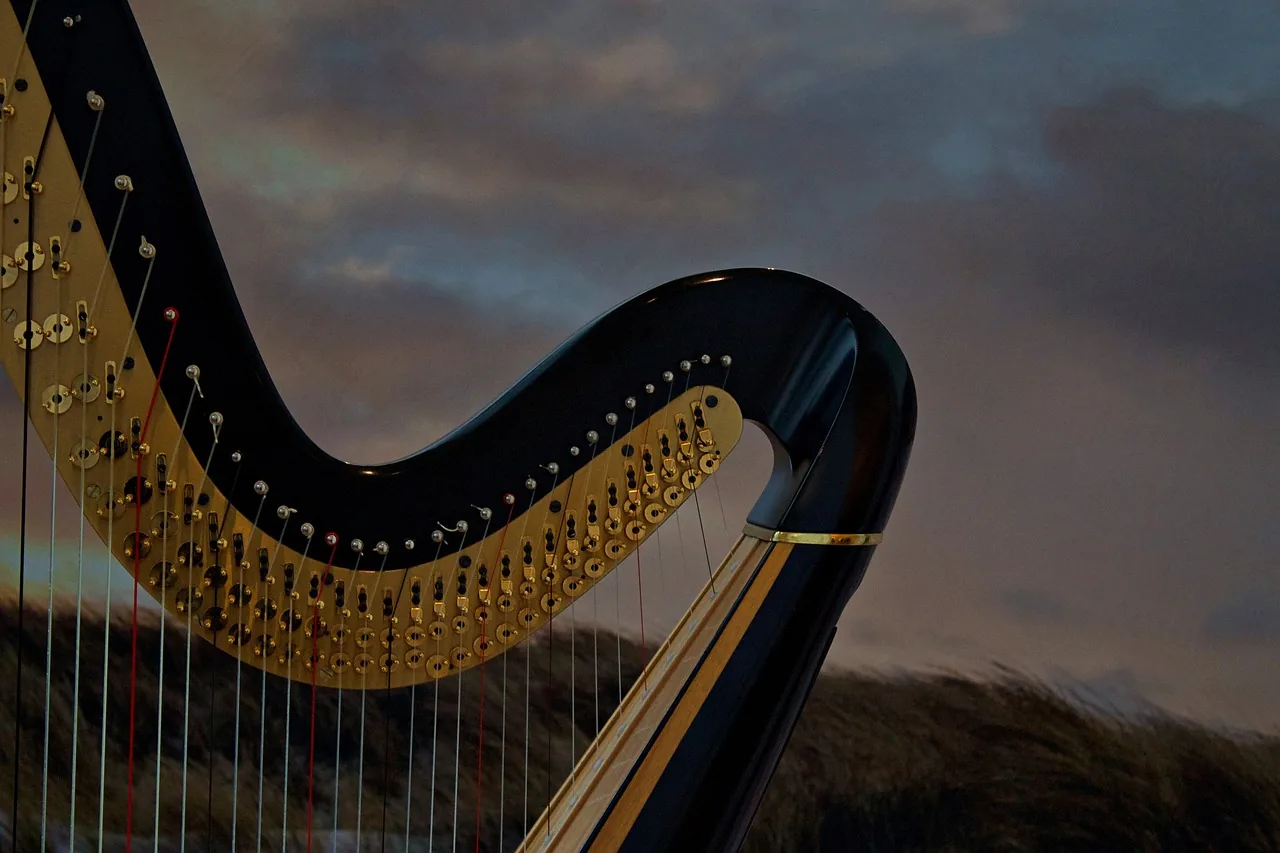
The Evolution of the Harp from Antiquity to the Present Day
The harp is one of the oldest instruments, with origins reaching back to Mesopotamia between the 5th and 2nd millennia BCE. Over the centuries, the harp underwent many changes to adapt to the musical needs and tastes of each era.
The Western harp, as we know it today, appeared around the beginning of the Christian era. In the 14th century, the Gothic harp succeeded the Romanesque harp, offering new sonic and aesthetic possibilities.
The 15th century is considered the “golden age” of the harp, during which it became the favorite instrument of the aristocracy in France and England. It was a period of great creativity for the harp, with numerous technical innovations.
The Celtic harp, although ancient in origin, experienced a revival in the 20th century and is now very often tuned. It has a distinctive sound and is often associated with traditional Irish music.
The electric harp emerged in the 1980s, giving musicians the ability to modernize their repertoire and create innovative sounds. This instrument transformed the world of the harp by introducing sound effects and amplification possibilities.
A recent innovation in the field of the harp is the stringless harp, designed by Intel in collaboration with the Philharmonie de Paris. This harp uses a 3D camera to detect finger movements, offering new possibilities for musical expression.
Types of Harps:
| Type of harp | Description |
|---|---|
| Double harp | Characterized by two rows of strings, one for natural notes and the other for accidentals. |
| Lever harp | Equipped with a lever system used to change the pitch of notes. |
| Lever-and-pedal harp | Combines levers and pedals to alter notes. |
| Concert harp | An enlarged version of the traditional harp, used mainly in large ensembles. |
| Chromatic harp | Invented by Gustave Lyon, it did not achieve great success because of its weight and lack of ergonomics. |
| Electric harp | A traditional harp fitted with microphones and sensors for sound amplification. |
From antiquity to the present day, the harp has come a long way. Its evolution continues to enrich modern music while preserving the legacy and beauty of this ancient instrument.
The Harp in Medieval Music Today
Today, medieval music continues to captivate many music enthusiasts, and some artists specialize in authentic interpretations of melodies from this period. Among these artists are contemporary medieval harpists devoted to preserving and sharing medieval music.
These medieval harpists use period instruments to faithfully recreate the sound and atmosphere of medieval music. Their authentic interpretation allows audiences to appreciate enchanting melodies in their original form, bringing an important part of musical history back to life.
In addition to playing period instruments, these contemporary medieval harpists also devote themselves to in-depth research and study of the playing techniques used in the medieval period. They strive to reproduce the fingering, phrasing and ornamentation techniques typical of this music in order to offer authentic, captivating performances.
The stringless harp is a fascinating example of modern innovation in the field of the medieval harp. This harp, developed by Intel in collaboration with the Philharmonie de Paris, uses technology to detect the movements of the harpist’s fingers and produce the corresponding sound. This technological reinterpretation of the medieval harp makes it possible to rethink the instrument while respecting its unique musical heritage.
Contemporary medieval harpists, through their authentic interpretation and their exploration of the new possibilities offered by technology, contribute to the preservation and rediscovery of medieval music. Their talent and passion help revive the enchanting melodies of this distant era and charm new audiences with the magic of the medieval harp.
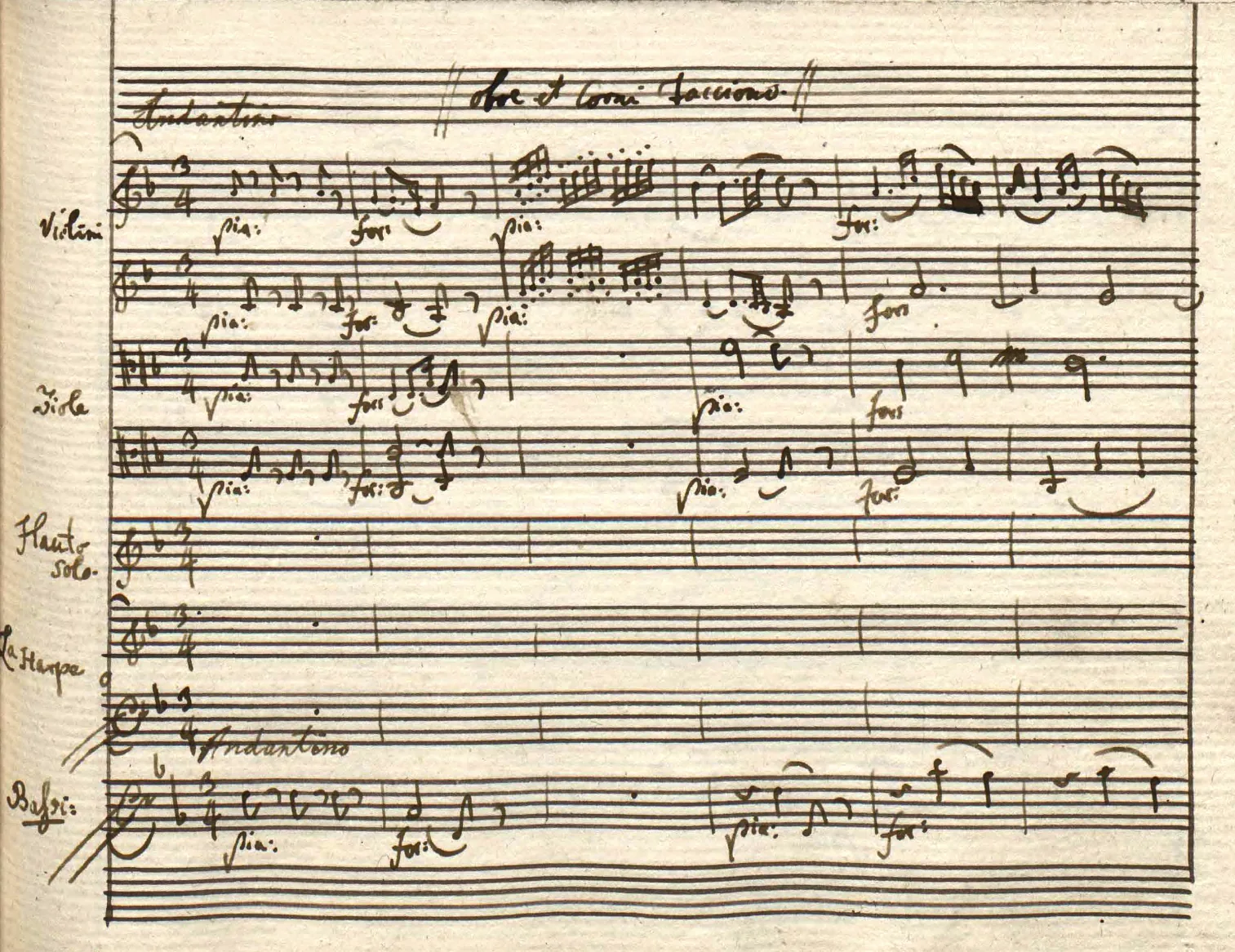
Example of a Medieval Repertoire:
| Pieces | Composers |
|---|---|
| Alla Marcia in C | Josquin des Prez |
| Estampie | Anonymous |
| Can vei la lauzeta mover | Bernart de Ventadorn |
| Quant voi l’erbe parer | Adam de la Halle |
| Ay mi, dame de valor | Gautier de Coincy |
These examples of medieval repertoire illustrate the diversity and richness of the melodies of this period. Contemporary medieval harpists aim to interpret these pieces with sensitivity and precision, bringing the timeless beauty of medieval music back to life.
Conclusion
Medieval music and the medieval harp offer a unique musical experience, carrying listeners through time. The distinctive characteristics of medieval music, influenced by culture and religion, continue to fascinate today’s listeners. The enchanting melodies of that era, blended with the magical sonorities of the harp, create a captivating and immersive atmosphere.
The evolution of the harp shows its ability to adapt and develop over the centuries. From the medieval harp to the modern harp, the instrument has continually renewed and refined itself to meet the musical needs and tastes of each period.
Whether you are passionate about medieval music or simply curious to discover forgotten melodies and sounds, enter the captivating world of the harp in medieval music and let yourself be enchanted by the timeless melodies that have crossed the centuries.