The medieval rock band is a unique fusion of styles that emerged in the early 1970s in England and Germany. This musical subgenre combines elements of early music with rock music, creating a captivating alternative musical experience.
The influence of the British folk rock movement and late-1960s progressive folk played a major role in the emergence of this genre. Musicians incorporated elements of medieval, Renaissance and Baroque music into their work, which led them to be classified as “medieval folk rock.” Some bands even used few or no electric instruments, favoring a more authentic sound.
The mid-1970s marked the peak of this subgenre in Great Britain, with recognition from the wider public. Bands such as Galeygates, Gentle Giant and Gryphon enjoyed considerable success, performing in renowned venues such as the National Theatre and the Old Vic. Gryphon even had the honor of sharing the stage with Yes on tour.
Despite this popularity, most bands that embraced medieval folk rock either ended their activities or evolved toward broader musical movements by the end of the 1970s. However, the genre grew in France and the Netherlands at that time, opening new horizons for medieval rock bands.
Some European bands, especially in France and the Netherlands, continued to play medieval folk rock until the early 1980s. However, most bands from that era stopped performing or explored other musical styles in the early 1980s, marking the end of an era.
Today, the genre is experiencing a revival, with contemporary bands drawing inspiration from medieval folk rock, as well as from other medieval music styles such as neo-medieval-oriented dark wave and medieval metal. This musical exploration continues to fuse cultures and unique sounds, offering a true musical journey inspired by the medieval era.
Characteristics of medieval folk rock
Medieval Folk Rock is characterized by three main elements. First, it involves performing early music with rock instruments. Second, it integrates compositional elements from early music, such as musical modes, into original compositions. Finally, it incorporates the sounds of early music into rock songs through vocal techniques, the use of additional instruments, or the simulation of early-music sounds on rock instruments. In addition, medieval Folk Rock often adopts perceived elements of “medievalism” in lyrics, actions, clothing or artwork. This combination creates a unique and captivating sound that blends the styles of medieval music and rock.
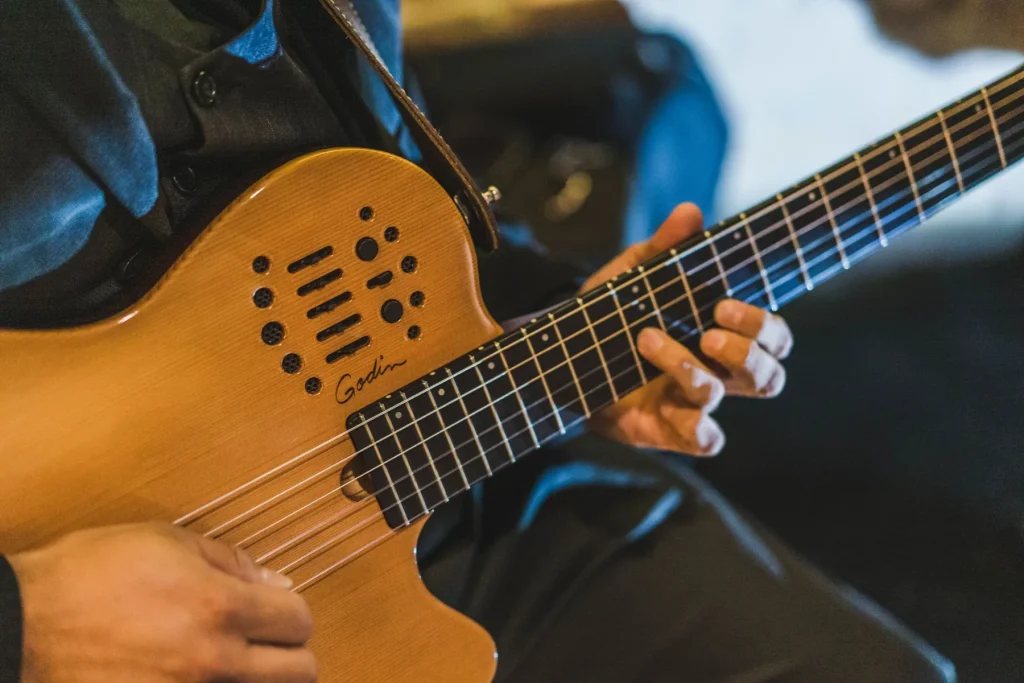
The use of rock instrumentation in medieval Folk Rock creates an interesting fusion between the sounds of the medieval era and the energy of rock. Electric guitars, basses and drums combine with traditional instruments such as lutes, flutes, medieval drums and bagpipes. This fusion creates a sound that is both powerful and evocative, transporting the listener into the mystical and spellbinding atmosphere of the Middle Ages.
Medieval Folk Rock also draws several compositional elements from early music, especially the musical modes used in the medieval period. These modes provide a harmonic and melodic foundation that is characteristic of the genre, giving songs an authentically medieval atmosphere. Medieval Folk Rock musicians also use specific playing techniques to recreate the sounds of the era, whether through particular vocal techniques, the addition of instruments such as fiddles or chalumeaux, or the search for sound effects reminiscent of period instruments.
In addition, Medieval Folk Rock often adopts a “medieval” aesthetic in its lyrics, actions, clothing and artwork. The themes addressed in songs may include medieval stories, legends, epic tales or emblematic figures from that period. Musicians in the genre therefore seek to recreate a medieval atmosphere through every aspect of their music.
Medieval Folk Rock, with its unique fusion of medieval music and rock, played an important role in the development of progressive music and even influenced heavy metal. Although its popularity declined in the late 1970s, Medieval Folk Rock has recently enjoyed a revival alongside other forms of medieval-inspired music. It continues to captivate music lovers with its fascinating blend of styles. Its influence also endures in contemporary music, with bands such as Mumford and Sons and The Lumineers, who integrate folk and rock elements to create a new hybrid genre called indie folk, thus carrying the spirit of Medieval Folk Rock forward for future generations.
The origins of medieval folk rock
The origins of medieval folk rock date back to the mid-1960s in Great Britain and the United States, with the fusion of popular music and elements of early classical music. This fusion was initially called baroque rock or baroque pop by musicologists. In the late 1960s, the British progressive folk movement emerged, incorporating elements of medieval and Renaissance music into its work. Artists such as The Incredible String Band and John Renbourn played a crucial role in this movement by introducing elements of early music into their compositions. The release of Fairport Convention’s album “Liege and Lief” in 1969 marked a turning point for the genre, with the fusion of English folk music and rock instruments. The formation of Steeleye Span, which explored a wide range of period music including medieval influences, also contributed to the development of medieval folk rock.
The fusion of early classical music with rock laid the foundations for medieval folk rock, creating a unique sound that enchanted listeners. Elements of folk, rock and classical music blended to form a captivating and innovative musical genre. Great Britain played a central role in the development of medieval folk rock, with bands such as Fairport Convention, Steeleye Span and Pentangle bringing the genre onto the music scene. These bands integrated elements of medieval music into their compositions, adding a historical and cultural dimension to their music.
Medieval folk rock is the product of a marriage between traditional folk music, rock and medieval classical music. These influences combine to create a unique sound that transports listeners to another era.
Medieval folk rock also influenced other musical genres, such as progressive rock and heavy metal. The fusion of styles opened up new sonic possibilities and inspired many artists to explore unknown musical territory. Today, medieval folk rock continues to influence many bands and artists, carrying on the tradition of a unique and timeless musical genre.
The golden age of medieval folk rock (1970-1975)
The heyday of medieval rock music took place from 1970 to 1975. This period was marked by the electrification of folk rock, with many progressive folk musicians incorporating rock instruments into their music. Bands such as Pentangle, Third Ear Band and Amazing Blondel embraced this change, while others, such as Forest and Gentle Giant, continued to create their own music in a Renaissance or medieval style. In Germany, the bands Ougenweide and Parzival were at the forefront of the genre, drawing exclusively on medieval High German music when they electrified their sound.
The growing interest in early music in academic and classical circles also played an important role in the expansion of medieval rock. Gryphon, a British band that appeared in 1971, incorporated bassoons and bagpipes into its music, creating a unique fusion between medieval music and rock.
The heyday of medieval rock music came to an end in the mid-1970s, as bands dissolved or turned toward other musical genres.
Conclusion
Although the golden age of medieval folk rock ended in the 1970s, the genre has seen renewed interest in recent years. Alongside other forms of music inspired by the Middle Ages, such as neo-medieval music oriented toward dark wave and medieval metal, medieval folk rock continues to captivate listeners with its unique blend of styles. Contemporary folk rock bands such as Mumford and Sons and The Lumineers have integrated folk and rock elements to create a new hybrid genre known as indie folk. This fusion of genres ensures the lasting spirit of medieval folk rock, inspiring new generations of musicians and music lovers.