
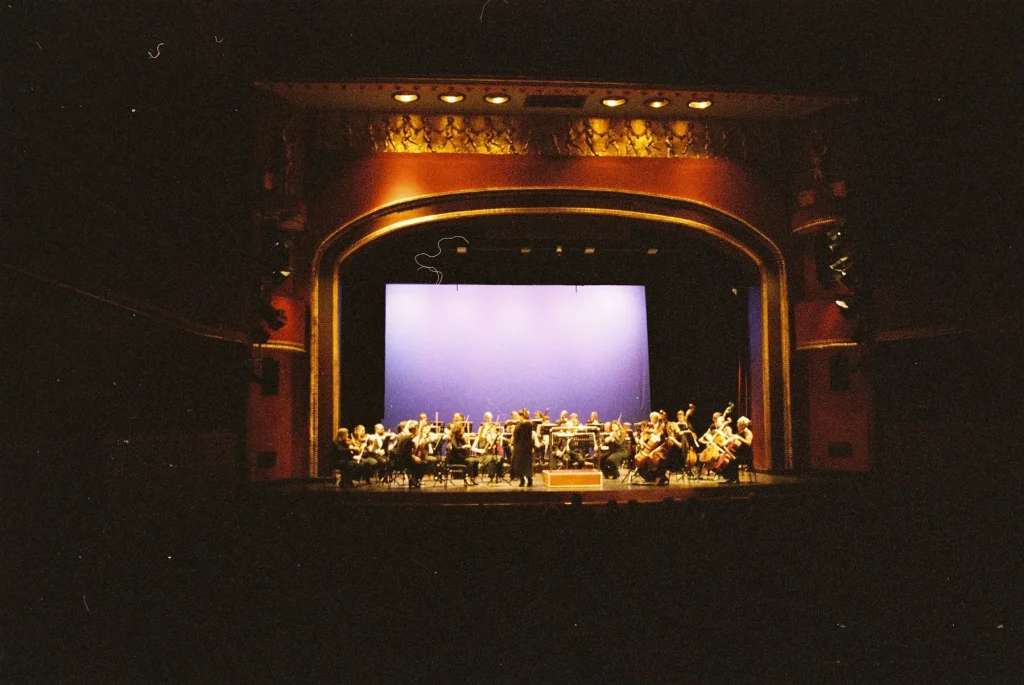
Among string instruments, the harp stands out for its captivating timbre. It brings a unique texture to compositions, creating atmospheres that are sometimes ethereal, sometimes dramatic. Its use goes back centuries, yet it remains essential in modern symphonic ensembles.
Whether as a solo instrument or in accompaniment, this instrument captivates through its versatility. Harpists face technical challenges, such as playing pianissimo without losing expressiveness. Today, innovations such as carbon fiber are renewing its presence on stage.
Discover how this instrument has traveled through history to establish itself in contemporary music. From ancient techniques to electroacoustic adaptations, the harp continues to charm the entire world.
History and Evolution of the Harp
The first traces of this instrument appeared in Mesopotamia more than 5,000 years ago. Arched harps, used in rituals, marked the beginning of a rich musical heritage. Their simple shape, carved from wood, contrasted with their sacred function.
From Ancient Origins to the Renaissance
In the Middle Ages, it reached Europe in the form of portable models. Made from willow, these harps accompanied troubadours. The Renaissance saw the emergence of the arpa doppia, popularized by Monteverdi. Its double rows of strings expanded melodic possibilities.
Pedal Innovation in the Eighteenth Century
In 1697, Jacob Hochbrücker revolutionized the system with pedals. Sébastien Érard perfected this mechanism in 1810, enabling rapid alterations. This technical advance encouraged its integration into chamber and symphonic works.
The Modern Harp: From Berlioz to Today
Hector Berlioz brought it back into the orchestra with his Symphonie fantastique. In the twentieth century, materials such as carbon fiber strengthened its durability. To explore this evolution of materials, museums now preserve these historic pieces.
Harp Techniques and Mechanisms
Mastering this instrument depends on ingenious mechanisms and demanding techniques. From revolutionary pedals to material innovations, every detail influences playing and tone.
The Pedal System and How It Works
Designed by Sébastien Érard in 1810, the double-action system allows rapid alterations. The seven pedals, one for each note of the scale, offer three positions: flat, natural, and sharp. This mechanism turns each string into a versatile sound palette.
The forked discs adjust the tension of the strings with precision. This invention marked a turning point, making integration into the classical and modern repertoire easier. To learn more, explore the detailed technical evolution.
The Technical Challenges for Harpists
Playing requires perfect synchronization between hands and feet. Glissandos, harmonics, and percussive effects demand exceptional agility. Coordination with other instruments during a concert increases the complexity.
Marie-Pierre Langlamet, a renowned harpist, emphasizes the importance of ergonomics. Adapting posture prevents strain while optimizing the musical function.
Contemporary Harps: Carbon Fiber and Electroacoustics
Carbon fiber lightens the structure without compromising resonance. Ideal for touring, it resists climate variations. Electroacoustic models expand the possibilities, as in Berio’s Sequenza II.
Frédérique Cambreling shows how these innovations transform interpretation. The nuances between traditional and electrified harps enrich today’s musical landscape.
The Role of the Harp in an Orchestra
Its crystalline timbre and ability to create unique atmospheres make this instrument a pillar of symphonic ensembles. Whether it plays solo or in harmony, it enriches every concert with an incomparable sound palette.
The Harp as a Solo Instrument
In the foreground, it shines in works such as Mozart’s Concerto for Flute and Harp. Xavier de Maistre, a recognized virtuoso, demonstrates its technical and expressive mastery. Cadenzas highlight its natural polyphony.
Boieldieu’s Concerto also exploits its melodic possibilities. Every note resonates clearly, carried by refined music. These pieces reveal its full narrative potential.
Its Integration into Orchestral Harmonies
It brings depth to the operas of Puccini and Wagner. In Tosca, its arpeggios underline dramatic tension. The Vienna Philharmonic Orchestra offers memorable interpretations of it.
With Simon Rattle, it dialogues subtly with the strings. This synergy creates captivating soundscapes, as in Mahler’s Adagietto.
Iconic Examples: Debussy, Ravel, and Berlioz
Debussy uses it in his Danse sacrée to evoke dreamlike images. Suzanne Cotelle captures all its delicacy. Ravel, for his part, integrates it brilliantly into Daphnis et Chloé.
Berlioz revolutionized its use in the Symphonie fantastique. The glissandos symbolize romantic obsession, proving its key role in the Romantic repertoire.
Conclusion
From its origins in Mesopotamia to modern stages, this instrument has undergone a remarkable evolution. Innovations such as pedals and carbon fiber have transformed its use. Today, it merges traditions with electroacoustic technologies.
Marie-Pierre Langlamet emphasizes its importance in symphonic ensembles. From Debussy to Berlioz, it enriches the musical world with unique nuances. Explore these masterpieces to appreciate all their magic.
Valuing this instrument in music education opens up new perspectives. Its heritage and potential continue to captivate, proving that it remains indispensable.