
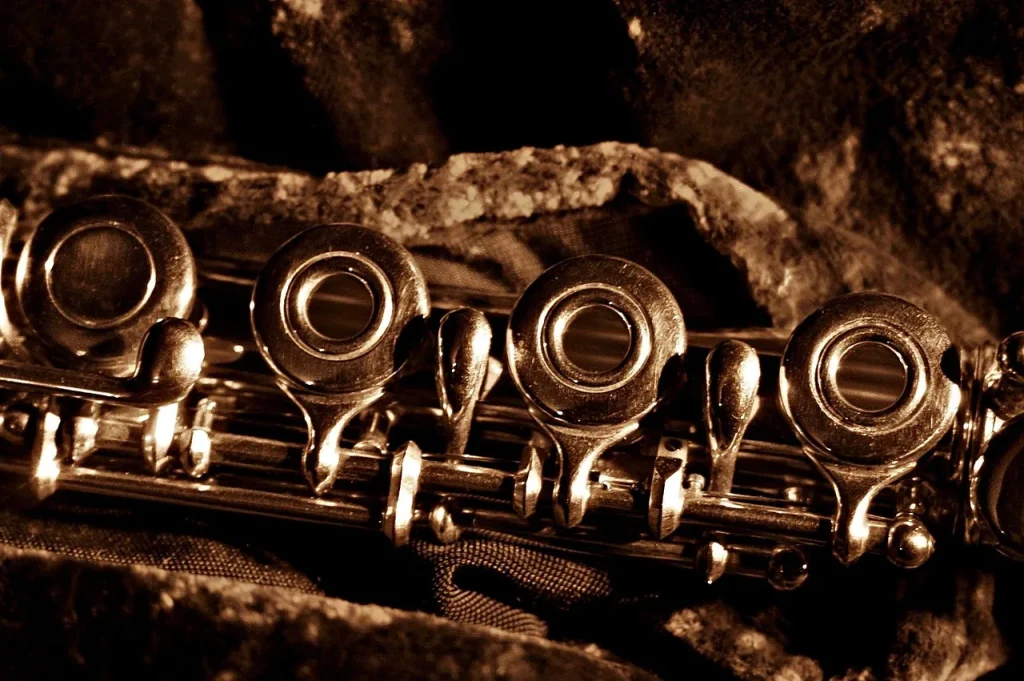
Among the emblematic works of Wolfgang Amadeus Mozart, the Concerto in C Major, K.299 stands out for its rare instrumentation. Composed in 1778 in Paris, it remains the only piece by the composer combining flute and harp.
Created during a difficult period for Mozart, this work nevertheless embodies the elegance of classical music. Its three movements – Allegro, Andantino and Rondeau – offer a balance between virtuosity and poetry.
Performed by legends such as Rampal and Laskine, this concerto lasts about 30 minutes. It marks a milestone in the evolution of the genre, blending technical skill with pure emotion.
The Historical Context of the Concerto for Flute and Harp
Behind this composition lies a story of patronage and personal drama. The Duke de Guisnes, an aristocrat with a passion for music, wanted a piece to play with his daughter, a talented harpist.
The Commission from the Duke de Guisnes
In May 1778, the Duke de Guisnes commissioned the composer. He wanted a work that would showcase the harp, an instrument rarely used as a soloist. Unfortunately, Mozart was never fully paid for his lessons.
Letters from the period reveal his disappointments:
- Fickle patronage, typical of the eighteenth century.
- Tensions over unpaid fees.
- An artistic collaboration that was fruitful all the same.
Mozart’s Paris Stay in 1778
Paris, in May 1778, was a musical melting pot. The composer encountered rivals there, including Gluck. Yet this stay was darkened by the death of his mother, which influenced his creative work.
Despite these trials, the concerto embodies:
- A response to Parisian tastes for instrumental dialogue.
- A balance between virtuosity and emotion, shaped by its three movements.
- The bold use of a symphonic orchestra to support the soloists.
The Musical Structure of the Concerto in C Major
This work stands out for its construction in three movements, each revealing a distinct facet. The balance between virtuosity and melody defines this major piece of the classical repertoire.
Allegro: Dialogues Between Soloists and Orchestra
The first movement, in sonata form, contains 265 measures. The exchanges between the flute, the harp and the orchestra create a captivating momentum.
The Allegro in major key makes use of:
- Complex themes presented in turn.
- Bold harmonic development.
- A cadenza that highlights each instrument.
Andantino: A Poetic Theme Introduced by the Strings
The second movement, in F major, contrasts through its gentleness. The strings introduce a lyrical motif, followed by delicate variations.
This section lasts about 10 minutes, offering:
- An intimate dialogue between the soloists.
- Four variations that enrich the main theme.
- A meditative atmosphere typical of the period.
Rondeau Allegro: A Virtuosic Gavotte
The finale draws on French dances with its 392 measures. This movement combines rondo structure with elements of the gavotte.
Its distinctive features include:
- Technical passages for the soloists.
- A lively rhythm underlined by the woodwinds.
- A brilliant coda that concludes the work.
| Movement | Key | Measures | Duration |
|---|---|---|---|
| Allegro | C major | 265 | 12 min |
| Andantino | F major | 184 | 10 min |
| Rondeau | C major | 392 | 8 min |
To explore the analysis of the three movements in greater depth, see this detailed study of its technical features.
Orchestration and Instruments: Flute and Harp in the Spotlight
The union of the flute and the harp in this concerto creates a unique sonic alchemy. Although these two instruments are rare in the composer’s works, they shine here through their complementarity.
The Harp: A Rare Instrument in Mozart
The classical harp of the eighteenth century had technical limitations. It did not have double-action pedals, which influenced Mozart’s writing.
The composer adapted his score in order to:
- Avoid overly complex modulations.
- Favor arpeggios and simple scales.
The Flute: Unloved, Yet Magnified
Mozart had an ambivalent relationship with the flute. Yet he drew out all its nuances in this concerto.
The solo passages combine:
- Virtuosity in the upper register.
- Gentleness in dialogues with the harp.
The Symphonic Orchestra: Woodwinds, Brass and Strings
The orchestra accompanies the soloists with delicacy. The brass instruments (2 horns) and the strings strengthen the dynamic contrasts.
To discover modern interpretations of the concerto, a recent version combines historical fidelity with expressiveness.
Conclusion: The Concerto’s Legacy and Its Memorable Interpretations
This classical masterpiece has continued to captivate music lovers for more than two centuries. From historic recordings, such as that of Jean-Pierre Rampal and Lily Laskine, to modern versions by Julien Beaudiment and Anaïs Gaudemard, the work reveals a timeless adaptability.
The composer left his mark on history with this piece, often studied in conservatories. Its influence extends to Romantic concertos, proof of his structural genius.
On portals dedicated to music, the work has accumulated thousands of listens. For a first discovery, favor performances led by a renowned conductor, capturing the balance between poetry and technical skill.
In 30 minutes, this concerto sums up the elegance of an era. An invitation to explore other works in the same spirit.