

The djembe is an iconic West African instrument, now widely found in workshops and on stages in France.
This guide helps you decide where to make your purchase based on budget, level and use. It compares the main channels: stores for trying the instrument, online sales for choice and delivery, local makers for authenticity, second-hand options for savings, and direct import for tradition.
Method: start by defining the size, expected sound and how often you will play. Then compare the real cost (price, shipping, warranty) and quality (shell, skin, ropes, mounting).
Commercial issue: two models at the same price can sound very different. Technical sheets, after-sales service and return conditions often matter as much as the instrument itself.
Promise: by the end, you will know what to check before paying and which channel minimizes risk for your situation.
Define your needs clearly before buying a djembe in France
The right choice starts with a clear idea of the context: home, stage, workshop or studio. Take a few minutes to define your use, frequency and sound environment. This helps avoid regrets and purchases that are too technical or too fragile.
Level and use
For beginners, prioritize stability and tuning hold rather than the lowest possible price. A good model makes progress easier and reduces loss of motivation.
If you take lessons or play in workshops, robustness matters. On stage, projection becomes the priority. In the studio, look for definition and balanced overtones.
Formats to aim for
- 7-8″: ideal for initiation, children and portable activities.
- 10-12″: the most versatile range for adults and daily practice.
- >13″: recommended for deep bass and stage presence.
Expected sound: basses, tones, slaps
A good instrument should distinguish three sounds: a deep bass, a clear mid tone and a dry, precise slap. Projection matters as soon as you play with other musicians.
“Choose according to your weekly playing time and the sensitivity of your hands.”
Once your needs are clear, you can choose the right channel to finalize your decision, especially by consulting a guide on the choice of buying channel.
Where to buy a djembe: store, online, artisan, what to compare
Choosing where to get your instrument mainly depends on your priorities: trying it, authenticity or budget.
Trying vs ordering: benefits and limits
Trying lets you check the balance between basses, tones and slaps. The feel under the hand is immediate.
Ordering gives you a wider selection, often with detailed product sheets and the ability to compare prices and models from home.
Can you buy without trying? Yes, if the photos, videos, technical sheets and return policy are clear.
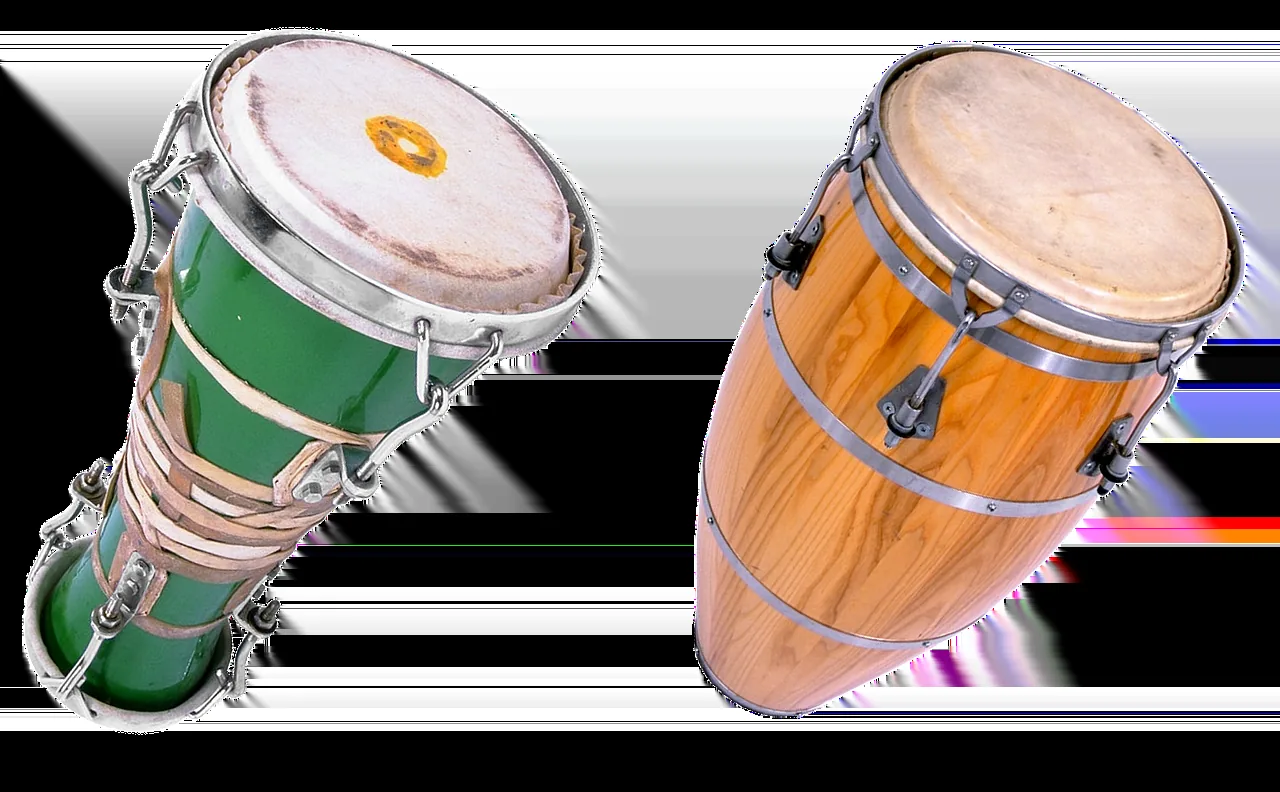
Authenticity, price, after-sales service: three simple criteria
To decide, keep three points in mind: authenticity (origin and artisans), price (total cost including shipping) and after-sales service (returns, warranties, parts availability).
Beginner: prioritize advice and easy returns. Regular player: focus on solid materials. Enthusiast: look for the workshop and the festival encounter.
| Channel | Advantage | Risk |
|---|---|---|
| Physical store | Immediate trial, direct advice | Limited stock, higher prices |
| Professional websites | Wide choice, technical sheets, right of withdrawal | Transport risks, sometimes misleading photos |
| Artisans / markets | Authenticity, direct contact with makers | Variable finish, uneven quality control |
The rest will explain what to check online and how to test in a store: photos, seller, returns, packaging and trial options.
Buying a djembe online: specialist stores, general websites, second-hand market
Ordering remotely opens up a wide choice, but also brings risks you need to understand.
Specialist stores: they offer a range of models, precise technical sheets (shell wood, diameter, type of skin, mounting) and responsive after-sales service. The 14-day right of withdrawal is often guaranteed, and customer reviews help with selection.
Basics for sorting major platforms
General websites display attractive prices. But quality varies. Check the seller’s identity, return policy and warranty before validating the cart.
Checklist before paying
- Clear photos of the shell, ropes and skin.
- Dimensions, wood type, tension and condition of the skins.
- Withdrawal conditions, return costs and customer reviews.
Delivery and transport
Require protective packaging and keep proof in case of impact. Plan for a bag from the start: it protects the instrument and reduces the total cost if it has to travel.
Online, you are buying a promise: secure it with clear returns and good after-sales service.
| Channel | Strength | Point to watch |
|---|---|---|
| Specialist stores | Detailed sheets, advice, after-sales service | Sometimes higher prices |
| General websites | Many prices and models | Variable quality, seller checks required |
| Online second-hand | Good price value | No warranty like with a professional |
For more guidance on choosing the buying channel and its consequences, see our dedicated guide: choice of buying channel.
Buying a djembe in a music store: the decisive advantage of trying it
Testing on site lets you quickly validate projection and playing comfort. Direct contact with the musical instrument reveals the real separation between bass, tone and slap.
How to test quickly in store
A simple procedure in a few movements:
- Strike basses without forcing to feel the resonance.
- Move from tone to slap to check clarity and separation.
- Listen for unwanted vibrations and tuning hold.
Visible quality checks
Check the regularity of the tension, the cleanliness of the roping and the condition of the rings. Also check shell stability and the absence of cracks or rattles.
Limited stock and price: when it is worth it
The price in store is often higher because of overheads. Still, it is worth it for a first purchase, an urgent need, or if you prefer a seller’s opinion.
Bonus
Ask for advice on maintenance according to the local climate. Use the store visit to get information about nearby lessons and workshops.
| Strength | Quick check | When to prioritize it |
|---|---|---|
| Immediate trial | Projection, feel, sounds | First purchase, urgent need |
| Personalized advice | Maintenance, lessons | Beginners, musicians looking for guidance |
| Limits | Reduced stock, higher price | Comparison and tight budget |
“A few minutes of testing are often enough to know whether the instrument suits you.”
Artisans, craft markets and festivals: finding a unique, authentic djembe
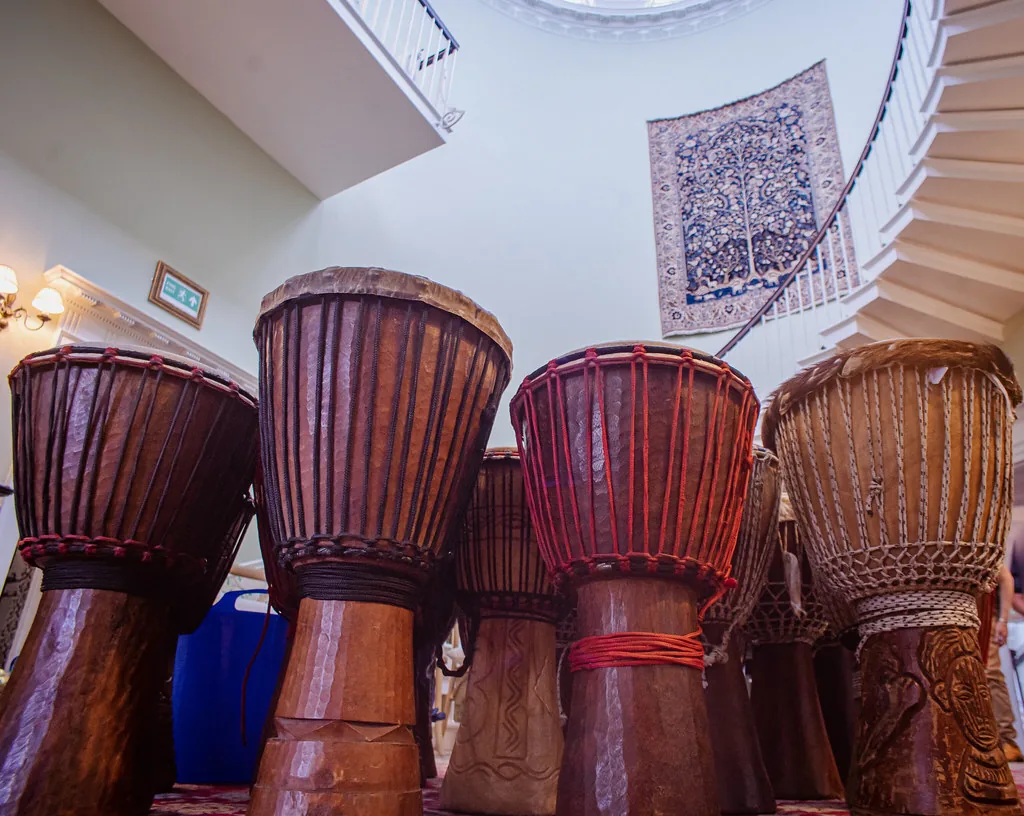
Markets and festivals are above all a cultural experience. You can see making in action, talk with artisans and musicians, and sometimes leave with a truly singular piece.
Meet and learn
Taking part in workshops lets you observe techniques, receive tuning advice and try several models in a lively context. These encounters clarify the choice of wood and the quality of the shell.
On-site precautions
- Inspect the shell: clean sanding, no visible cracks.
- Check the mounting: rings properly seated, clean and regular knots.
- Test the tension all around the edge to identify soft areas.
Negotiate or ask for a bag, strap or proof of making if the object is presented as traditional. Beware of impulse buying: even at a festival, require consistent sound before giving in.
To go deeper into choices based on origin and quality, see our practical guide: guide to buying channels.
Buying a second-hand djembe: good deals and traps to avoid
Finding a good second-hand deal requires method: inspection, questions and a sound test.
Where to look
Start with local classifieds, specialist forums and resale between musicians. Listings from players often provide the instrument’s history.
Prioritize sales with message exchanges that detail maintenance and use. This helps you quickly assess the real condition.
Inspection checklist
- Skin: look for microcracks and thinned areas. A tired skin requires costly replacement.
- Ropes: check wear and tension; frayed ropes signal neglected maintenance.
- Rings: look for deformation or rust spots on the metal hoops.
- Shell: examine cracks, impacts and old repairs that affect stability.
Why travel to test it
Between private sellers, there is no right of withdrawal. Going in person lets you hear the bass, tone and slap. Listen to the projection and identify unwanted vibrations.
Bring a bag for the return trip to avoid impacts and new cracks. A proper on-site check protects your budget and your confidence in the proposed price.
A five-minute check can save you a long, expensive repair.
| Checked point | What to look for | Impact on price |
|---|---|---|
| Skin | Microcracks, elasticity | Replacement = significant cost |
| Ropes and tension | Wear, knots, stability | Possible reworking, medium cost |
| Shell and rings | Cracks, impacts, deformed hoops | Strong influence on quality and lifespan |
Direct order from West Africa: authenticity, real costs and import risks
Importing an instrument from West Africa offers a promise of authenticity: pieces often shaped from dense wood and stretched with a natural skin, frequently goatskin, for a sought-after timbre and unique sound presence.
The real costs go far beyond the displayed price. Count international transport, shipping fees, customs duties and the risk of breakage in transit. Calculate everything before confirming the order.
Concrete risks: long delays, differences between photos and reality, difficult returns, and variations in workmanship that can be either an advantage or a problem depending on your expectations.
How to limit mistakes
- Ask for the exact origin and the workshop name.
- Require clear photos of the shell, rings and ropes.
- Ask for a video showing bass, tone and slap being played.
- Check the supplier’s reputation through reviews and recommendations.
“Recommended option for enthusiasts and mid- to high-end budgets, ready to manage import and uncertainty.”
To understand the local issues connected with heritage and tourism, read our related article on the impact of activities on Lompoul.
What to compare to choose a good djembe: quality, materials, price and value
Before investing, set up a simple grid to judge the instrument’s real value. Focus on six criteria: shell, skin, ropes/mounting, size, accessories and total cost.
Shell and wood
Solid wood offers better resonance and longer life. Check density, sanding and absence of cracks. A regular shell improves projection and harmonic richness.
Skin: natural or synthetic
Natural skin (often goatskin) gives a lively, expressive grain. Synthetic skins remain stable in tension and require less maintenance. Choose according to your climate and sound priority.
Ropes and mounting
Healthy ropes, clean knots and even pulling guarantee that tension holds. Identify soft areas and poorly tied knots that complicate tuning.
Budget, ranges and options
France reference points: entry level < EUR120, artisanal models often > EUR200. Include accessories: bag (EUR30-100), replacement skin (EUR20-80), strap (EUR10-40). The total cost prevents a false bargain.
New, second-hand or shell only
New = warranty and returns. Second-hand = savings, but strict inspection. Shell only = customization, but plan for mounting and labor.
“Select three models, compare materials, mounting and warranties, then choose the one that best suits your playing.”
| Criterion | What to check | Impact on choice |
|---|---|---|
| Shell / wood | Density, sanding, cracks | Projection, durability |
| Skin | Natural or synthetic, thickness | Sound grain, stability |
| Ropes / mounting | Clean knots, even pull | Tuning hold |
| Accessories | Bag, strap, replacement skin | Total cost and protection |
| Condition (new/second-hand) | Warranty, history, inspection | Risk / savings |
Conclusion
In summary, proceed in two steps: first clarify use and budget. Then choose the channel that reduces risk for your profile (on-site trial, specialist website, market or import if you can handle the logistics).
Recommended matches: professional websites for choice and after-sales service, stores to validate the sound, festivals for authenticity, second-hand for savings with rigorous inspection, import for tradition if you calculate costs and delays.
Do not compromise on quality: healthy shell, skin in good condition, clean ropes and mounting, regular tension and clear bass/tone/slap separation. Calculate the total cost: price + transport + accessories + maintenance.
Final practical tip: select three models or listings, ask for photos and videos before closing the deal. For reference points on second-hand buying and inspection, see this guide: checking condition and negotiating.
A well-chosen instrument will make you play more often, progress in lessons and last over the long term.