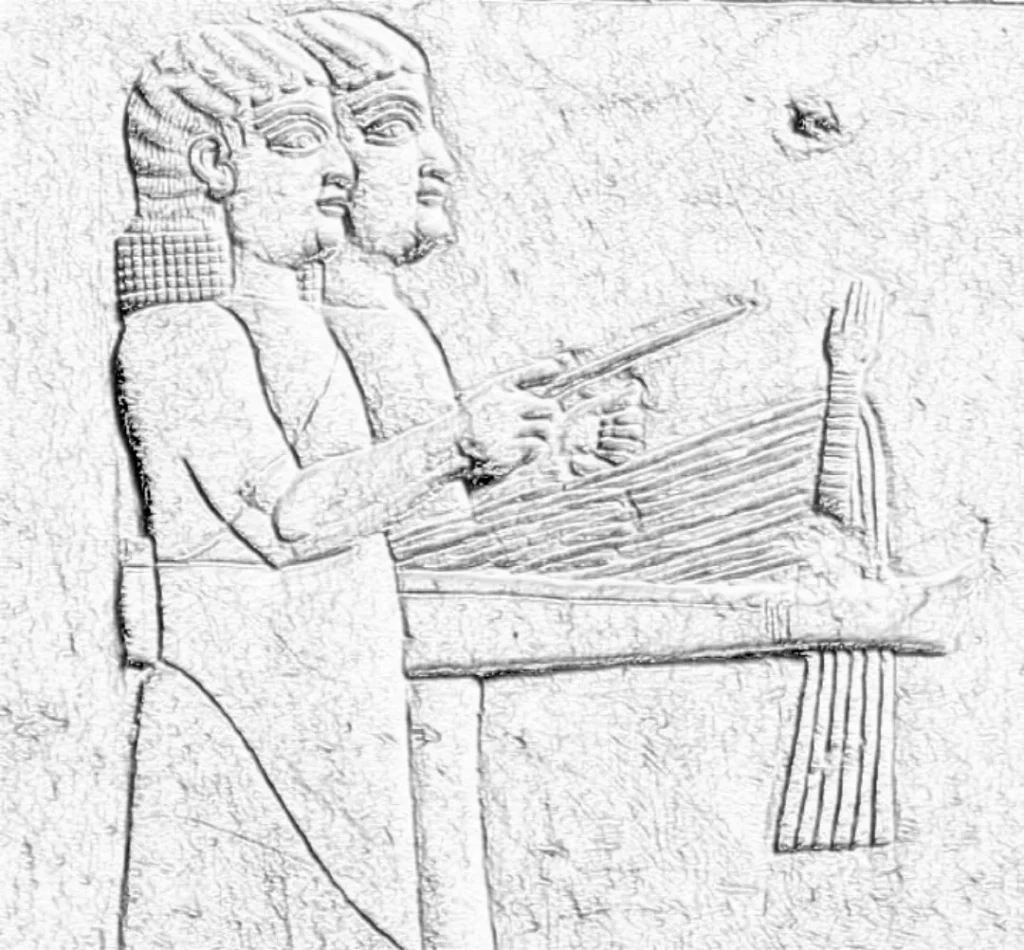
This legendary instrument has its roots in ancient Mesopotamia, more than 5,000 years ago. Over the centuries, it evolved into a symbol of medieval art.
During the Middle Ages, the harp held a central place, both in churches and in royal courts. Its gentle, intimate sound captivated listeners.
The models of the period were compact, with a number of strings ranging from 7 to 24. Today, choosing a harp suited to this music requires close attention to materials and tuning.
This guide will help you discover the essential features you need to make an informed choice. Dive into the history and find the ideal instrument.
Introduction to the medieval harp
At the heart of early musical traditions, this instrument has crossed the centuries with elegance. Its charm lies in its simplicity and in its ability to evoke forgotten atmospheres.
An instrument steeped in history
From the 11th century onward, the Romanesque harp accompanied sacred song. Troubadours popularized it in noble courts, creating a unique link between art and power.
Illuminated manuscripts reveal its importance. They often show musicians playing during ceremonies or festivities. To learn more about this fascinating history, discover the evolution of the harp through the centuries.
Why choose a specific harp?
Contemporary models differ in several essential ways:
- No pedal mechanism
- Gut strings for a warmer sound
- Tuning adapted to early modes
Performing an estampie or a conductus calls for an instrument faithful to the spirit of the time. Accurate intervals and distinctive resonance are crucial for recreating an authentic atmosphere.
The essential characteristics of a medieval harp
The authenticity of a historical instrument depends on precise details. To reproduce melodies from the past, every element matters, from the strings to the types of wood.
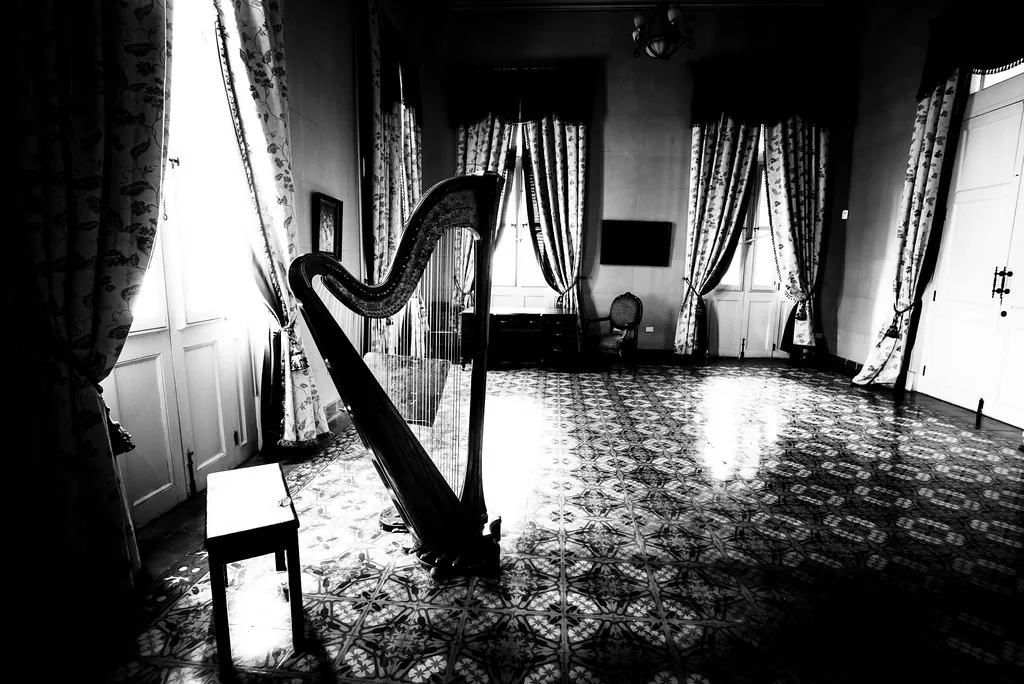
The optimal number of strings
Older models favored a simple configuration. Between 19 and 24 strings, often made of gut or silver-plated metal, made it possible to play diatonic modes.
Julien Skowron emphasizes in his research:
“The absence of semitones creates a purity of sound typical of the period.”
Traditional materials
The choice of wood directly influences the sound. Maple, walnut, and pear wood were favored for their warm resonance.
Unlike modern carbon versions, an unvarnished soundboard preserves the authentic tone.
The authentic sound
Playing techniques play a key role. Ornamentation, such as broken figures or mordents, adds a historical touch.
A recent study confirms that diatonic tuning better restores the atmosphere of early compositions.
Which harp should you choose to play medieval music? The available options
Melodies from the Middle Ages require a suitable instrument. Several historical models make it possible to recapture the spirit of this medieval period. Here are the three main harps recommended.
The Gothic harp
This model impresses with its curved column and carved decorations. Atelier Claude Bioley offers a 26-string version, ideal for a range of 3.5 octaves.
Its moderate weight (6 to 7 kg) makes it a valued stage instrument. Craftsmen such as Yves d’Arcizas often incorporate motifs inspired by cathedrals.
The Romanesque harp
Called “David,” this lightweight version (3 to 5 kg) has only 12 strings. Perfect for travel, it covers 2 octaves.
Its pared-down design recalls 11th-century illuminations. Atelier des Menestrels makes them with local woods such as walnut.
The adapted Celtic harp
Some luthiers modify Celtic harps by adding quarter-tone levers. This innovation makes it possible to play the micro-intervals typical of early modes.
It is a practical option for those who want to alternate between medieval and contemporary repertoires.
| Type | Strings | Range | Weight | Craftsperson |
|---|---|---|---|---|
| Gothic | 26 | 3.5 octaves | 6 to 7 kg | Claude Bioley |
| Romanesque | 12 (fewer strings) | 2 octaves | 3 to 5 kg | Atelier des Menestrels |
| Adapted Celtic | 22 to 34 | 3 octaves | 5 to 6 kg | Yves d’Arcizas |
Each model has its advantages. Your choice will depend on your practice and the repertoire you have in mind.
Comparison of the main types of medieval harps
Choosing a medieval harp means comparing several technical and aesthetic criteria. Here is a detailed analysis to guide you.
Comparison table: size, strings, price
The characteristics vary depending on the model. This table summarizes the main differences:
| Type | Size (cm) | Strings | Average price |
|---|---|---|---|
| Gothic | 120 to 140 | 26 | €4,500 to €6,000 |
| Romanesque | 80 to 100 | 12 | €1,500 to €2,800 |
| Adapted Celtic | 90 to 110 | 22 to 34 | €3,000 to €4,500 |
Advantages and limits of each model
Each instrument has specific advantages:
- Gothic: wide range, ideal for concerts. However, its price and weight (up to 12 kg) can be off-putting.
- Romanesque: light and affordable. Perfect for beginners, but limited in repertoire.
- Adapted Celtic: versatile thanks to its quarter-tone levers. It requires regular maintenance of the gut strings.
For amateur use, the Romanesque version offers the best value for money. Professionals will prefer the Gothic model for its authenticity.
Technical criteria to examine before buying
A successful choice rests on a careful analysis of several key elements. These technical criteria guarantee the quality and longevity of your future instrument.
Pitch accuracy
Check the tuning on the 8va and 15ma harmonics. A forged-steel tuning pin block ensures optimal stability.
Test the resonance in different conditions:
- Check stability under varying humidity levels
- Listen to how the notes sustain for at least 5 minutes
Ease of playing
Ergonomics directly affects comfort. Favor an inclination angle between 45° and 55°.
Professional musicians recommend:
- A column suited to your height
- Well-spaced strings to avoid mistakes
The instrument’s robustness
Examine structural reinforcements, such as internal bracing in solid wood. String tension should withstand 70 to 90 kg.
Essential checkpoints:
- Strength of the joints
- Quality of the gluing
- Resistance to climate variations
“A good craftsperson always includes durability tests in the process.”
Where can you buy a quality medieval harp?
Finding the right craftsperson is crucial when acquiring a quality historical instrument. A successful buying experience combines expertise and authenticity.
Specialized workshops in France
Brittany is home to renowned luthiers such as Atelier Ardival. Their creations respect ancestral techniques, using hand-selected woods.
In Switzerland, Harpes Bioley offers models inspired by 12th-century manuscripts. Their know-how is certified by the Guild of Makers of Early Instruments.
Secure online platforms
For those who prefer the digital path, Early Music Shop and Harp Corner offer safeguards:
- Detailed photos from every angle
- Certificates of authenticity included
- 30-day returns
Events not to miss
Festivals such as the one in Dinan let you meet artists and testers. The International Early Harp Meetings even offer trial workshops.
“Seeing and touching remain essential for appreciating true resonance.”
Consult the 2024 programs to discover exhibitors near you.
The budget to plan for a medieval harp
Acquiring a historical instrument is a significant investment. It is essential to assess the costs carefully before getting started.
Price ranges by type
Prices vary considerably depending on the model and build quality. Here are the average ranges observed:
| Type | New price | Used price |
|---|---|---|
| Romanesque | €1,800 to €3,500 | €1,000 to €2,000 |
| Adapted Celtic | €3,000 to €5,000 | €1,800 to €3,000 |
| Gothic | €5,000 to €8,000 | €3,000 to €5,000 |
The wood used directly affects the cost. Noble woods such as maple or walnut can increase the bill by 15 to 20%.
Used vs. new instruments
The used market offers attractive savings. Discounts often reach 40% compared with new instruments.
Points to check on a used instrument:
- Condition of the strings and tuning pins
- No cracks in the wood
- Maintenance history
Specialized sites such as Instrument Celtique offer technical checks before purchase.
For a tight budget, long-term rental is an appealing alternative. Some luthiers offer plans starting at €80 per month.
“A well-maintained instrument can last more than 30 years. The investment makes sense over the long term.”
Do not forget the additional costs:
- Protective case: €150 to €400
- Specialized transport: €200 to €500
- Insurance: 2% of the value per year
Also plan €150 to €300 per year for regular maintenance. A minimum 5-year warranty on the structure is recommended.
Essential accessories for your harp
A historical instrument deserves accessories suited to its unique character. These items preserve its sound and make everyday use easier.
Protecting your investment
A good case must combine safety and practicality. Here are the essential criteria:
| Type | Insulation | Weight | Average price |
|---|---|---|---|
| Hard case | Thermal | 3 to 5 kg | €250 to €400 |
| Semi-rigid | Partial | 2 to 3 kg | €150 to €250 |
| Soft case | Minimal | 1 to 2 kg | €80 to €150 |
Choose models with high-density foam. They absorb shocks better during transport.
Maintenance equipment
A complete kit includes:
- Brass tuning key
- Specialized gut scraper
- Natural wax (Hornguild type)
Regular waxing preserves the wood. Use solvent-free products so the resonance is not altered.
Historical repertoire
Early scores require a specific approach. The Bärenreiter method offers:
- Transcriptions from the Faenza Codex
- Deciphered neumatic notation
- Annotations by medieval artists
“Working from facsimiles develops a deep understanding of the original effects.”
Critical editions such as Carmina Burana provide valuable interpretation paths.
Learning to play the medieval harp
Mastering this ancestral instrument requires a specific approach, different from modern practice. Historical techniques emphasize fluidity and ornamentation.
Comparison of teaching approaches
Two main methods are opposed:
- Early solfege, based on neumes
- Adapted modern tablatures
The CNSMD in Lyon offers a complete course combining both approaches. This dual experience makes it possible to decipher original manuscripts.
Conservatory training
Several French institutions offer specialized classes:
- CRR de Toulouse: monthly workshops
- CRR de Paris: masterclasses with Jordi Savall
- CRD d’Avignon: intensive summer course
These programs are designed for experienced musicians as well as motivated beginners.
Digital platforms
Online resources are a useful complement to learning:
- Medieval Harp Academy: 120 video tutorials
- Antique Sound Workshop: analysis of early modes
- Harp Historical Society: discussion forum
Professional musicians recommend combining these tools. An immersive experience speeds up progress.
“Working from facsimiles develops a unique musical intuition.”
Maintaining your medieval harp
Taking care of your medieval harp extends its lifespan and guarantees optimal sound quality. Regular maintenance preserves the instrument’s authenticity while avoiding costly damage.
Periodic adjustments
Seasonal adjustments maintain the instrument’s stability. Here are the key points to check:
- String tension (quarterly adjustment)
- Column alignment (annual check)
- Condition of the tuning pins (monthly visual inspection)
A preventive maintenance schedule helps avoid major problems. Consult a specialized luthier for complex adjustments.
Protection against humidity
The ideal humidity level is between 45% and 55%. Effective solutions are available:
| Problem | Solution | Frequency |
|---|---|---|
| Excess humidity | Silica gel | 3 months |
| Air too dry | Ultrasonic humidifier | Winter |
A UV lamp can help prevent mold in poorly ventilated areas.
Changing the strings
String replacement varies depending on the material:
- Natural gut: 6 to 12 months
- Silver-plated metal: 12 to 18 months
The historical knot technique ensures a solid attachment. Watch for these signs of wear:
- Loss of sustain
- Unusual cracking sounds
- Discoloration
“A worn string affects the instrument’s entire intonation. Do not wait too long to replace it.”
For professional maintenance, refer to approved centers in your region. Good follow-up preserves your harp for future generations.
Conclusion: finding the ideal medieval harp
The art of choosing a historical harp takes thought. Authenticity and practicality must be balanced to recreate the spirit of the past.
Always test your instrument with an expert. Touch and resonance reveal what specifications cannot say.
Start with a simple model, then move toward more complex versions. Specialized associations offer valuable resources for exploring this history.
Take part in gatherings of practitioners. These exchanges enrich your experience and preserve the heritage of medieval music.