This buying guide sets the framework: what does it really mean to play a quality djembe, and how can you avoid the traps of choosing too quickly? We detail the essential criteria — morphology, materials, craftsmanship, and budget — that influence playing comfort and longevity.
The right drum quickly becomes an extension of the hand: strike response, nuance, projection, and tuning stability depending on humidity or the playing venue. This text explains how to assess these points and compare offers on the site or in a shop.
This introduction is intended for stage musicians, teachers, studios, and demanding beginners who want to avoid buying a “toy.” We will first present the technical criteria, then how to choose according to use, size, sound tests, and budget.
Finally, we will briefly compare traditional and modern families, and explain why the best choice depends on the context. To discover the variants, also see the available types of djembes.
Professional djembe: what criteria define a high-end instrument
A good wooden shell turns every strike into a clear, sustained response.
Solid wood: the density of the shell determines sustain, projection, and tonal warmth. Mahogany, iroko, and lenke offer a rich, deep sound. Visually, check the grain, the veining, and the sensation of weight in the hand.
Head: goatskin gives a lively texture and fine dynamics, but it is sensitive to humidity. Synthetic heads provide useful tension stability outside the studio. Read the head: even thickness, no micro-holes, and regular tension.
Tension system: traditional ropes allow fine adjustment and sound personalization. Hoops or mechanical tuning systems tune faster and suit mobile playing.
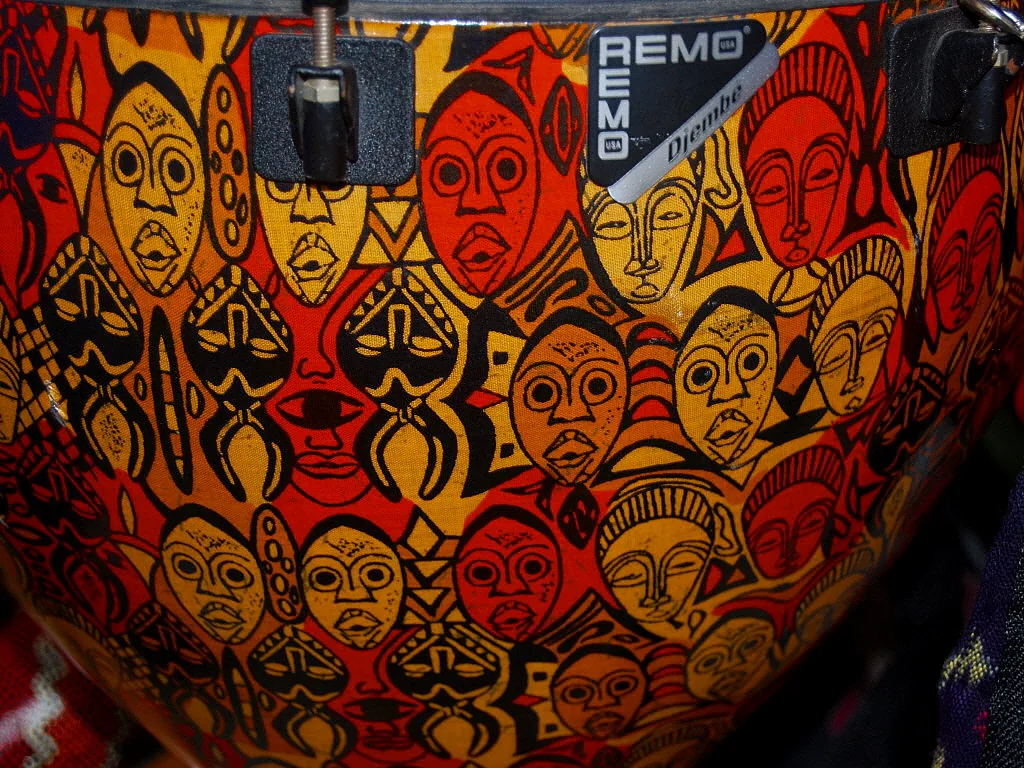
Finish and construction: rounded edges, a shell shape that feels comfortable between the knees, and good weight balance protect the hands during long sessions. A shell carved from a single block brings character and resonance, while industrial production favors consistency.
| Element | Advantage | Point to check | Recommended use |
|---|---|---|---|
| Mahogany / Iroko / Lenke | Warmth, sustain | Grain, cracks, weight | Stage, studio |
| Goatskin | Expressiveness, lively texture | Tension, thickness, humidity sensitivity | Studio, controlled concert |
| Synthetic head | Stability, low maintenance | Uniformity, less “warm” sound | Outdoors, mobility |
| Ropes or hoops | Personalization / speed | Rope quality, clean hoops | Long-term professional use / touring |
High-end mini-checklist: solid wood with no cracks, healthy ropework, even head, smoothed edges, and immediate comfort in a seated playing position. To compare selected models, see this recommended offer: high-end djembe.
Traditional or modern: choose according to your use and environment
The right instrument family depends above all on your playing context and how often you use it.
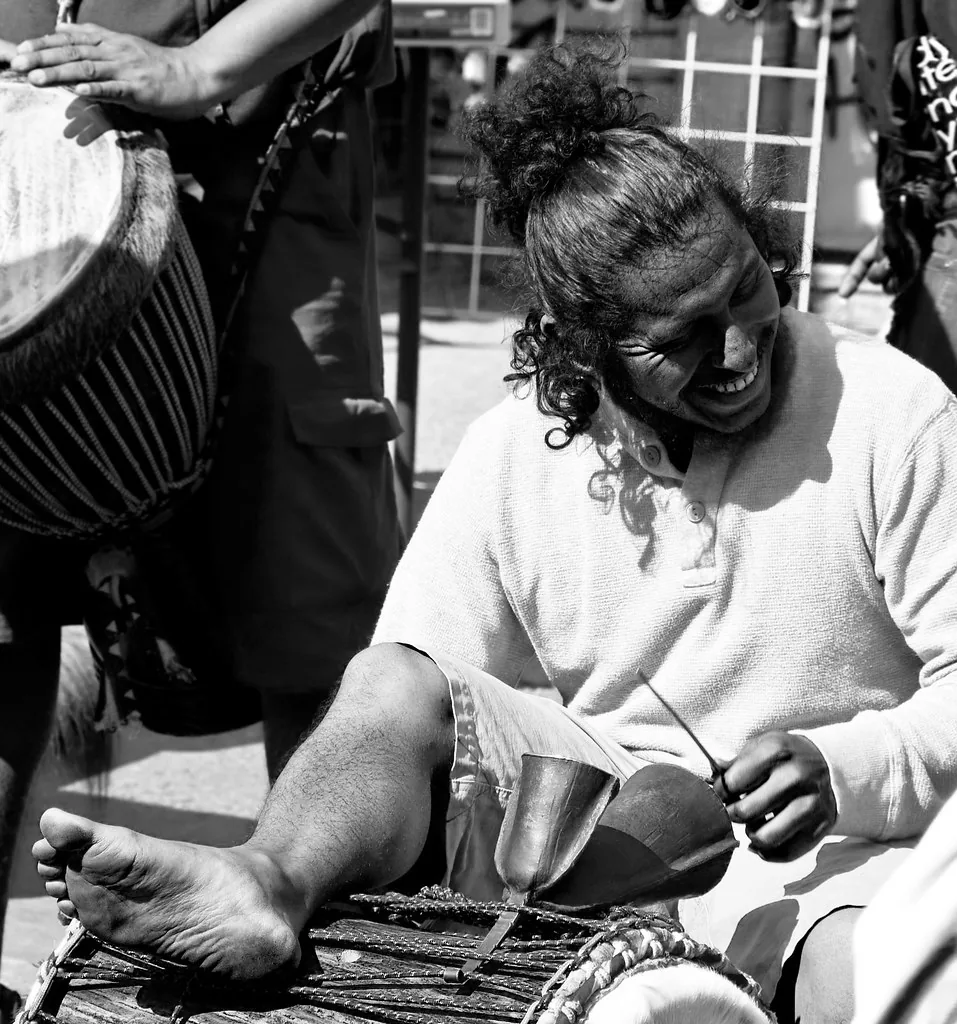
What you gain with a traditional wooden djembe and animal skin head
Authenticity and organic sound: solid wood and natural skin offer livelier resonance and powerful bass.
Fine response to technique: bass, tone, and slap stand out better when the head is properly maintained.
Why a modern model is reassuring outdoors and on the move
Stability and durability: ABS or fiber shells resist climate variations and require little maintenance.
Ideal for travel and touring: lightness, tuning consistency, and peace of mind during transport.
Quick guide by context
- Stage: prioritize projection and timbre — wood if you want traditional color.
- Studio: precision and separation between registers — a well-adjusted head.
- Group workshop: resistance and ease of use — practical synthetic models.
- Travel: weight and solidity — ABS/fiber recommended.
- Learning: comfort and endurance — choose according to frequency and budget.
Buying advice: prefer the model that fits your real use rather than prestige. To deepen your reference points, also see this guide to finding a rare gem.
Size, diameter, and morphology: finding a djembe that feels right
Size and diameter often determine whether the instrument truly fits your body and your playing.
How size directly influences sound: the larger the diameter, the more present the bass and the greater the projection. However, this means a heavier shell and a suitable posture.
Standard sizes and sounds
Simple reference points:
- Small (7–8″) — easy to transport, clear highs, useful for learning and travel.
- Medium (10–12″) — balance between highs and lows, versatile for solo or group playing.
- Large (>13″) — powerful bass, strong projection, ideal in ensembles, but heavier.
Choose according to your posture
Place the shell between your knees so your arms form an angle of about 90° at the elbow. Your hands should fall naturally onto the striking area without having to raise your shoulders.
Which model for children?
For children, prioritize low weight, rounded edges, and stable heads, often synthetic, which limit adjustments linked to humidity and variations.
Simple in-store test: sit down, position the instrument, check the hand-to-edge distance and your sense of control over the highs. Avoid choosing one that is too large “to get more sound”: it harms precision and hand endurance.
High-end sound: how to test an instrument before buying
A structured trial quickly reveals whether the instrument lives up to its sonic promises. Start by warming up your hands for a few minutes, then follow this simple, reproducible protocol.
The three basic sounds to check
Play the bass, tone (midrange), and slap (high) separately. Expect a clear separation between registers: each sound should be identifiable without blending into the others.
- Bass: depth, roundness, and sustain.
- Tone: clarity without buzzing.
- Slap: sharpness and precise attack, without excessive harshness.
Projection and dynamics
Test projection by striking harder, then more softly. A quality model responds to nuances, from pianissimo to fortissimo, without saturation.
Quick checks in a shop or workshop
Feel the shell vibrate against your knees. Check tension regularity and the absence of unwanted noise (buzzing, unstable overtones).
“A good shell resonates; it does not vibrate parasitically.”
- Inspect the ropes: knots, symmetry, and adjustment potential.
- Ask when the head was last changed, the storage conditions, and the intended use (workshop, stage, transport).
To buy with confidence, test several models and compare them. Also see where to buy and learn about good workshop practices through this learning resource.
Price, budget, and the French market: investing at the right level without making a mistake
The budget you plan already determines the nature of the sound and the longevity of the purchase. In France, the reference points are clear: entry level (50–100 €), mid-range (100–300 €), and above 300 € for the high end.
What price changes: materials (wood and head), tension regularity, comfort, and projection. Very low-cost models, under 50 €, are often disappointing: light wood, standard head, and unreliable tuning.
Additional costs to anticipate
Plan for a case and strap (20–50 €), replacement head (30–80 €), and around 15 €/year in maintenance. These items prevent unpleasant surprises after purchase.
New vs used: essential checks
Buying used can give you access to a better instrument for less. Inspect the shell: micro-cracks, wood condition, traces of humidity.
- Head: stains, cracks, thinning.
- Ropework: wear, knots, uneven tension.
- History: storage, humidity variations.
Common mistake: giving in to decoration or buying too large. Compare models and brands (Meinl, Toca, Afroton, Terre, Nino) based on their characteristics, not their logo.
Conclusion
In short, your purchase should meet clear, testable priorities.
Five actionable criteria guide the choice: materials (wood and head), tension system, comfort and finish, suitable size, and the ability to produce clear basses, tones, and slaps. Test each point in store.
Adapt your selection to real use: synthetic models for outdoors and mobility, solid wood for stage performance and authenticity. Do not sacrifice ergonomics for power.
Before buying, check the sound, projection, and absence of unwanted noise. Avoid oversizing and plan the total budget (case, replacement head, maintenance).
Final recommendation: a well-chosen and well-maintained djembe retains its value and supports the percussionist for years. See this guide to choosing well.