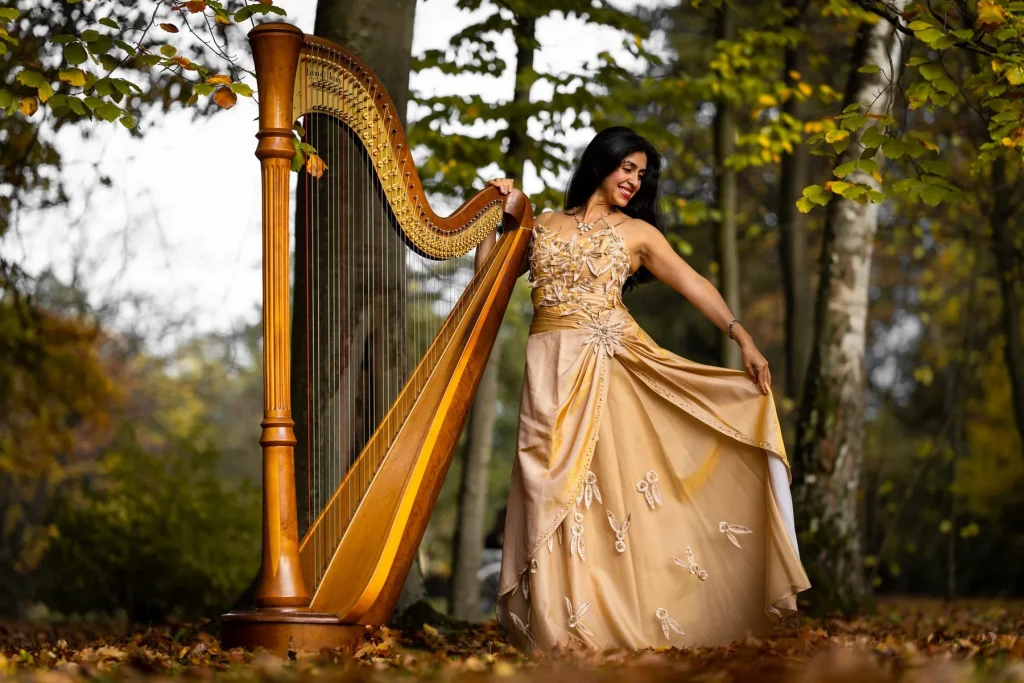
The Celtic harp charms listeners with its spellbinding melodies and its accessibility for beginners. This instrument, rich in history, offers a unique musical experience suited to every level.
Before making your choice, several essential criteria deserve attention. Size, number of strings, and materials directly affect your comfort and progress. To learn more, see our complete guide.
Ergonomics and value for money are crucial for a successful first purchase. Our goal? To help you find the instrument that matches your musical aspirations.
The Celtic harp: an instrument steeped in history
A cultural symbol par excellence, the Celtic harp carries centuries of stories within it. Its recognizable design and enchanting sound make it much more than a simple instrument: it is a centerpiece of Celtic heritage.
Origins and Irish symbolism
Emerging in the Middle Ages, it was the instrument of minstrels and bards. Its curved pillar is a distinctive feature, often depicted on Irish coins. “The harp is the heart of Ireland,” said a fifteenth-century poet.
It embodies cultural resistance in the face of invasions. Even today, it appears on the presidential flag and passports. An unbreakable bond links this instrument to Celtic identity.
Modern evolution and popularity
Since 2010, sales have risen by 35%. Breton festivals, such as the one in Lorient, have contributed greatly to its wider appeal. Unlike the bombarde or the bagpipes, it attracts players through its versatility.
Luthiers are innovating with models suited to contemporary music. Tradition and modernity combine to create unique melodies. This revival appeals to newcomers and purists alike.
Composition and technical characteristics
A harp is made up of three key elements: the soundbox, the strings, and the levers. Each one influences the sound and ease of playing. For beginners, understanding these technical aspects helps in choosing a suitable model.

Triangular structure and plucked strings
The triangular shape ensures stability and proper weight distribution. The strings, usually made of nylon, vary from 27 to 38 depending on the model. Their tension can be adjusted for precise tuning.
Nylon is favored for its softness, ideal for beginner fingers. Some harps use bronze or steel for more powerful projection.
The role of levers and materials
Semitone levers change the pitch of the notes. This ingenious system adds versatility without excessive complexity. They are often absent from entry-level models.
The choice of wood has a direct effect on resonance. Maple offers a clear tone, while walnut brings deep bass. Seventy percent of study harps use ash, which offers an ideal balance between price and quality.
| Characteristic | With levers | Without levers |
|---|---|---|
| Average price | €800-€1,500 | €400-€800 |
| Maintenance | Regular adjustments | Simplified |
| Versatility | High | Limited |
To learn more about the technical evolution of this instrument, see the detailed history of the Celtic harp.
How to choose your first Celtic harp: essential criteria
Selecting the right model depends on precise criteria. Ergonomics, sound, and ease of transport are all priorities for a beginner.
Playing level: study or professional harps
Study models, such as the Salvi Mia 34-string, offer excellent value for money. Agnes, a beginner harpist, explains: “Renting with an option to buy allowed me to test without committing.”
Professional versions, such as Dusty Strings, require technical control. Their touch and resonance differ noticeably.
Size and weight for easy transport
A light instrument, under 5 kg, and a compact format make travel easier. Here is a comparison of the main models:
| Model | Number of strings | Weight |
|---|---|---|
| 12-string harp | 12 | 3 kg |
| 27-string harp | 27 | 4.5 kg |
| 34-string harp | 34 | 6 kg |
How woods influence sound
Ash, common for beginners, offers a balanced tone. Walnut, more expensive, enriches the bass. Trying the instrument in person remains essential, according to luthiers.
One teacher emphasizes:
“Many people overlook morphological fit. A harp that is too tall creates unnecessary tension.”
Strings: nylon or something else?
The choice of strings directly affects comfort and sound. For beginners, this decision has an impact on ease of learning and pain prevention.
Advantages of nylon strings
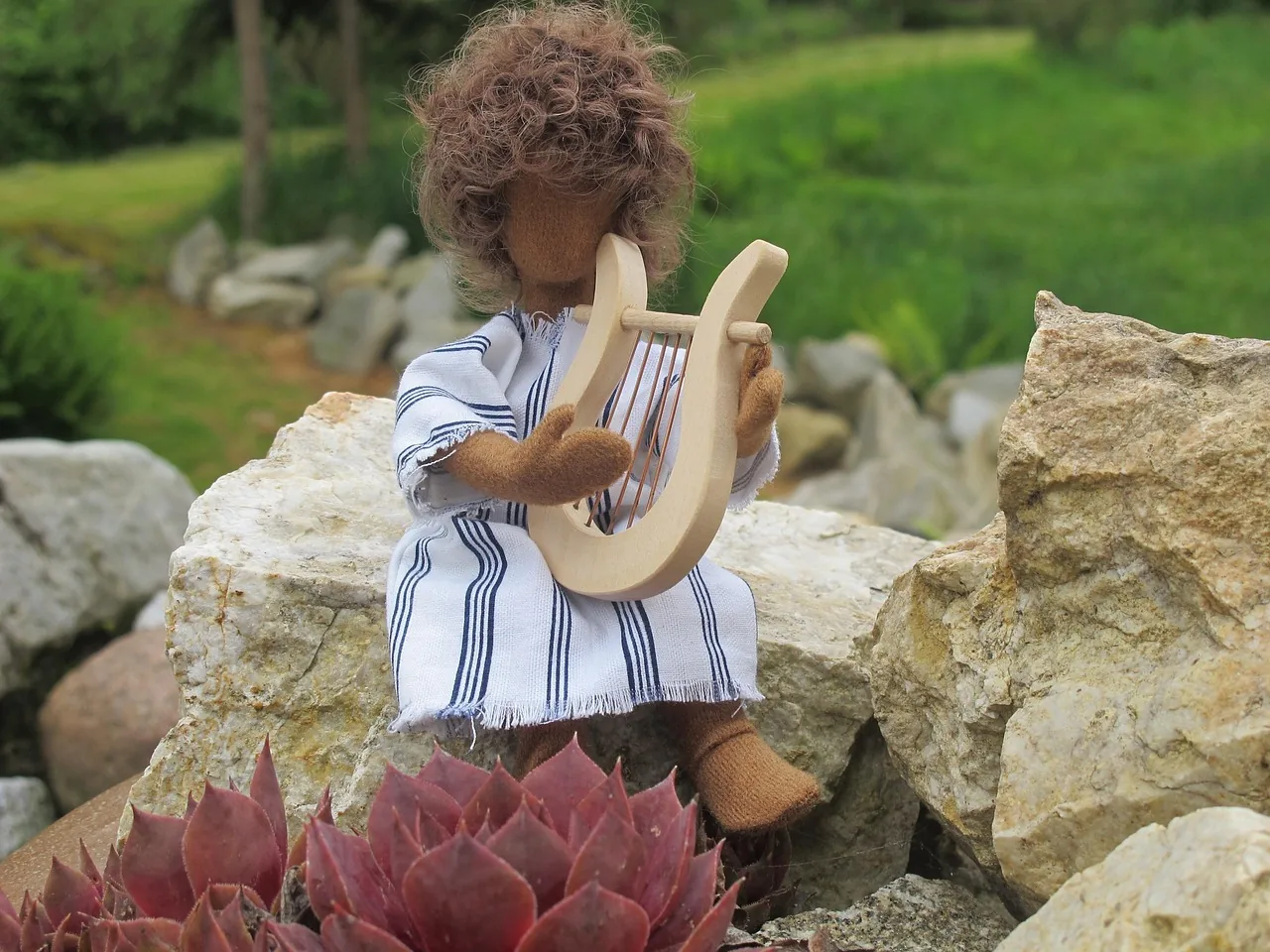
Nylon remains the preferred material for first steps. Its flexibility protects the fingers from repeated friction. A recent study shows 40% less pain compared with metal strings.
Its thickness ranges from 0.6 mm to 1.8 mm depending on the register. Study models often use medium diameters, offering an ideal compromise between precision and ease of handling.
Performance comparison
The resonance of nylon offers warm harmonics, perfect for traditional repertoire. Natural gut strings, however, provide richer nuances but require careful maintenance.
In terms of durability, nylon holds up better over time:
- Average lifespan: 2 years (nylon) vs. 18 months (gut)
- Humidity resistance: +30% for nylon
- Tuning stability: 15% higher
A Breton luthier explains:
“Students progress faster with nylon strings. The transition to other materials happens naturally after 2 to 3 years of practice.”
To identify quality nylon strings, test their elasticity. A good string should instantly return to its shape after a slight twist. High-end versions often include a carbon-fiber core to strengthen resonance.
Maintenance techniques differ depending on the material. Nylon simply requires monthly cleaning with a dry cloth, while gut needs specific products to prevent drying out.
Budget: what price for a Celtic harp?
Investing in this instrument requires a precise analysis of costs. Several options are available to musicians, depending on their commitment and financial means.
Price ranges according to size and materials
The price varies according to technical features. A 12-string ash harp costs around €900, while a professional 34-string model can reach €4,500.
Materials directly affect the final cost:
- Solid wood (walnut, maple): +30% to +50%
- Semitone levers: +€200 to +€800
- Handcrafted finishes: 15% surcharge
| Type | Strings | Average price |
|---|---|---|
| Study | 22-27 | €1,200-€1,800 |
| Intermediate | 30-34 | €2,500-€3,500 |
| Professional | 36-38 | €4,000-€6,000 |
Renting or buying: advantages when starting out
Rental (€50 to €100/month) lets you test without committing. Some contracts include an option to buy, ideal for those who are still undecided.
Over 5 years, buying second-hand, 40% cheaper, becomes more worthwhile. Always check:
- The condition of the strings and tuning pins
- The absence of cracks in the soundbox
- The stability of the levers, if present
Financial support can help reduce the cost:
- Conservatory grants
- Zero-interest loans from associations
- Scholarships for young musicians
For a detailed brand comparison, see our specialized guide.
Top 3 Celtic harps for beginners
Discover three models that are perfect for starting the harp. Each offers a unique experience, suited to the needs of beginners.
27-string harp with levers
The Salvi Mia (34 strings, 5.8 kg) is a versatile choice. Its lever system allows quick alterations, ideal for exploring different types of melodies.
Included: reinforced cover and electronic tuner. A Breton dealer reports:
“Ninety percent of our beginner customers choose this model. Its ergonomics reduce muscle fatigue.”
Compact 12-string ash model
Perfect for children or travel, this small harp weighs only 3 kg. Its ash wood offers clear, balanced resonance.
Dimensions: 80 cm x 45 cm. Brands such as Aoyama offer versions with scratch-resistant finishes.
Small transportable harp
The Camac Melusine excels in the low register, according to tests. Its foldable design makes it transportable anywhere. It is perfect for lessons or travel.
A trade-in program is available from 70% of authorized dealers in France.
| Model | Strings | Weight | Price |
|---|---|---|---|
| Salvi Mia | 34 | 5.8 kg | €1,500 |
| Compact 12 | 12 | 3 kg | €900 |
| Camac Melusine | 27 | 4.2 kg | €1,800 |
To compare the sounds, watch our video test. These three brands guarantee a frustration-free experience.
Conclusion: find the harp that suits you
Your musical experience begins with the right instrument. Weight, number of strings, and materials are key criteria. Adapt them to your body shape and ambitions.
In Brittany, discovery workshops let you try different models. An ideal opportunity to feel which harp resonates with you. Starting with a teacher accelerates learning.
Marine, a student for 6 months, confirms: “My small ash harp made every exercise enjoyable. Today, I dream of a model with levers!”
Before buying, check:
- Seated comfort
- String quality
- Tuning-pin stability
The world of the harp offers endless possibilities. With this advice, your choice will be a joyful step toward music.