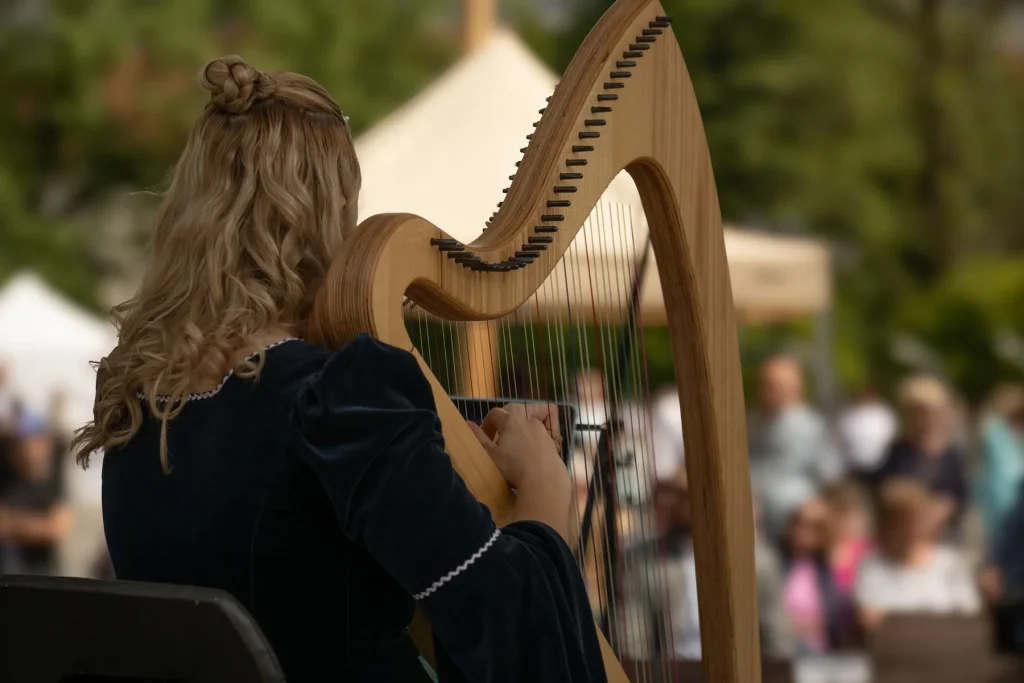
The Celtic harp is far more than a simple instrument. It embodies a rich musical tradition that crosses centuries and borders. A cultural symbol, it resonates in Ireland as much as in Brittany, carrying ancestral melodies with it.
Three historic models stand out: the Brian Boru, Queen Mary and Lamont harps. Each has unique characteristics shaped by its period. Their tone, often tuned to A 432 Hz, brings a distinctive harmony.
Today, craftspeople such as Harpes Herrou keep this expertise alive. Their work helps preserve a precious heritage. This instrument continues to inspire musicians throughout the world.
Let us explore its fascinating history, its nuances and its role in today’s music.
The historical origins of the Celtic harp
Let us dive into the fascinating past of this emblematic instrument. Its history reaches back to ancient times, when it played a central role in Celtic culture.
The earliest traces in Celtic tradition
From the age of the Gallic bards onward, this musical art held a privileged place. These musician-poets enjoyed high social status. Their talent was celebrated throughout society.
Celtic monks played a key role. They preserved plainchant and instrument-making techniques. One unusual method involved immersing wood in peat to mineralize it.
Emblematic medieval harps
Among the most remarkable pieces, the Brian Boru harp stands out. Dating from the 14th century, it is now displayed at Trinity College Dublin. Two other Scottish models complete this prestigious trio.
The Queen Mary and Lamont harps represent the height of this medieval art. Their dimensions and decorations testify to exceptional craftsmanship. Every detail tells part of this rich history.
Decline and revival
In the 13th century, the Norman invasions marked a turning point. The influence of these events on musical culture was profound. Yet the tradition survived thanks to dedicated enthusiasts.
Edward Bunting in the 18th century, then Thomas Gruffydd in 1867, worked to preserve it. Their work saved precious scores. Today, craftspeople such as those at Hent Telenn keep this heritage alive.
In the 1950s, Georges Cochevelou reconstructed ancient models. His work helped revive this mythical instrument. It remains a powerful symbol for the Celtic countries.
Handcrafted construction and technical characteristics
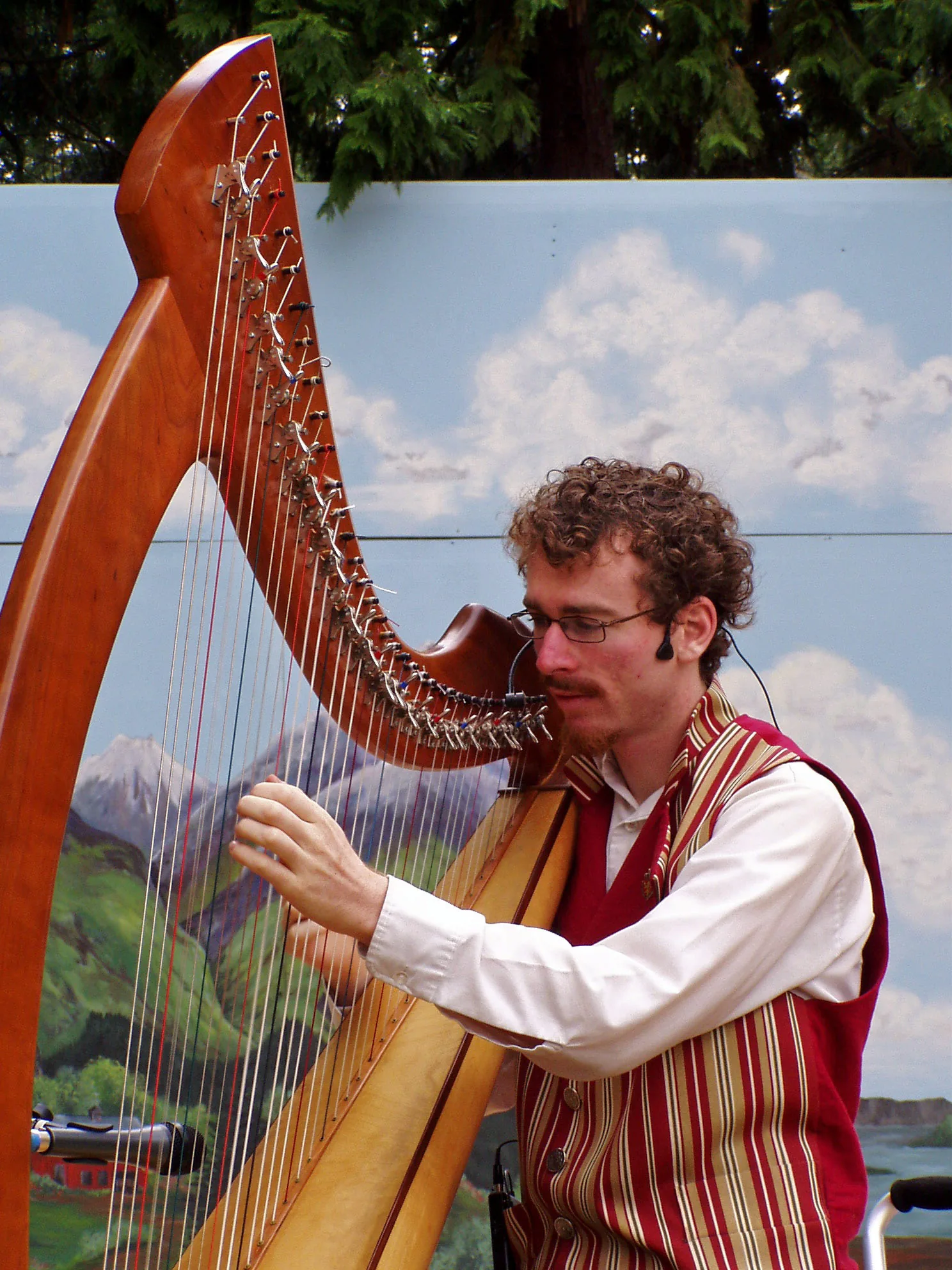
The choice of materials defines the soul of the instrument. Every part, from the wood to the strings, influences its tone and durability. Luthiers combine ancestral knowledge with innovation to create acoustic masterpieces.
Traditional materials: wood, strings and metal
The selected wood varies according to its resonance. Maple, red willow and oak are favored for the neck and the soundbox. These species provide acoustic stability.
Historic strings made from sheep gut are often replaced today by nylon or bronze. Metal tuning pins ensure precise tension without altering the timbre.
Sacred geometry and assembly techniques
Glue-free assembly, using tenons and mortises, ensures exceptional longevity. The curve of the neck follows harmonic proportions, often described as “sacred.”
The eye of the harp, a decorative opening, plays both a symbolic and acoustic role. It balances vibrations within the soundbox.
The evolution from ancient models to modern harps
Today’s dimensions, from 92 to 150 cm, make the instrument lighter without sacrificing sound volume. Its weight ranges from 7 to 12.5 kg.
| String type | Advantages | Disadvantages |
|---|---|---|
| Sheep gut | Warm, historic sound | Fragility, frequent adjustments |
| Carbon steel | Stability, lifespan | Less traditional timbre |
| Nylon/bronze | Balanced sound | Moderate maintenance |
Electroacoustic harps now incorporate preamplification systems. This innovation preserves authenticity while expanding stage possibilities.
Sound maturation can take up to two years. During this period, the soundbox gradually arches, refining the harmony.
Playing style and unique musicality
The musicality of this instrument rests on unique techniques passed down through generations. Its playing combines precision and emotion, creating an unmistakable harmony.
Posture and string-plucking techniques
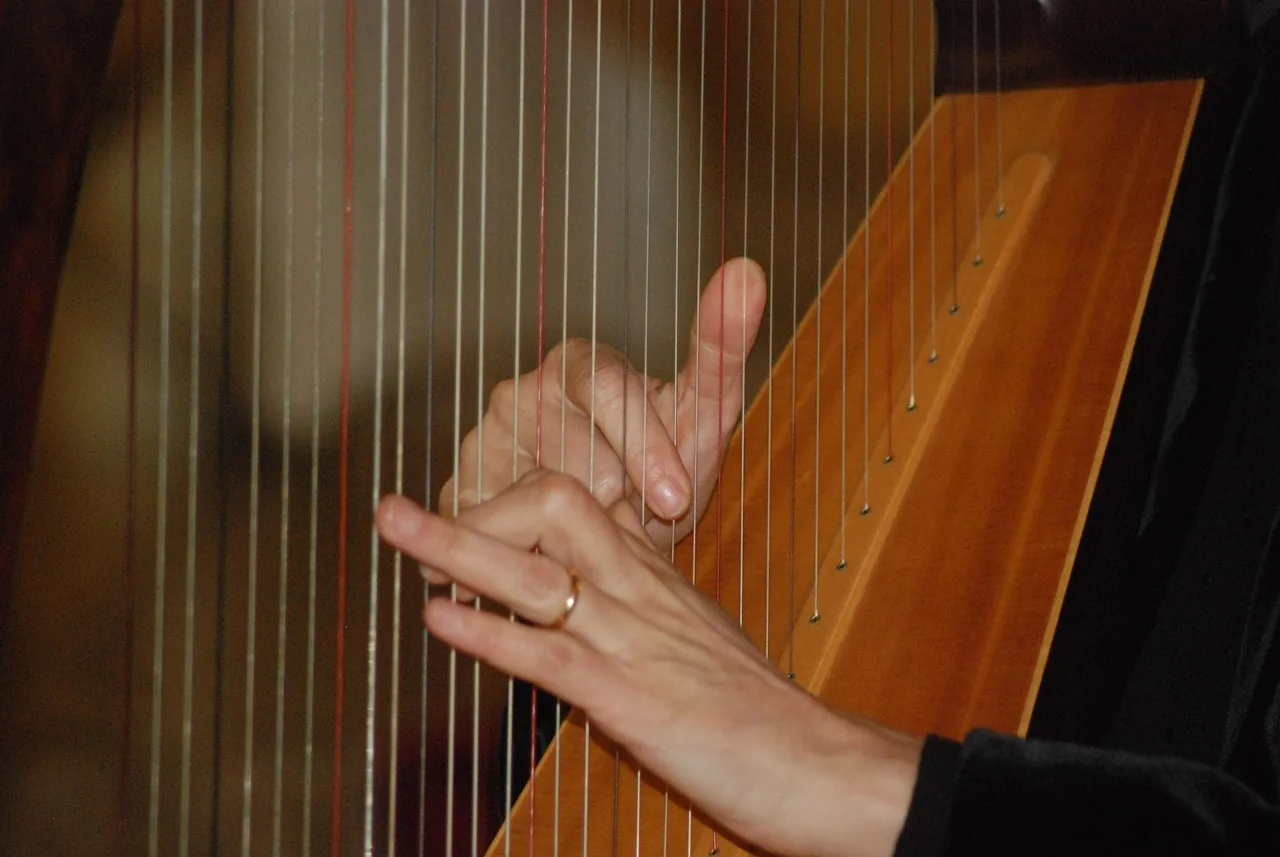
The left-side playing position differs from that of the classical harp. Harpists use only their fingernails to pluck the strings, producing a crystalline sound quality.
The right hand works the high notes, while the left accompanies with deep basses. A relaxed posture is essential to avoid tension.
The Celtic musical system: scales and harmonics
The system is based on a Pythagorean scale, with a permanent drone on G. The “companion strings” enrich the harmony, adding complex resonances.
This system even influences modern compositions, as shown by Breton playing techniques.
| Technique | Medieval | Modern |
|---|---|---|
| Plucking | Natural fingernails | Fingernails or fingertips |
| Damping | Left hand | Dynamic variations |
| Improvisation | Scottish modes | Fusion with other styles |
Great historic harpists
Turlough O’Carolan, the blind 18th-century composer, left a lasting mark on history with his moving melodies. His works, inspired by traditional modes, are still played today.
Edward Bunting, another key figure, preserved ancient scores. His collections made it possible to reconstruct medieval pieces for symphony orchestra.
These harpists shaped a heritage in which playing and creativity intertwine, as the compositions of Turlough O’Carolan show.
The Celtic harp in culture and society
Beyond its musicality, this instrument embodies a deep cultural identity. It transcends borders and anchors itself in modern society, while keeping its traditional soul.
A symbol of resistance and Irish identity
The Guinness logo is directly inspired by the Brian Boru harp. This symbol also appears on Irish euro coins, marking a central place in national history.
During Brexit, it became a pan-Celtic emblem. Wales and Scotland adopted it as a sign of unity in the face of political upheaval.
Its role in contemporary ceremonies and festivals
Festivals such as Festiv’harpes in Brittany attract thousands of visitors. In Dinan, the international gatherings celebrate this living heritage every year.
In Wales, the Eisteddfod makes it a key element of its musical competitions. These events strengthen its place in today’s artistic world.
The harp in cinema and pop culture
Pixar (Brave) and Studio Ghibli (Arrietty) have highlighted its unique timbre. Cécile Corbel, a Breton harpist, composed memorable soundtracks.
Fantasy literature (The Lord of the Rings) often uses it to evoke mystical atmospheres. Its influence extends far beyond traditional stages.
UNESCO is even considering its recognition as intangible heritage. Proof that its reach now touches the entire world.
The features that distinguish it from other harps
This instrument stands apart through unique traits, both technical and aesthetic. Its design and sound make it a singular object in the musical universe.
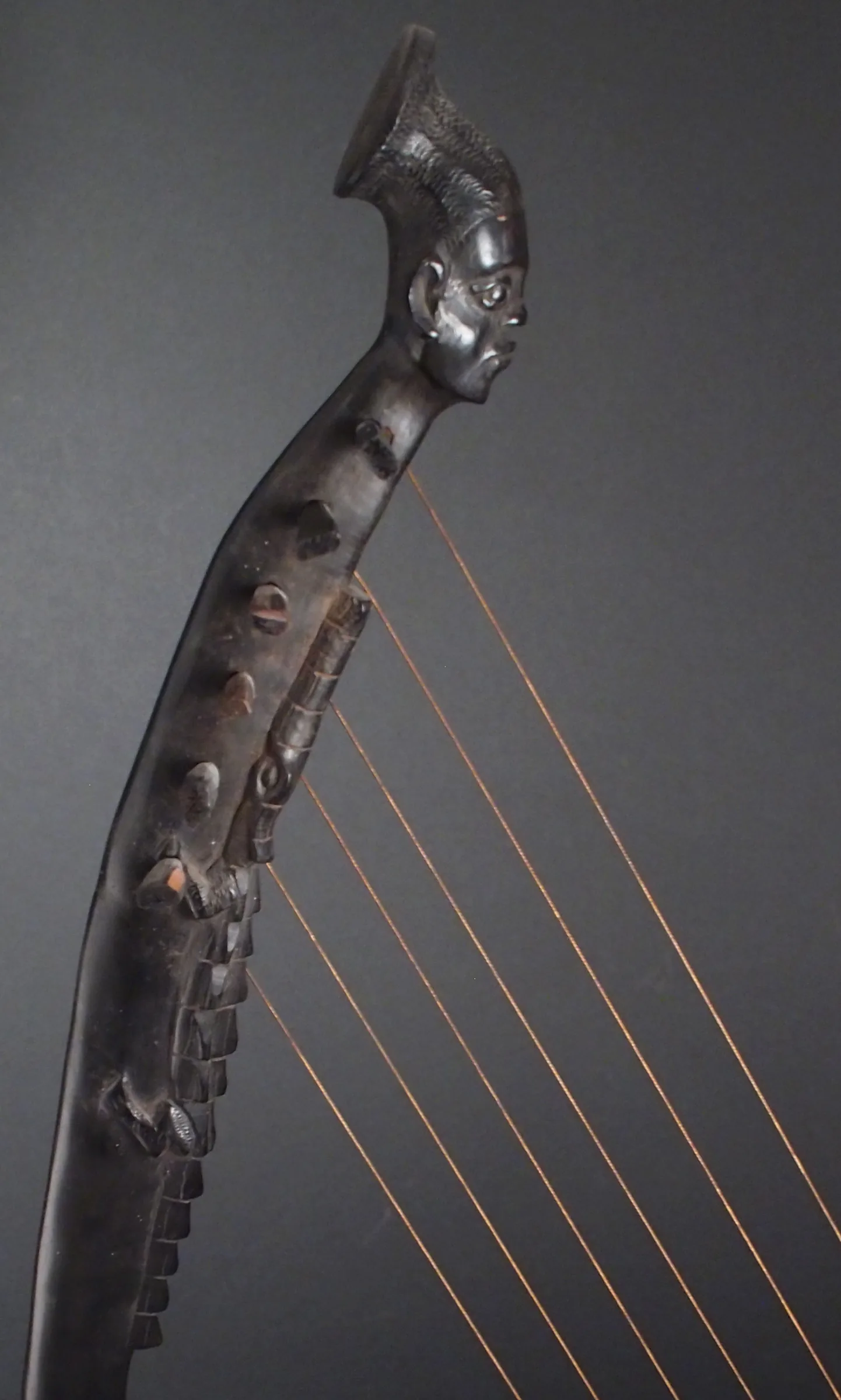
Comparison with the concert harp
Unlike the concert harp, it has no pedals. This absence simplifies its mechanism, reduces its weight and makes it easier to transport.
The tension of the strings is much lower: 30 to 40 kg, compared with more than 1,000 kg for an orchestral version. This difference directly affects resonance and playing technique.
- Number of strings: 32 to 38, compared with 47 on classical models
- Materials: nylon, bronze or gut, with steel remaining rare
- Rotating levers to change notes, without a complex system
Acoustic and sonic specificities
Its acoustic specificities lie in its smaller soundbox. Front sound holes direct the sound differently, creating an intimate projection.
Spectrographic analysis reveals warmer harmonics than on a classical harp. This unique timbre inspires compositions such as the Breton Suite.
“The sound seems to come from another time, both gentle and powerful.”
The importance of ornaments and Celtic motifs
The ornaments are not merely decorative. Interlace patterns symbolize the journey between the visible and invisible worlds. Every detail tells a story.
The metal string shoes, often gilded, improve projection. Their design draws on traditional motifs, like those found on the Brian Boru harp.
| Element | Function | Style |
|---|---|---|
| Pillar | Structural support | Celtic carvings |
| Neck | String anchoring | Metal inlays |
| Plates | Protection | Historic engravings |
Craftspeople use ancestral techniques to restore these pieces. Gilding with gold leaf demands extreme precision, thereby preserving authenticity.
Conclusion: the Celtic harp, a living heritage
Between tradition and innovation, this instrument fascinates through its versatility. Luthiers incorporate modern materials while respecting ancestral techniques, ensuring its continuity. Its unique harmony also appeals to therapists, who use it in sound healing.
In Brittany, schools introduce children from the age of 7, weaving a bond between generations. Recognition by UNESCO as world heritage could crown this rich history. Projects such as the Dinan exhibition reveal its role in Breton culture.
Supporting craftspeople and musicians is essential to preserving this harmony. This heritage, both local and universal, continues to enrich the world of music. Discover it to grasp all its magic.